
Uppsala-Angstrom observatory
Satellite imagery: Esri, Maxar, Earthstar Geographics
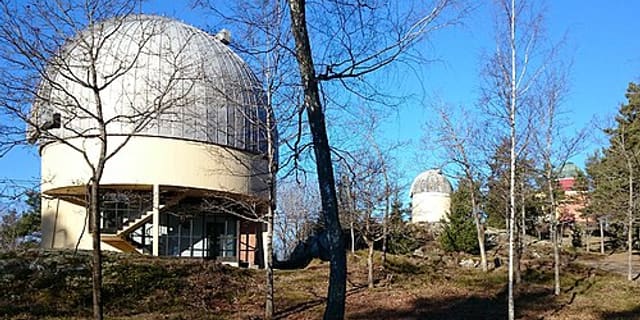
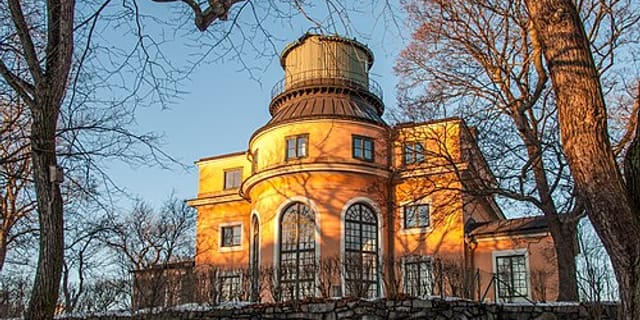
Tucked into a medieval stone building in the heart of Uppsala, Sweden, the Uppsala Astronomical Observatory is the oldest astronomical observatory in the country, with a rooftop dome that has watched the northern sky for nearly three centuries.
About the observatory
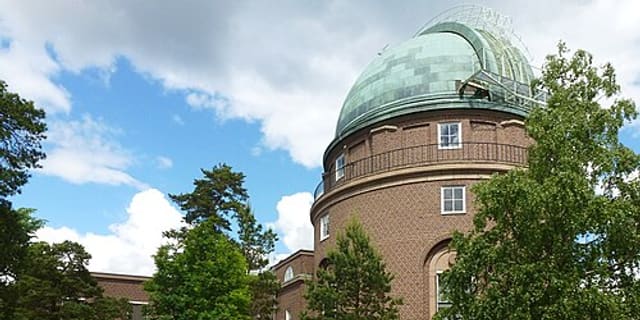
The observatory occupies a historic stone house in central Uppsala, its rooftop dome a landmark of the university city. It has long served as a working centre for Swedish astronomy, blending old stonework with generations of instruments trained on the sky above.
History
The observatory was founded in 1741 by the astronomer and physicist Anders Celsius, making it the oldest of its kind in Sweden. In the 19th century, members of the Ångström family carried out pioneering work here in spectroscopy and solar radiation research, laying groundwork that still echoes through modern astrophysics.
Telescopes & research
Research from the observatory has ranged across stellar parallaxes and stellar statistics to the structure of the galaxy, the study of external galaxies, stellar atmospheres, and Solar System objects — a broad portfolio built up over the site's long working life.
Location & getting there
The observatory sits in central Uppsala, Sweden, within easy reach of the university quarter and the city's historic core, making it a convenient stop for anyone exploring Uppsala on foot.
Visiting Uppsala Astronomical Observatory
As with any working academic site, opening hours and public access can vary, so it's worth checking ahead with the university or a quick search before you travel.
See your named star from here
Because any point in the sky can be located from its coordinates, staff at an observatory like this one can point a telescope toward the exact right ascension and declination of a star you've had named. Name a star of your own, or browse the catalogue to see what's already been dedicated.
Opening hours and public-visit programs vary by season. Check Google Maps for current times before you travel.
Institutional and reference sources used to verify this guide.
Satellite imagery: Esri, Maxar, Earthstar Geographics

 39 kmMuseum
 61 kmMuseum
 75 km
75 km