
Stockholm Observatory


Image: Wikimedia Commons
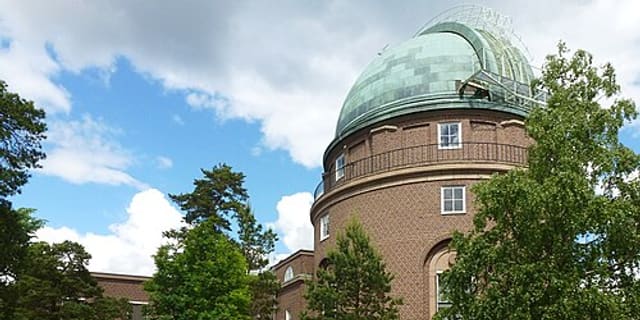
On a hill in Observatorielunden park in central Stockholm stands the old Stockholm Observatory, a founding institution of Swedish astronomy that today welcomes visitors as a museum.
About Stockholm Observatory
The observatory was founded in 1753 by the Royal Swedish Academy of Sciences, on the initiative of its secretary Per Elvius; construction had begun in 1748 to designs by architect Carl Hårleman. Pehr Wilhelm Wargentin served as its first head. Today the old building functions as a museum, prized for its sweeping view over Stockholm from the dome, along with sculptures and a walled garden.
History
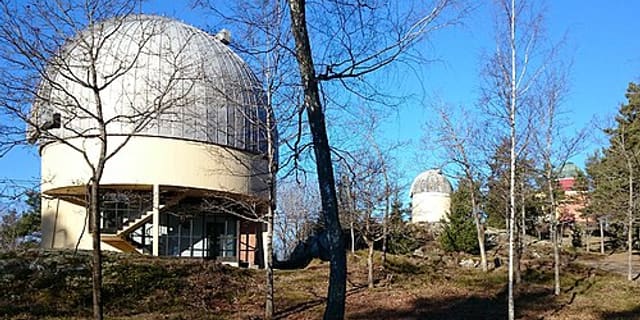
Daily weather observations have been recorded at the site since 1754, one of the longest such records in the world. The museum's collection spans centuries of instruments, including a Repsold telescope and a marble-inlaid meridian line, used historically to fix the positions of stars and determine local time. By the late 19th century the observatory had adopted astrophotography, with the Repsold refractor used to make chemically developed images of the sky. In 1931 a new, larger facility - Saltsjöbaden Observatory, nicknamed "Saltis" - was inaugurated on the Karlsbaderberget at Saltsjöbaden southeast of the city, equipped with a 40-inch (102 cm) Grubb reflecting telescope and a Grubb double refractor combining 24-inch and 20-inch apertures on one mount. Saltsjöbaden operated until 2001; both sites are now part of Stockholm University.
Location & getting there
The historic observatory building sits in Observatorielunden, a park in central Stockholm, Sweden, offering one of the best public viewpoints over the city.
Visiting Stockholm Observatory
The old observatory operates today as the Observatory Museum, with its collections, garden, and city views open to the public; check current opening hours before visiting.
See your named star from here
Generations of astronomers here in Observatorielunden used their instruments to chart star positions with painstaking precision - and today, any telescope that can track the sky can be aimed at the coordinates on your own star certificate. Browse the full star catalogue to find yours.
Opening hours and public-visit programs vary by season. Check Google Maps for current times before you travel.
Institutional and reference sources used to verify this guide.
Satellite imagery: Esri, Maxar, Earthstar Geographics

 16 km
16 km
 31 kmMuseum