
Trivandrum Observatory

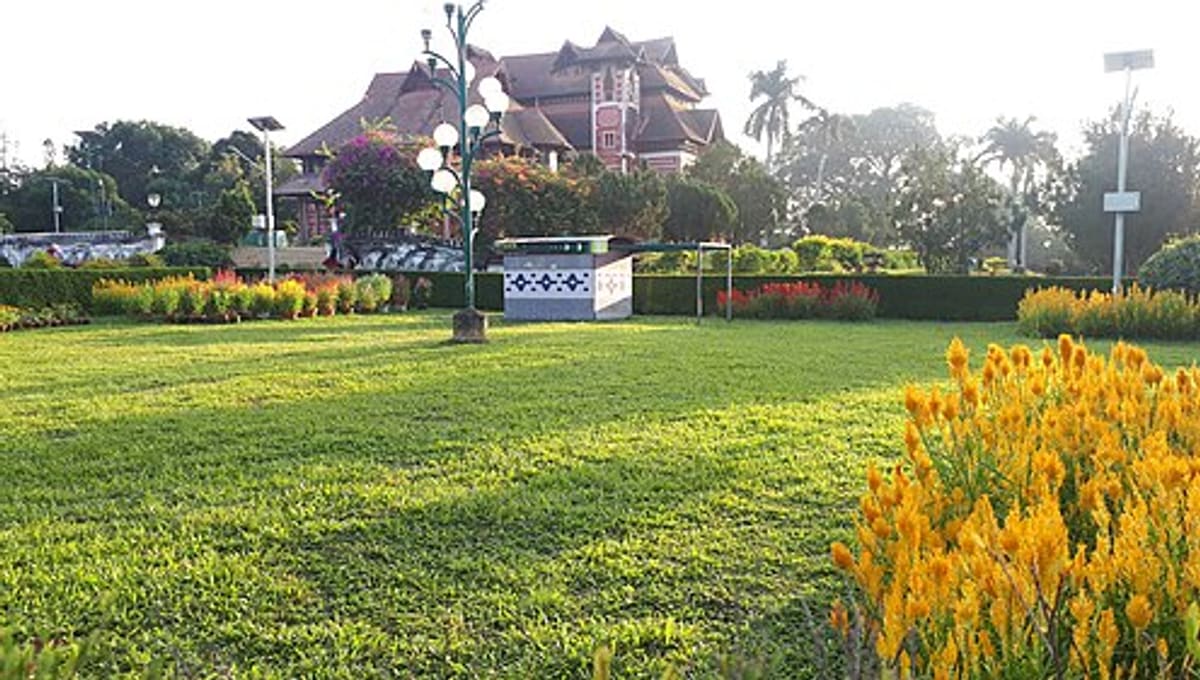
Image: Wikimedia Commons
Trivandrum Observatory, also known as the Thiruvananthapuram Astronomical Observatory, has watched the sky over the Kerala capital since the 1830s, with a history bound up in royal patronage and pioneering magnetic research.
About Trivandrum Observatory
The observatory was established in 1836–37 by Swathi Thirunal Rama Varma, the Raja of Travancore, on the highest point in the city, opposite his palace. The site was considered especially significant because the magnetic equator passed through Thiruvananthapuram at the time.
History
John Caldecott, who had previously run a small personal observatory at Alappuzha, was appointed royal astronomer to lead it, working from a design by Lieutenant W. H. Horsley of the Madras Engineers. Caldecott began meteorological measurements in July 1837 and oversaw a second building added in 1842, which housed a Dollond equatorial circle; a Travancore Almanac was published in 1838. After Caldecott's death in 1849, John Allan Broun took over from January 1852, later establishing a second high-altitude station on the peak of Agasthyamalai to study how the magnetic field varied with altitude. Broun and his assistants published the Thiruvananthapuram Magnetic Observations in 1874. The original building was eventually demolished to make way for a water tank, and a new observatory was built nearby.
Telescopes & research
The current observatory has a telescope mounted above it and is open to visitors, carrying on the site's long tradition of combining astronomical and magnetic observation.
Location & getting there
The observatory stands on high ground in Thiruvananthapuram (Trivandrum), the capital of Kerala, in southern India.
Visiting Trivandrum Observatory
The observatory is open to visitors; it's worth checking current opening hours and any entry requirements locally before you go, as these can change.
See your named star from here
A site with almost two centuries of tracking the sky and Earth's magnetism is a fitting place to think about your own named star, whose coordinates are recorded with the same care. Browse the star catalogue to find it.
Opening hours and public-visit programs vary by season. Check Google Maps for current times before you travel.
Institutional and reference sources used to verify this guide.
Satellite imagery: Esri, Maxar, Earthstar Geographics

 200 kmSolar
 1,168 kmResearch
Inter-University Centre for Astronomy and Astrophysics
Indian institute for Astronomical sciences