
Inter-University Centre for Astronomy and Astrophysics


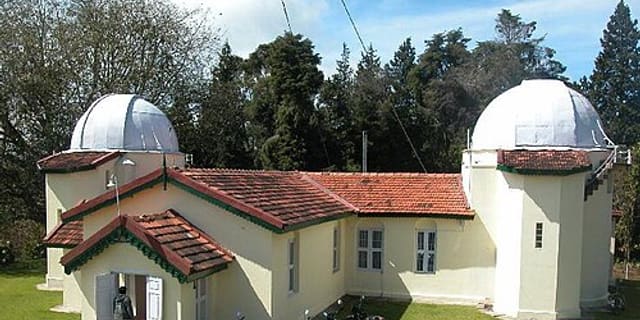
Image: Wikimedia Commons
The Inter-University Centre for Astronomy and Astrophysics (IUCAA) is a national astronomy institute on the University of Pune campus in Pune, India, set up to bring active astrophysics research into Indian universities.
About Inter-University Centre for Astronomy and Astrophysics
IUCAA is an autonomous institution established by the University Grants Commission of India in 1988 to promote the growth of astronomy and astrophysics groups at universities across the country. It sits next to the National Centre for Radio Astrophysics, which operates the Giant Metrewave Radio Telescope, putting two major Indian astronomy institutions side by side on one campus.
History
Founded in 1988, IUCAA was built with a distinctive campus designed by the noted Indian architect Charles Correa, giving the institution a striking architectural identity alongside its scientific one.
Telescopes & research
IUCAA operates the Girawali Observatory, home to a 2-metre telescope used for research work, and develops instruments such as the IUCAA Faint Object Spectrograph & Camera (IFOSC) for studying faint astronomical sources.
Location & getting there
The centre is located in Pune, in the Indian state of Maharashtra, on the University of Pune campus. Its position in Asia's astronomy corridor, alongside the radio astrophysics centre next door, makes it a natural stop for anyone interested in Indian astronomy.
Visiting Inter-University Centre for Astronomy and Astrophysics
IUCAA welcomes academic visitors and runs public outreach activities; check the official website before travelling to confirm current visiting hours and any tour arrangements.
See your named star from here
Once you name a star through Star Register, its coordinates can be pointed to from any observatory equipped to do so, including sites connected to India's astronomy network. Browse your certificate details any time in the catalogue.
Opening hours and public-visit programs vary by season. Check the official website and Google Maps for current times before you travel.
Institutional and reference sources used to verify this guide.
Satellite imagery: Esri, Maxar, Earthstar Geographics

 1,005 kmSolar
 1,168 km