
Tixie Bay Magnetic Observatory
Satellite imagery: Esri, Maxar, Earthstar Geographics
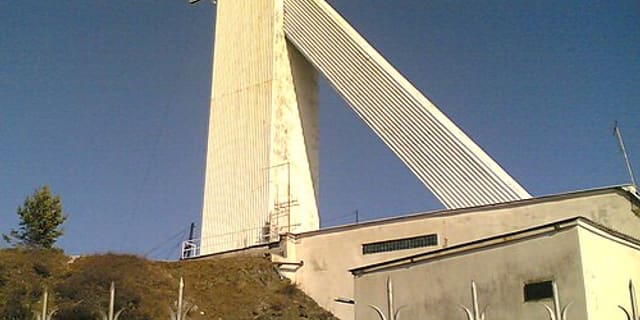
Tixie Bay Magnetic Observatory has recorded the Earth's magnetic field from the Arctic coast of Yakutia, Russia, since the late 1950s, making it one of the longer-running geophysical stations in the region.
About Tixie Bay Magnetic Observatory
Despite the name, this is a geomagnetic and cosmic-ray research station rather than a stargazing site. It is operated by the Institute of Cosmophysical Research and Aeronomy, part of the Russian Academy of Science, and continuously records the East, Horizontal, and Down components of Earth's magnetic field.
History
The observatory was established in 1957 during the International Geophysical Year, an international push to coordinate Earth science observations worldwide. Its historical K-index data, spanning 1957 to 1992, is archived at the World Data Center for Solar-Terrestrial Physics in Moscow.
Telescopes & research
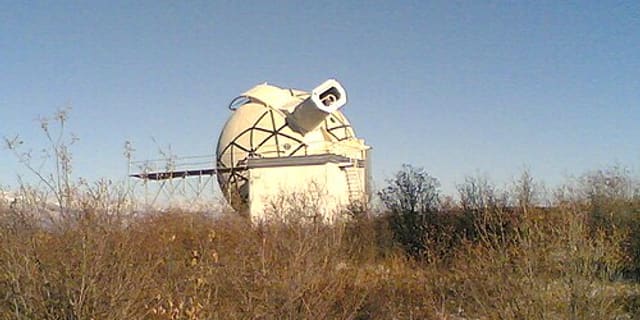
Alongside its magnetic instruments, the station also hosts a neutron monitor used to track cosmic-ray activity, contributing to a global network of stations that studies how solar activity affects particles reaching Earth.
Location & getting there
Tixie Bay sits on the Arctic coast of Yakutia in far northeastern Russia, in the Asia region, one of the most remote inhabited areas on the planet. It is not a tourist destination, and reaching it involves significant travel through a sparsely populated part of Siberia.
Visiting Tixie Bay Magnetic Observatory
This is a scientific monitoring station, not a public attraction, and no visitor programme is documented. Anyone with a genuine research interest should contact the Institute of Cosmophysical Research and Aeronomy directly.
See your named star from here
You don't need to be at a magnetic observatory to find your named star. Wherever the Arctic sky is dark and clear, a Star Register certificate gives you the exact coordinates to locate it yourself with a telescope or stargazing app. Get started with a star-naming package or browse the catalogue of named stars.
Opening hours and public-visit programs vary by season. Check Google Maps for current times before you travel.
Institutional and reference sources used to verify this guide.
Satellite imagery: Esri, Maxar, Earthstar Geographics

 2,497 km
 2,618 kmSolar