
Baikal Astrophysical Observatory

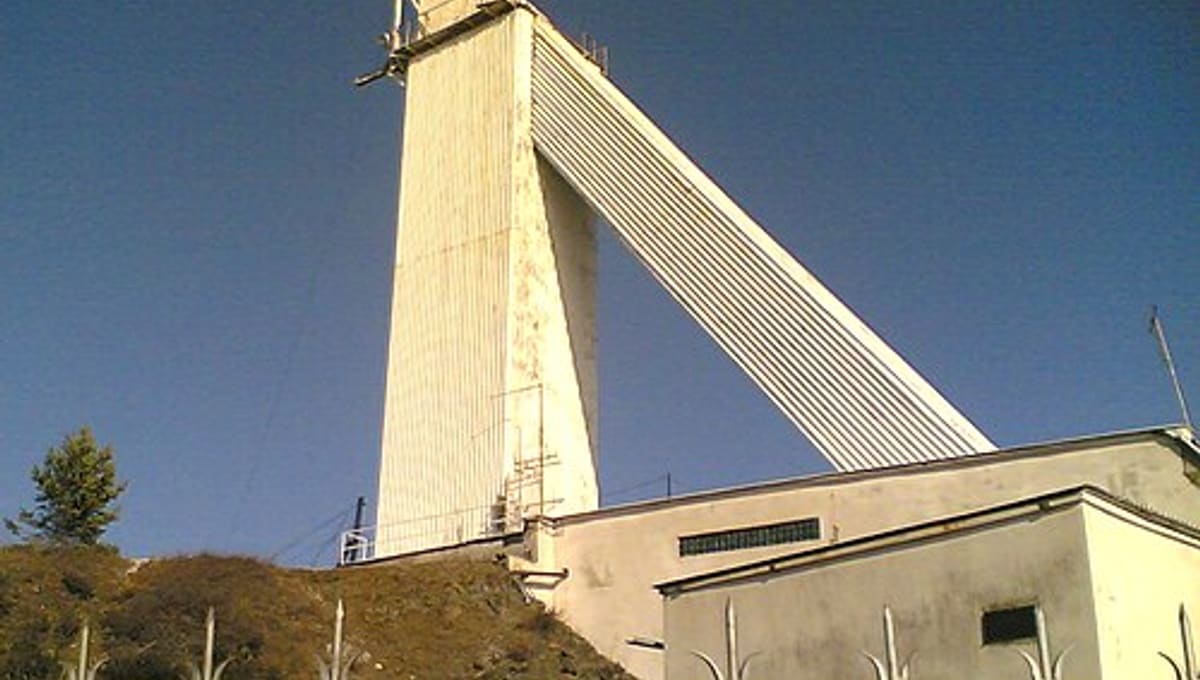
Image: Wikimedia Commons
Baikal Astrophysical Observatory sits on a hilltop above Listvyanka, Siberia, with panoramic views over Lake Baikal and the source of the Angara River, about 70 km from Irkutsk, Russia.
About Baikal Astrophysical Observatory
The observatory stands at 645 metres elevation and is dedicated primarily to solar research, studying solar flares and the dynamics of large-scale solar activity. The site also hosts the oldest magnetic observatory in Siberia and is linked to the Baikal-GVD deep-underwater neutrino telescope project, which uses Lake Baikal itself for astroparticle physics research.
History
The observatory was founded in 1980, the same year its main instrument, the Baikal Solar Vacuum Telescope, was built.
Telescopes & research
The Baikal Solar Vacuum Telescope (BSVT) is the largest solar vacuum telescope in Russia and across Eurasia, standing roughly 25 metres tall — about nine storeys — and built as a chromospheric-type instrument for registering solar flares and large-scale structures in solar activity.
Location & getting there
The observatory occupies a hilltop site near Listvyanka on the shore of Lake Baikal, Siberia. Use the map and directions on this page to plan your route from Irkutsk.
Visiting Baikal Astrophysical Observatory
The observatory is available for tours and is reachable via Listvyanka. Check current schedules and access arrangements before travelling, especially given the site's remote setting.
See your named star from here
From this hilltop above Lake Baikal, a clear night sky stretches over one of the world's great lakes. Name a star and check the catalogue for its exact coordinates to look for it here.
Opening hours and public-visit programs vary by season. Check Google Maps for current times before you travel.
Institutional and reference sources used to verify this guide.
Satellite imagery: Esri, Maxar, Earthstar Geographics

 275 kmSolar
 469 km