
Sudbury Neutrino Observatory


Image: Wikimedia Commons
More than two kilometres beneath Ontario's Creighton Mine, the Sudbury Neutrino Observatory once tracked solar neutrinos, work that would go on to earn its director a share of the Nobel Prize in Physics.
About the Sudbury Neutrino Observatory
The Sudbury Neutrino Observatory (SNO) was a neutrino detector built 2,100 metres underground in Vale's Creighton Mine near Sudbury, Ontario, Canada. Its detector used a large tank of heavy water to catch the faint interactions of solar neutrinos, particles that pass through ordinary matter almost undetected.
History
SNO was switched on in May 1999 and ran until 28 November 2006, with its collaboration continuing to analyse the data for several years afterward. The experiment's director, Art McDonald, was co-awarded the Nobel Prize in Physics in 2015 for its contribution to discovering neutrino oscillation. Since then, the underground site has been expanded into the permanent SNOLAB facility, hosting multiple experiments, and the original SNO equipment has been refurbished for use in the SNO+ experiment.
Location & getting there
The observatory is located near Sudbury, Ontario, in a deep active mine, making it one of the least accessible observatories anywhere: its detector sits 2,100 metres below the surface.
Visiting the Sudbury Neutrino Observatory
As an active underground research facility, SNOLAB isn't open to casual visitors; access is tightly controlled for safety and scientific reasons. Anyone interested in current tours or outreach programmes should check SNOLAB's website directly.
See your named star from here
SNO was built to catch particles born inside the Sun itself, a reminder of just how much precision astronomy can bring to a single point in the sky. A star named through Star Register comes with that same kind of precision: exact coordinates you can find with any telescope. Name a star, or browse the catalogue of stars named so far.
Opening hours and public-visit programs vary by season. Check the official website and Google Maps for current times before you travel.
Institutional and reference sources used to verify this guide.
Satellite imagery: Esri, Maxar, Earthstar Geographics

 53 km
53 kmKillarney Provincial Park Observatory
Observatory in Killarney Provincial Park, Ontario, Canada

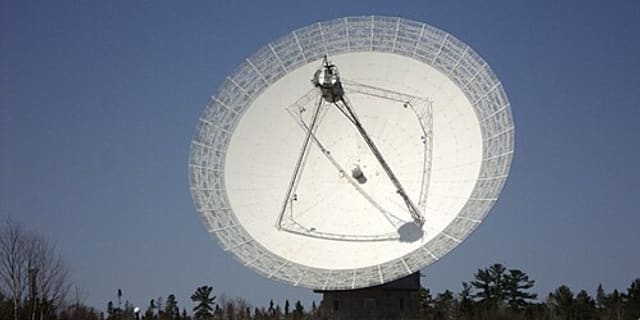 245 kmRadio
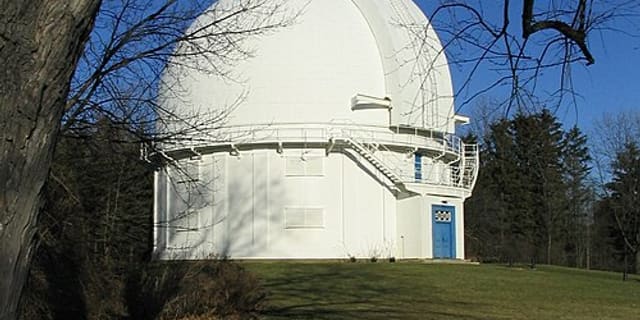 320 km