
Helium and Lead Observatory
Satellite imagery: Esri, Maxar, Earthstar Geographics
Deep underground at SNOLab in Sudbury, Canada, the Helium and Lead Observatory, known as HALO, listens for the neutrino burst that would signal a supernova exploding somewhere in our galaxy.
About the Helium and Lead Observatory
HALO is a neutrino detector rather than a conventional optical telescope. It forms part of the international Supernova Early Warning System (SNEWS), a network of detectors designed to give astronomers advance notice when a massive star explodes, so telescopes worldwide can turn to watch the event unfold.
History
Engineering operations at HALO began on 8 May 2012, and the detector joined SNEWS operationally in October 2015. It was built as a low-cost, low-maintenance instrument, in part by repurposing existing equipment: 76 metric tonnes of lead from a decommissioned cosmic ray detector, combined with 128 helium-3 neutron detectors salvaged from the Sudbury Neutrino Observatory.
Telescopes & research
Instead of collecting light, HALO detects neutrinos, the ghostly particles that stream out from a collapsing star's core in the seconds before its visible explosion. By catching this early neutrino burst, HALO and its partner detectors can alert astronomers before the supernova becomes visible in ordinary telescopes.
Location & getting there
HALO sits within SNOLab, a underground science laboratory near Sudbury, Ontario, Canada, chosen for its depth, which shields sensitive detectors from cosmic ray interference at the surface.
Visiting the Helium and Lead Observatory
SNOLab is a working research facility built deep underground, not a general tourist site, so public access is limited. Anyone interested in visiting should check SNOLab's official channels for current tour or outreach options.
See your named star from here
HALO exists to catch the earliest signal of a star's dramatic end, a reminder that every star, including the one you've named, has its own life story written in light and, eventually, in particles like these. Find your star's exact position in our star catalogue.
Opening hours and public-visit programs vary by season. Check Google Maps for current times before you travel.
Institutional and reference sources used to verify this guide.
Satellite imagery: Esri, Maxar, Earthstar Geographics

 54 km
54 kmKillarney Provincial Park Observatory
Observatory in Killarney Provincial Park, Ontario, Canada

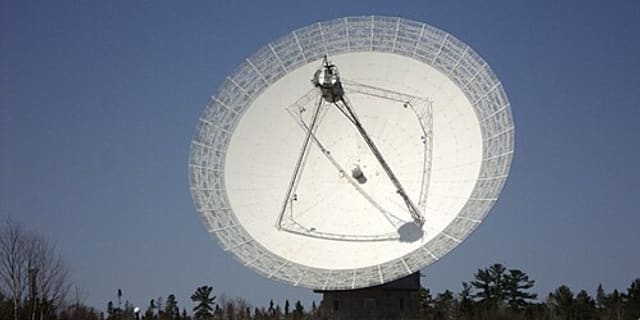 246 kmRadio
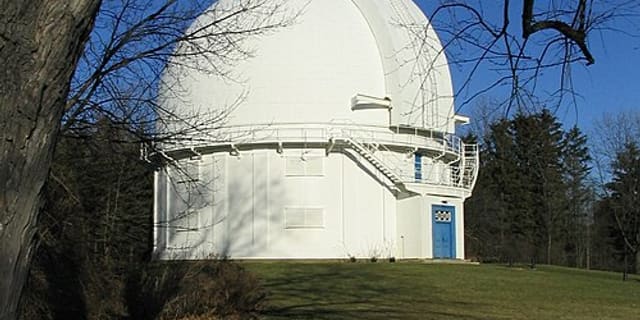 321 km
 328 kmResearch