
Santa Pola Observatory
Satellite imagery: Esri, Maxar, Earthstar Geographics
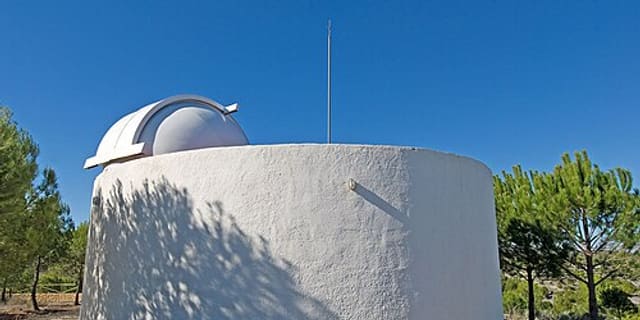
Santa Pola Observatory, in Spain's Valencian Community, is best known not for stargazing but for its network of birdwatching hides across the town's salt pans.
About Santa Pola Observatory
Rather than a traditional astronomical site, Santa Pola Observatory refers to the Salt Pans Interpretation Centre and its observation points, including the Torre de Tamarit, Pinet, and El Saladar hides, built for watching the wetland's birdlife rather than the night sky.
Location & getting there
The observation points sit around Santa Pola's salt pans on Spain's Costa Blanca, in the Valencian Community. The main tower offers panoramic views from around 20 metres up, looking out over the flat, open wetland landscape.
Visiting Santa Pola Observatory
The hides are used for ornithological observation, with the best birdwatching from November to March, when wintering species arrive, and April to June, during the breeding season. Look out for marbled ducks, greater flamingos, pied avocets and black-winged stilts. Check locally for current access and opening times before visiting.
See your named star from here
The same open, flat wetland horizon that makes Santa Pola good for birdwatching by day can also make for clear stargazing after dark, a fitting spot to look for a star named through Star Register. Browse the star catalogue to find yours.
Opening hours and public-visit programs vary by season. Check Google Maps for current times before you travel.
Institutional and reference sources used to verify this guide.
Satellite imagery: Esri, Maxar, Earthstar Geographics

 136 km