
Oliver Observing Station
Satellite imagery: Esri, Maxar, Earthstar Geographics
Atop the 5,000-foot summit of Chews Ridge in California's Santa Lucia Mountains, Oliver Observing Station is one of the more unusual professional observatories in the United States, named after engineer and astronomer Barnard M. Oliver.
About Oliver Observing Station
The station is owned and operated by the Monterey Institute for Research in Astronomy (MIRA), founded in 1972 as the first private professional observatory to open in the United States in the 20th century. Oliver himself donated a quarter of the construction costs. Rather than a conventional dome with a slit, the observatory uses a distinctive sliding-roof design.
History
Ground was broken in 1982 and the station became operational in 1984. Its main telescope, a 36-inch Cassegrain reflector, was originally designed at Princeton University for NASA high-altitude balloon flights and served as a precursor to the Hubble Space Telescope programme before finding a permanent home here.
Location & getting there
Oliver Observing Station sits in the Los Padres National Forest, roughly 20 miles east and south of Carmel Valley, California, atop Chews Ridge at around 5,000 feet elevation, in the Santa Lucia Mountains of the western United States.
Visiting Oliver Observing Station
As a working research site operated by MIRA, access is generally organised through the institute rather than casual drop-in visits. Check MIRA's own channels for any public programmes before planning a trip up Chews Ridge.
See your named star from here
The same 36-inch reflector that once chased NASA balloon research can, in principle, be aimed at the coordinates of any named star. Name a star of your own, or browse the star catalogue to see what others have named.
Opening hours and public-visit programs vary by season. Check Google Maps for current times before you travel.
Institutional and reference sources used to verify this guide.
Satellite imagery: Esri, Maxar, Earthstar Geographics

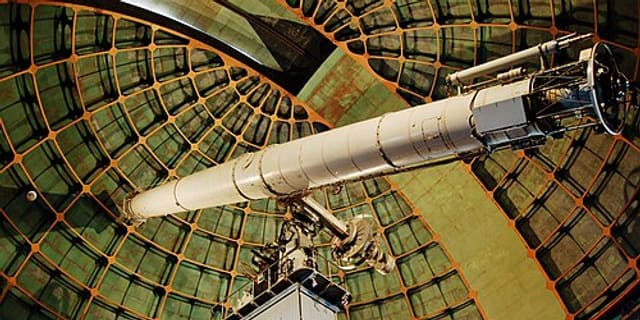 117 kmResearch
Nora and Hashem Naraghi Hall of Science
Science building located on the California State University, Stanislaus campus

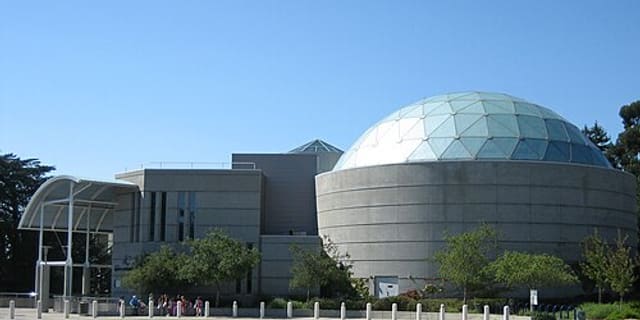 170 kmPlanetarium
Chabot Space and Science Center
science museum, planetarium and observatory in the United States