
Leuschner Observatory
Satellite imagery: Esri, Maxar, Earthstar Geographics
Leuschner Observatory is a teaching and research facility jointly operated by the University of California, Berkeley and San Francisco State University, located in Lafayette, California.
About Leuschner Observatory
Leuschner serves as a hands-on training site for astronomy students at both partner universities, combining optical and radio instruments used in undergraduate and graduate coursework.
History
The observatory began in 1886 as the Students' Observatory on the Berkeley campus, built to give civil engineering and astronomy students practical training. It was renamed in 1951 to honour longtime director Armin Otto Leuschner, who led it from 1898 to 1938. In 1965 the observatory relocated to Lafayette, roughly 10 miles east of Berkeley, and San Francisco State University's physics and astronomy department joined as a partner in 2012.
Telescopes & research
Leuschner currently operates two main instruments: a 30-inch optical telescope fitted with a CCD camera for visible-light imaging and an infrared detector, and a 4.3-metre radio dish used in an undergraduate radio astronomy course. Historically, the site has supported real research, including early-1900s work on the orbits of small Solar System bodies and supernova surveys carried out in the 1980s and 1990s.
Location & getting there
The observatory sits in Lafayette, California, in the East Bay hills east of Berkeley, far enough from campus for darker skies while remaining an easy drive for students and visitors.
Visiting Leuschner Observatory
Leuschner primarily serves UC Berkeley and San Francisco State University students and researchers. If you'd like to visit or attend a public event, check the observatory's official website for current access and schedule information before travelling.
See your named star from here
With its 30-inch research telescope, Leuschner Observatory has the equipment needed to point at the precise coordinates of any star, including one you've named. Explore our star-naming packages or browse the star catalogue to find the star that's yours.
Opening hours and public-visit programs vary by season. Check Google Maps for current times before you travel.
Institutional and reference sources used to verify this guide.
Satellite imagery: Esri, Maxar, Earthstar Geographics

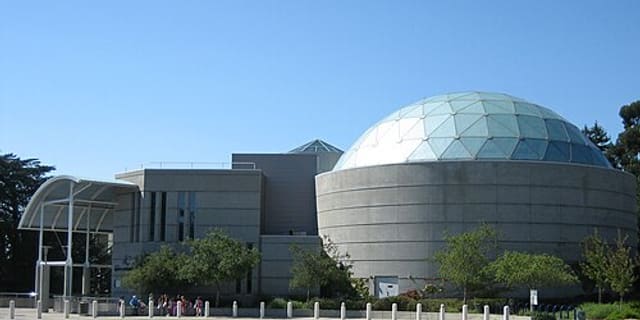 11 kmPlanetarium
Chabot Space and Science Center
science museum, planetarium and observatory in the United States

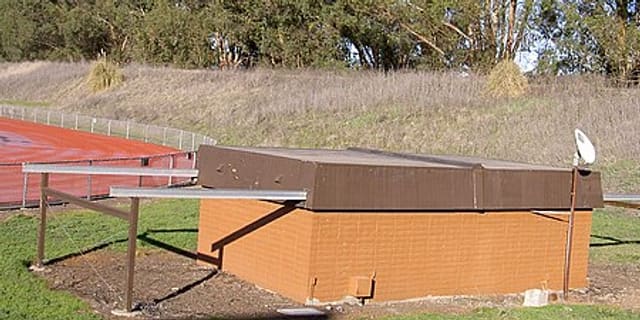 65 kmResearch
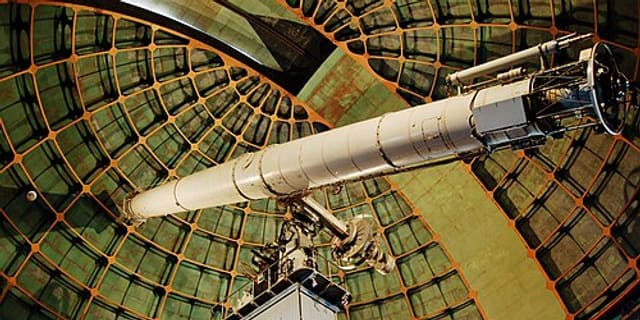 78 kmResearch
Nora and Hashem Naraghi Hall of Science
Science building located on the California State University, Stanislaus campus