
Lick Observatory

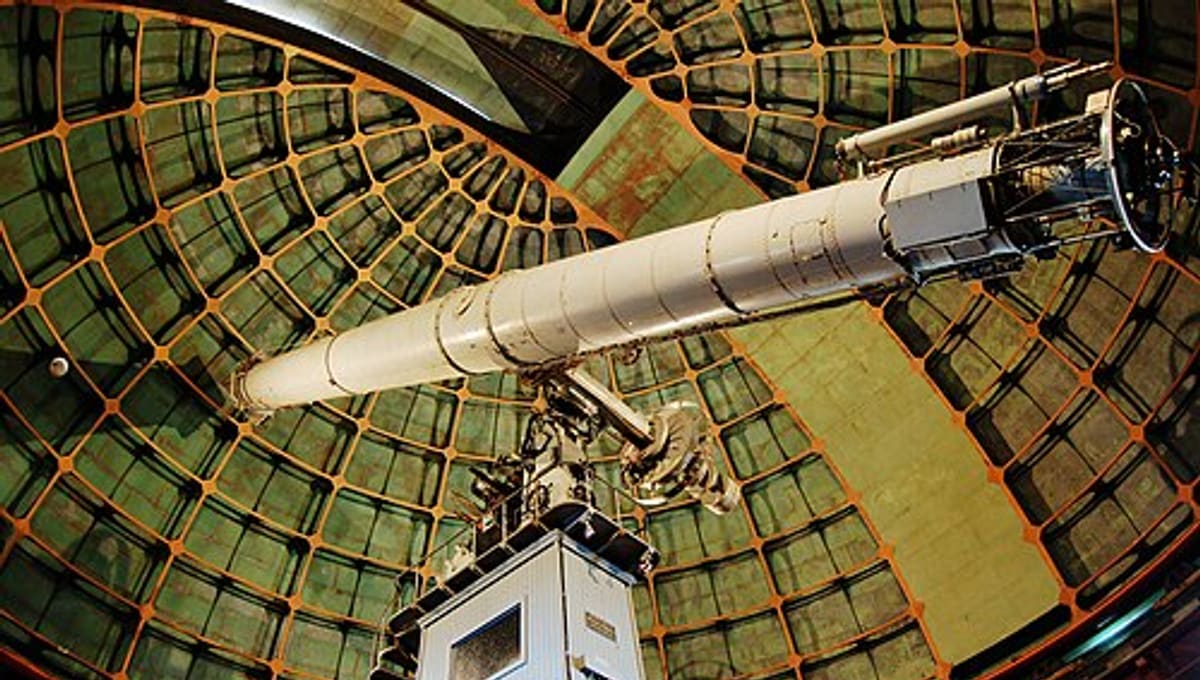
Image: Wikimedia Commons
Lick Observatory sits atop Mount Hamilton in California's Diablo Range, east of San Jose, the world's first permanently staffed mountain-top observatory.
About Lick Observatory
Lick Observatory stands at an elevation of 1,283 metres on the summit of Mount Hamilton, owned and operated by the University of California, with its scientific staff based at the University of California, Santa Cruz.
History
The observatory was funded by a $700,000 bequest from businessman James Lick, after whom it is named. Construction ran from 1876 to 1887, and the site became operational in 1888 when it was transferred to the University of California, making it the first permanently occupied mountain-top observatory in the world.
Telescopes & research
Lick's telescopes have a long discovery record: in 1892, astronomers here found Amalthea, Jupiter's fifth moon, the first new moon of Jupiter identified since Galileo's observations more than two centuries earlier. The observatory went on to discover the Jovian moons Elara and Himalia in 1905 and Sinope in 1914, and its instruments have since contributed to extrasolar planet research, spectroscopy of active galaxies, and further measurements of Jupiter's moons.
Location & getting there
Mount Hamilton rises in the Diablo Range east of San Jose, California, with sweeping views over the Santa Clara Valley, the elevation and distance from city lights were exactly what drew astronomers to the site in the 19th century.
Visiting Lick Observatory
Lick Observatory welcomes public visitors; check the observatory's official website for current opening times, tours, and any public viewing evenings before you make the drive up the mountain.
See your named star from here
A working research observatory with more than a century of discoveries, Lick is an inspiring place to try to spot a star you've named. Name a star of your own or search the star catalogue for its coordinates.
Opening hours and public-visit programs vary by season. Check the official website and Google Maps for current times before you travel.
Institutional and reference sources used to verify this guide.
Satellite imagery: Esri, Maxar, Earthstar Geographics

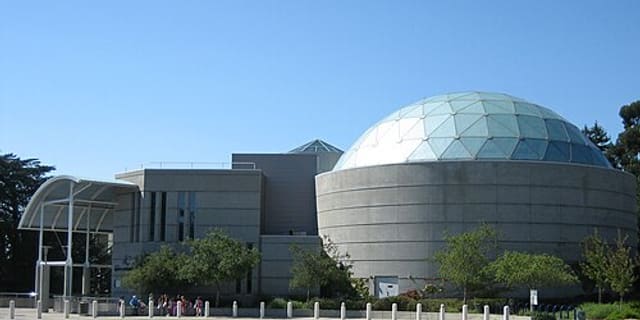 71 kmPlanetarium
Chabot Space and Science Center
science museum, planetarium and observatory in the United States
Nora and Hashem Naraghi Hall of Science
Science building located on the California State University, Stanislaus campus