
Old University of Alabama Observatory

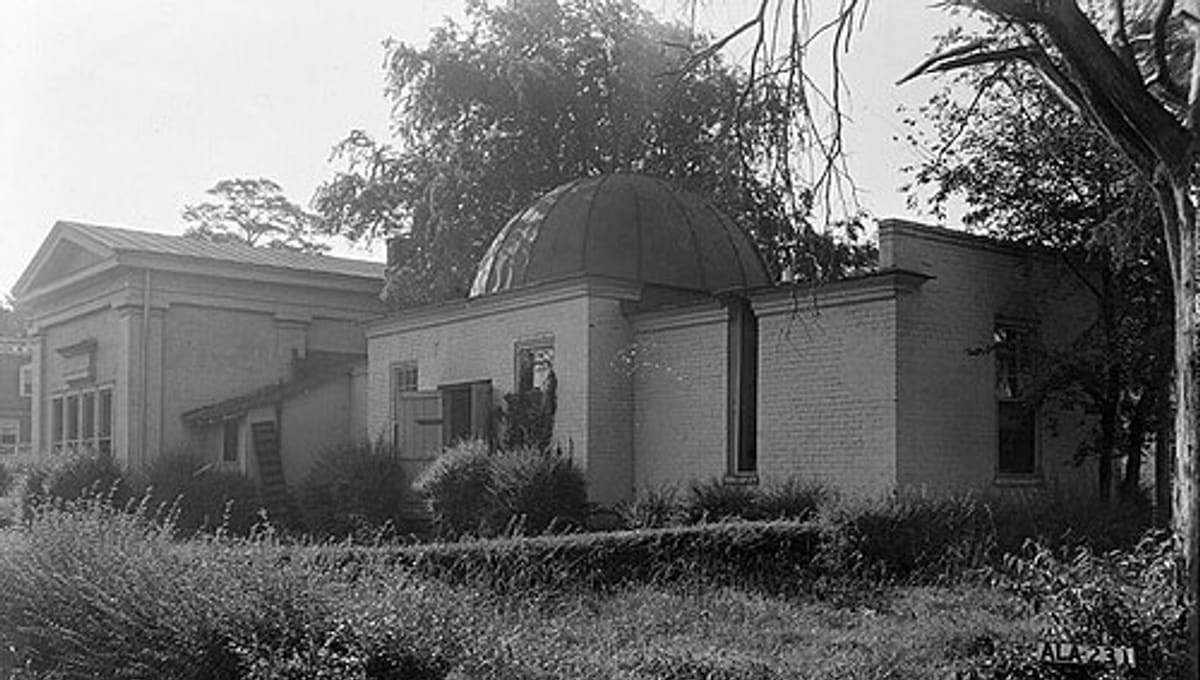
Image: Wikimedia Commons
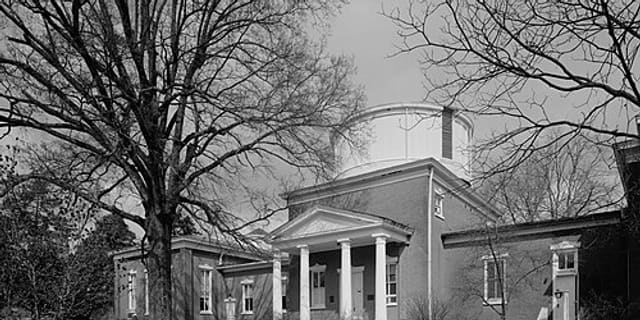
Now known as Frederick R. Maxwell Hall, the Old University of Alabama Observatory in Tuscaloosa, Alabama, was one of the first purpose-built astronomical observatories in the American South.
About Old University of Alabama Observatory
Built for the University of Alabama, the observatory is a Greek Revival building that once housed serious research astronomy. Though it hasn't functioned as a working observatory for decades, it has been carefully restored and preserved as one of the university's most historic structures.
History
Plans for the observatory were presented in 1838 by astronomer Frederick A. P. Barnard, and the building was completed in 1844, making it the first astronomical observatory in the Southeast and only the sixth built in the United States. A Troughton & Simms 8-inch refracting telescope, a serious instrument for its day, was mounted in 1849. The building survived the Civil War largely intact: when Union General John Croxton's forces raided the campus on April 4, 1865, it was one of only seven buildings left unburned. A new observatory with a new telescope was built in Gallalee Hall by 1950, and the original structure was renamed Frederick R. Maxwell Hall in 1985 in honour of consulting engineer Frederick R. Maxwell. It was added to the National Register of Historic Places on January 14, 1972.
Location & getting there
The building stands on the University of Alabama campus in Tuscaloosa, Alabama, in the southeastern United States.
Visiting Old University of Alabama Observatory
The historic building today houses the university's Collaborative Arts Research Initiative (CARI) rather than an active observatory. Check with the University of Alabama's astronomy department for current access details before visiting.
See your named star from here
A named star's coordinates work anywhere with a clear sky and a telescope, including a modern one aimed skyward from Tuscaloosa. Name a star for someone you love, or explore the star catalogue to see what's already been named.
Opening hours and public-visit programs vary by season. Check the official website and Google Maps for current times before you travel.
Institutional and reference sources used to verify this guide.
Satellite imagery: Esri, Maxar, Earthstar Geographics

 224 kmResearch
 224 km