
Barnard Observatory

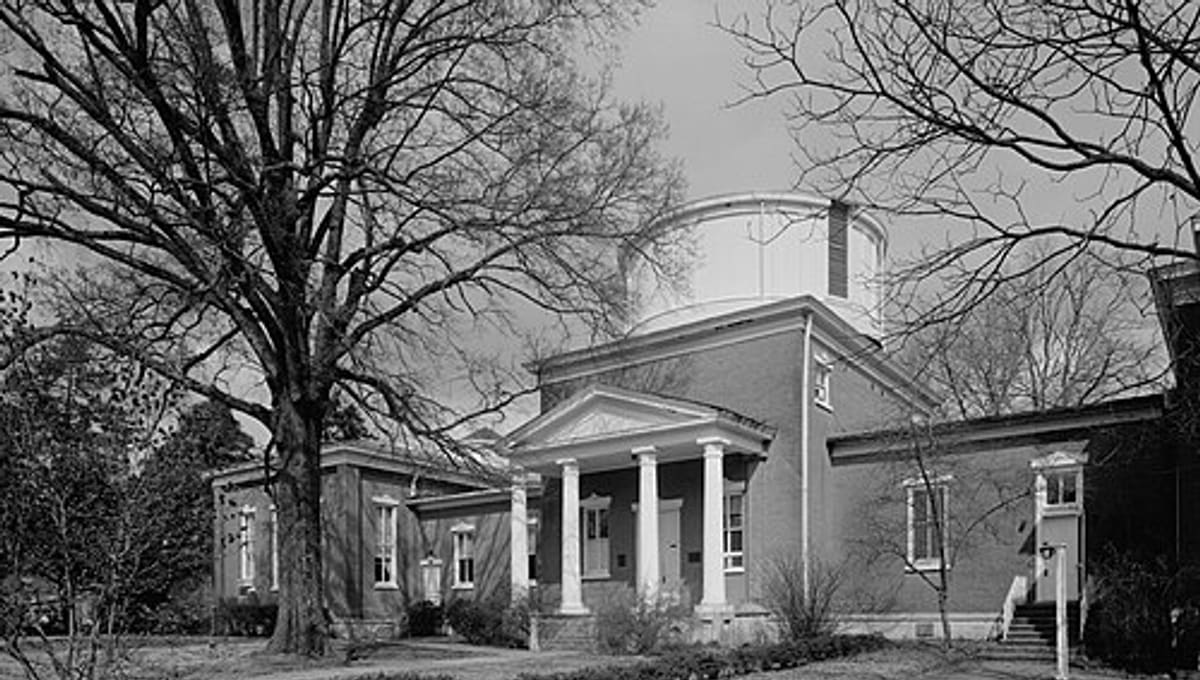
Image: Wikimedia Commons
On the University of Mississippi campus in Oxford, Barnard Observatory is a Greek Revival building with an unusual history: built to house a great telescope that never arrived. Today it serves an entirely different purpose from the one it was designed for.
About Barnard Observatory
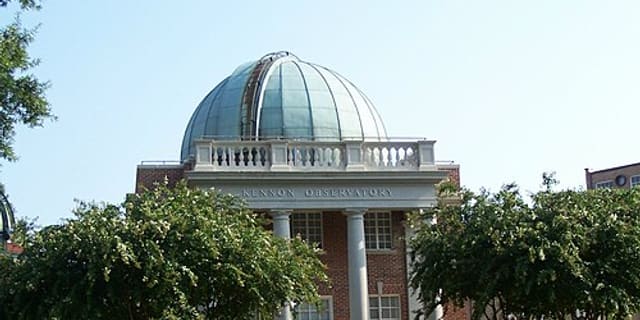
Barnard Observatory is a historic academic building modeled on the observatory at Pulkovo, Russia, and named for chancellor Frederick A. P. Barnard, who championed astronomy at the university. It now houses the Center for the Study of Southern Culture, while the university's working astronomy programme uses Kennon Observatory instead.
History
Completed in 1859, Barnard Observatory was meant to hold a telescope larger than those at Pulkovo and Harvard, but the outbreak of the Civil War halted the purchase, and the intended instrument went instead to Dearborn Observatory in Illinois. During the war the building served as a hospital for both Confederate and Union soldiers, and it later did duty as a classroom, a sorority house, a physics department, and a theatre stage. It was added to the National Register of Historic Places in 1979 and named a Mississippi Landmark in 1986.
Location & getting there
Barnard Observatory stands on University Circle at the University of Mississippi in Oxford, Mississippi, in the North America region, easily reached as part of a visit to the historic campus.
Visiting Barnard Observatory
As a campus academic building housing the Center for the Study of Southern Culture, Barnard Observatory can generally be viewed from outside and is part of the university's historic building tours; check the university's visitor information before planning a stop.
See your named star from here
Barnard Observatory's own telescope never arrived, but that doesn't stop you from tracking down a star of your own from the Ole Miss campus or anywhere else, since coordinates in the sky don't depend on location. Take a look at the naming packages or browse the star catalogue.
Opening hours and public-visit programs vary by season. Check Google Maps for current times before you travel.
Institutional and reference sources used to verify this guide.
Satellite imagery: Esri, Maxar, Earthstar Geographics

 under 1 km
 224 kmResearch
Old University of Alabama Observatory
observatory in Alabama, United States of America
River Ridge Observatory
astronomical observatory in Arkansas, United States