
Observatorio Ramón María Aller

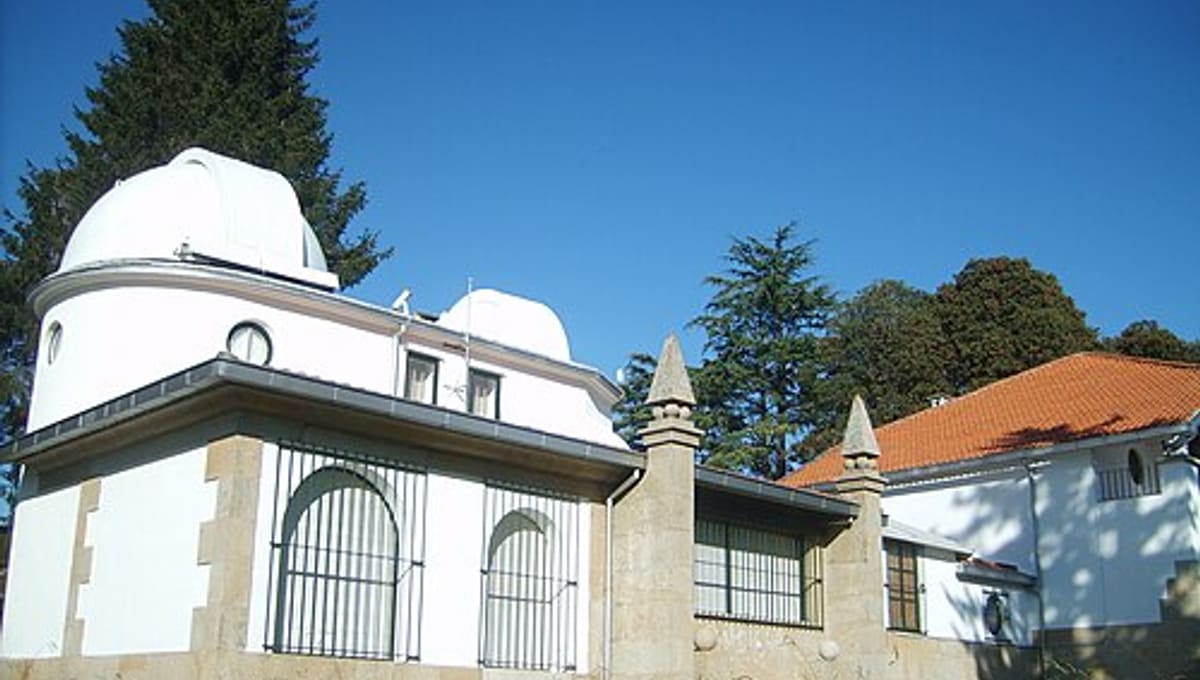
Image: Wikimedia Commons
At the University of Santiago de Compostela in Galicia, Spain, the Observatorio Ramón María Aller has specialised in the study of double and multiple stars since it was founded in 1943.
About Observatorio Ramón María Aller
The observatory takes its name from its founder, the priest and professor Ramón María Aller Ulloa, who established it as a continuation of the private observatory he had already run in Lalín. Aller was a pioneer in Spain in the study of double and multiple stars, and gained international recognition for measuring and observation instruments of his own design, later adopted by the Paris Observatory. It remains the only university observatory in Galicia with this specialist history in double-star research.
History
Founded in 1943 on what is now the South Campus of the University of Santiago de Compostela, the observatory has been in continuous operation for over eighty years, evolving from Aller's original instruments to a modern research facility.
Telescopes & research
Instruments on site include the refractor telescope donated by the founder, a speckle interferometry camera, and an occultation photometer, alongside a 62 cm aperture telescope added in 2003. The observatory also carries out meteorological research using both manual and automatic weather stations.
Location & getting there
The observatory is located on the South Campus of the University of Santiago de Compostela, in the Galicia region of northwestern Spain.
Visiting Observatorio Ramón María Aller
As a university research observatory, visiting arrangements are best confirmed with the university in advance of a trip; opening details are not fixed to a public daily schedule.
See your named star from here
Given its long history with double and multiple stars, this observatory's 62 cm telescope is well suited to seeking out a star named through Star Register. Check the catalogue for your star's coordinates before getting in touch about a visit.
Opening hours and public-visit programs vary by season. Check Google Maps for current times before you travel.
Institutional and reference sources used to verify this guide.
Satellite imagery: Esri, Maxar, Earthstar Geographics

 33 km
33 km
 43 km
43 km
 298 kmResearch