
Astronomical Observatory of Cantabria
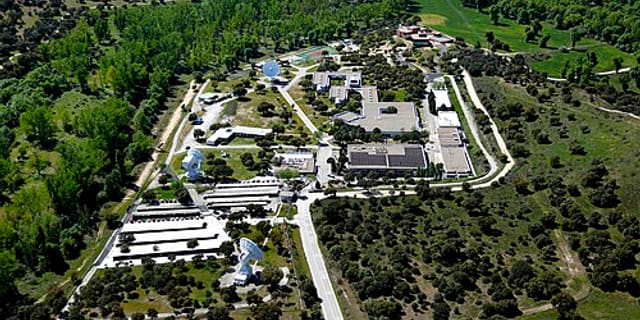
Satellite imagery: Esri, Maxar, Earthstar Geographics
High in the hills of Valderredible, at an elevation of over 1,000 metres, the Astronomical Observatory of Cantabria (OAC) combines scientific research with public stargazing in one of northern Spain's quieter corners.
About Astronomical Observatory of Cantabria
The OAC is run by the Environment Research Center (CIMA), a body of the Ministry of the Environment of the Government of Cantabria. Its work draws on partners including the University of Cantabria, the Institute of Physics of Cantabria, and the Astronomical Association of Cantabria, giving the site both a scientific and a community-outreach role.
History
The observatory was established in 2006, making it a relatively young addition to Spain's network of astronomical facilities, built from the outset to serve both research and public education.
Telescopes & research
The main instrument at the OAC is a 40 cm telescope, supported by several smaller telescopes used mainly to introduce visitors and students to observational astronomy.
Location & getting there
The observatory sits at 1,080 metres above sea level in Valderredible, a sparsely populated municipality in Cantabria, Spain, chosen for its dark skies and distance from city light pollution.
Visiting Astronomical Observatory of Cantabria
The OAC's smaller telescopes are intended for public and educational use, though the site does not publish fixed opening hours. Anyone planning a visit should call ahead on +34 676 965 003 or check the observatory's website for current tour availability.
See your named star from here
Because a star's exact coordinates can be handed to any telescope operator, the OAC's staff could in principle point their instruments toward the same right ascension and declination as a star named through our star-naming packages. Browse the star catalogue to find your star before a visit.
Name a star of your own
Whether or not you can visit Astronomical Observatory of Cantabria, you can dedicate a real, visible star through Star-Register. Name a star to receive its exact coordinates, or browse the star catalogue to look one up.
Opening hours and public-visit programs vary by season. Check Google Maps for current times before you travel.
Institutional and reference sources used to verify this guide.
Satellite imagery: Esri, Maxar, Earthstar Geographics

 191 kmMuseum
 259 kmResearch