
Norikura Solar Observatory

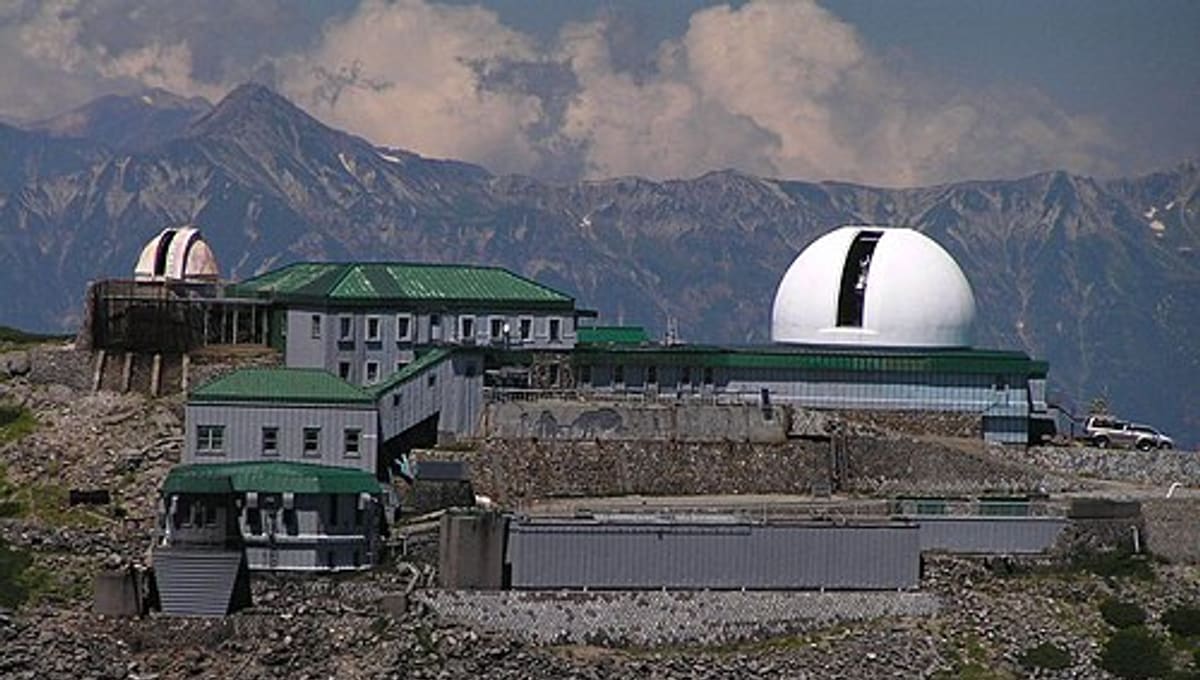
Image: Wikimedia Commons
Norikura Solar Observatory was built high on Mount Norikura in Japan's Northern Alps, where thin, still mountain air made it one of the country's most important sites for watching the Sun.
About Norikura Solar Observatory
Founded in 1949 as the first off-campus facility of the Tokyo Astronomical Observatory, University of Tokyo, the station sat at roughly 2,876 metres above sea level. Researchers used coronagraphs, including 10 cm and 25 cm instruments, to study the Sun's corona, prominences and flares, with the 25 cm coronagraph typically run each year from July to mid-October when conditions allowed.
History
The observatory later passed to the National Institutes of Natural Sciences and ran a joint-use program that hosted solar researchers from across Japan. Conditions on the mountain were extreme, with summer temperatures around 10°C and winter readings dropping below -20°C. Solar observations at the site were decommissioned in 2010.
Location & getting there
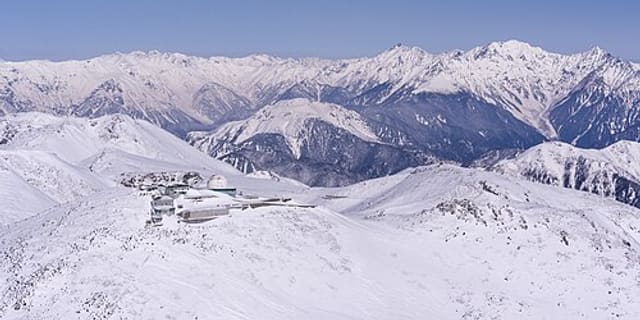
Mount Norikura rises in the Northern Japan Alps, one of the highest and most remote parts of the Japanese mainland, which is exactly why it was chosen for high-altitude solar research.
Visiting Norikura Solar Observatory
Since regular solar observing ended in 2010, the site is best treated as a piece of Japan's astronomical history rather than an active research station. Anyone planning a trip to Mount Norikura should check current access conditions for the mountain itself before travelling.
See your named star from here
Norikura's work was about the Sun rather than the night sky, but the same coordinate system professional observatories use to track their targets is what Star Register uses to record every named star. Explore the packages at /#packages or browse named stars in the catalogue.
Opening hours and public-visit programs vary by season. Check the official website and Google Maps for current times before you travel.
Institutional and reference sources used to verify this guide.
Satellite imagery: Esri, Maxar, Earthstar Geographics

 under 1 km
 40 km
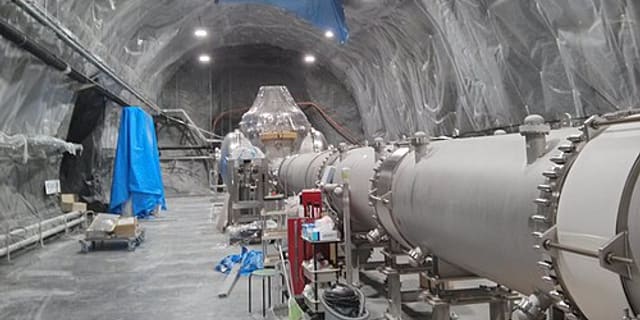
40 kmKamioka Liquid Scintillator Antineutrino Detector
neutrino oscillation experiment in Japan