
Mount Graham International Observatory

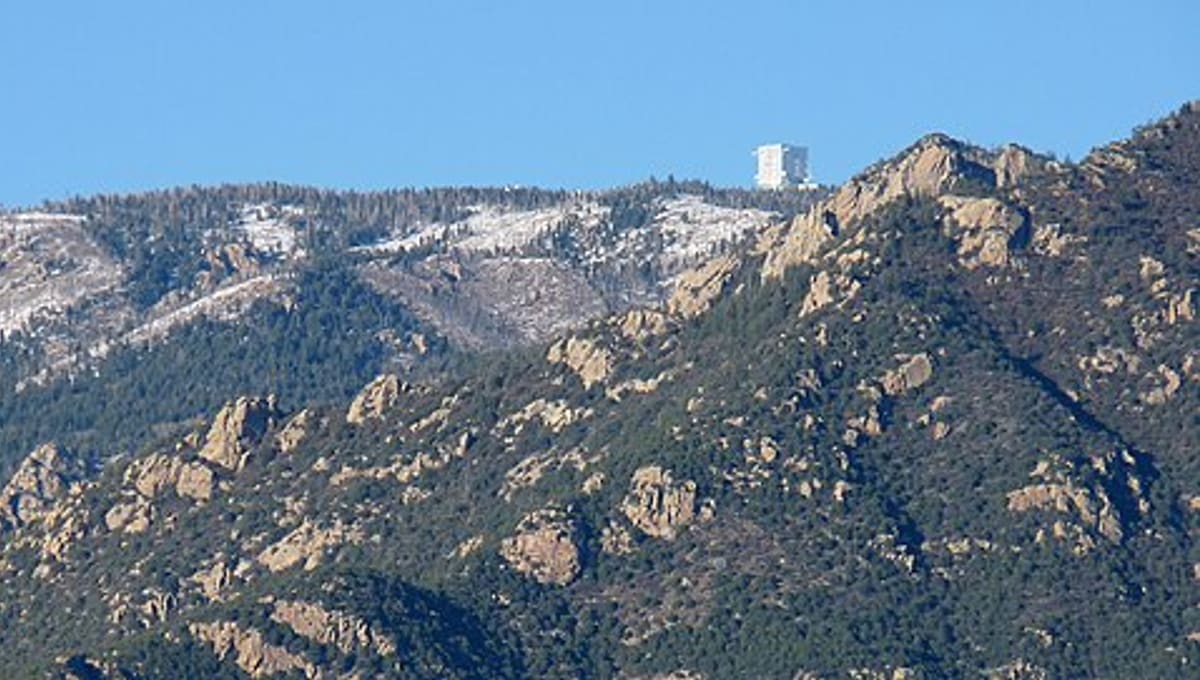
Image: Wikimedia Commons
Mount Graham International Observatory is a mountaintop research site in the Pinaleño Mountains of southeastern Arizona, home to some of the largest optical telescopes on Earth.
About Mount Graham International Observatory
Known as MGIO, the observatory is a division of Steward Observatory, the research arm of the University of Arizona's Department of Astronomy. It sits at 3,191 metres near Mount Graham and was first known as the Columbus Project during its early development.
History
Construction began in 1989. The Vatican Advanced Technology Telescope and the Heinrich Hertz Submillimeter Telescope both began operating in 1993, followed by the Large Binocular Telescope, whose twin mirrors started independent operations in 2004 and joint operations in 2008. The observatory's construction and continued presence has been controversial, opposed by environmentalists over the endemic Mount Graham red squirrel and by the San Carlos Apache Tribal Council, since the site lies on ground sacred to and traditionally used by Western Apache peoples.
Telescopes & research
The Large Binocular Telescope, one of the world's largest and most powerful optical telescopes, pairs two enormous mirrors to gather light and resolve detail that no single comparable telescope could match on its own. Alongside it, the Vatican Advanced Technology Telescope and the Heinrich Hertz Submillimeter Telescope continue their own research programs.
Location & getting there
MGIO sits at an elevation of 3,191 metres in the Pinaleño Mountains of southeastern Arizona, in the North America region of the United States.
Visiting Mount Graham International Observatory
Public tours of MGIO are run by Eastern Arizona College's Discovery Park Campus between mid-April and mid-October, weather permitting and subject to reservations. Book ahead through Discovery Park Campus before planning your trip.
See your named star from here
Instruments as precise as the Large Binocular Telescope work from exact sky coordinates, the same kind printed on a Star Register certificate. Name a star and check its position in the catalogue before booking a tour up the mountain.
Opening hours and public-visit programs vary by season. Check the official website and Google Maps for current times before you travel.
Institutional and reference sources used to verify this guide.
Satellite imagery: Esri, Maxar, Earthstar Geographics

 85 km
85 kmCatalina Station
astronomical observatory on Mount Bigelow in Arizona, U.S.

 85 km
85 kmMt. Bigelow Station 27" Telescope
telescope facility on Mount Bigelow in Arizona, U.S.

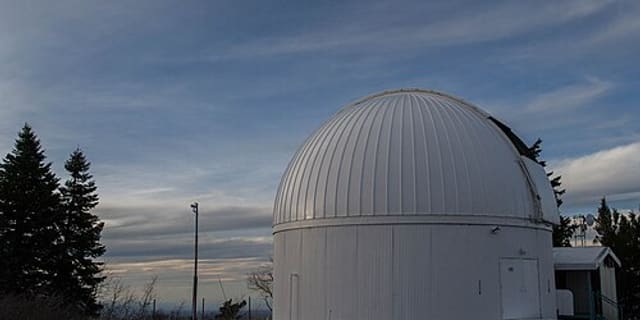 89 km
89 kmCatalina 40" Telescope
telescope facility in the Catalina Sky Survey, located on Mount Lemmon in Arizona, U.S.

 89 km
89 kmOWL-Net observatory, Mt. Lemmon
astronomical observatory in Arizona, United States