
Meanook Magnetic Observatory
Satellite imagery: Esri, Maxar, Earthstar Geographics
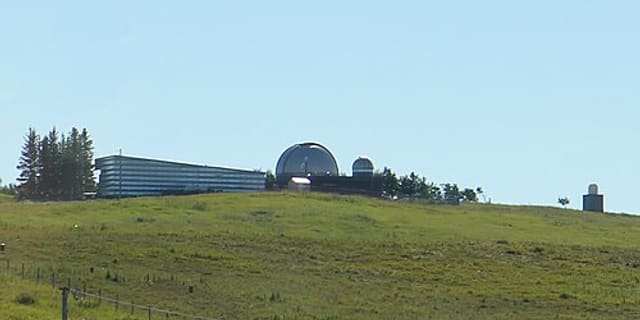
Meanook Magnetic Observatory is a long-running geomagnetic research station in northern Alberta, one of thirteen magnetic observatories operated across Canada.
About Meanook Magnetic Observatory
Rather than observing stars, Meanook records continuous data on the Earth's magnetic field as part of Natural Resources Canada's national network of magnetic observatories, contributing to scientific understanding of geomagnetic activity, including the auroral activity common at this latitude.
History
The observatory was established on July 1, 1916, on land acquired by Herbert E. Cook and his wife Mary, though the earliest data on record dates to 1944. It has operated continuously as part of Canada's geomagnetic monitoring effort ever since.
Location & getting there
The site is located about 136 km north of Edmonton, Alberta, and roughly 18 km south of Athabasca — a remote, sparsely populated region of the province known for clear, dark skies.
See your named star from here
Meanook's own instruments are built to measure magnetism rather than starlight, but the dark, remote skies of northern Alberta are well suited to stargazing. If you'd like to see a named star for yourself, look up its right ascension and declination in the star catalogue and share them with a telescope operator in the region.
Opening hours and public-visit programs vary by season. Check Google Maps for current times before you travel.
Institutional and reference sources used to verify this guide.
Satellite imagery: Esri, Maxar, Earthstar Geographics

 422 km
 887 km
Golden Ears Observatory
astronomical observatory in Maple Ridge, British Columbia, Canada