
Hurbanovo Magnetic Observatory
Satellite imagery: Esri, Maxar, Earthstar Geographics
In the town of Hurbanovo in southern Slovakia stands one of Europe's longest-running geomagnetic research stations, the Hurbanovo Magnetic Observatory, still recording the slow drift of Earth's magnetic field more than a century after it first opened.
About Hurbanovo Magnetic Observatory
The observatory is a national institution dedicated to monitoring variations in Earth's magnetic field. It was previously known under the historical names Ógyalla and Stará Ďala, reflecting the town's changing borders and administrations over the twentieth century.
History
The observatory was founded on 30 September 1900 by Dr. Miklós Konkoly-Thege. It has operated continuously through changes of country and name, building one of the longest magnetic data records in the region.
Instruments & research
Hurbanovo performs continuous recording of the geomagnetic field alongside absolute measurements taken twice a week. Its instrumentation includes a torsion photoelectric magnetometer (TPM), a three-axis fluxgate sensor (Magson), a DI-flux theodolite of the Lemi type, and a proton precession magnetometer (Elsec 820). In 1998 the observatory joined INTERMAGNET, the international network of magnetic observatories that shares standardised, real-time geomagnetic data.
Location & getting there
The observatory sits in Hurbanovo in southern Slovakia, part of the wider Nitra region. The site's coordinates place it close to the Danube lowlands, an area long associated with scientific observation in this part of Central Europe.
Visiting Hurbanovo Magnetic Observatory
Visits to the site are ticketed (entry carries a fee), and the observatory can be reached by phone for enquiries. For current opening times and how to arrange a visit, check the official website before travelling.
See your named star from here
Hurbanovo's work is geomagnetic rather than telescopic, so it isn't set up for public stargazing sessions. If you'd like to actually see a star you've named, name a star with Star Register first, then use the coordinates on your certificate to find it with a stargazing app or at a dedicated public observatory near you. Browse other named stars in our catalogue.
Opening hours and public-visit programs vary by season. Check Google Maps for current times before you travel.
Institutional and reference sources used to verify this guide.
Satellite imagery: Esri, Maxar, Earthstar Geographics

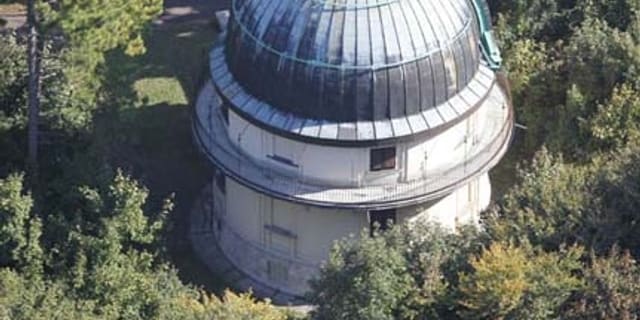 70 km
70 km
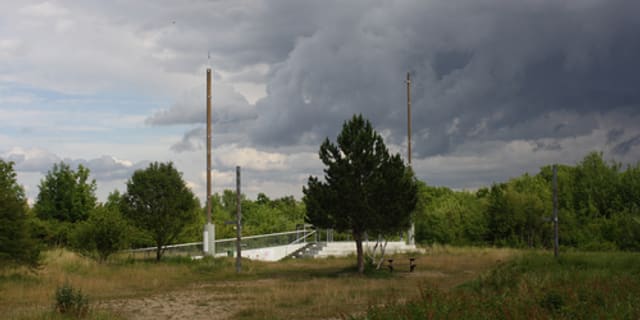 148 km
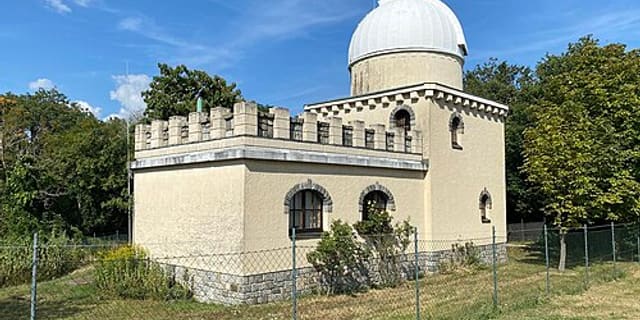 150 km