
Konkoly Observatory

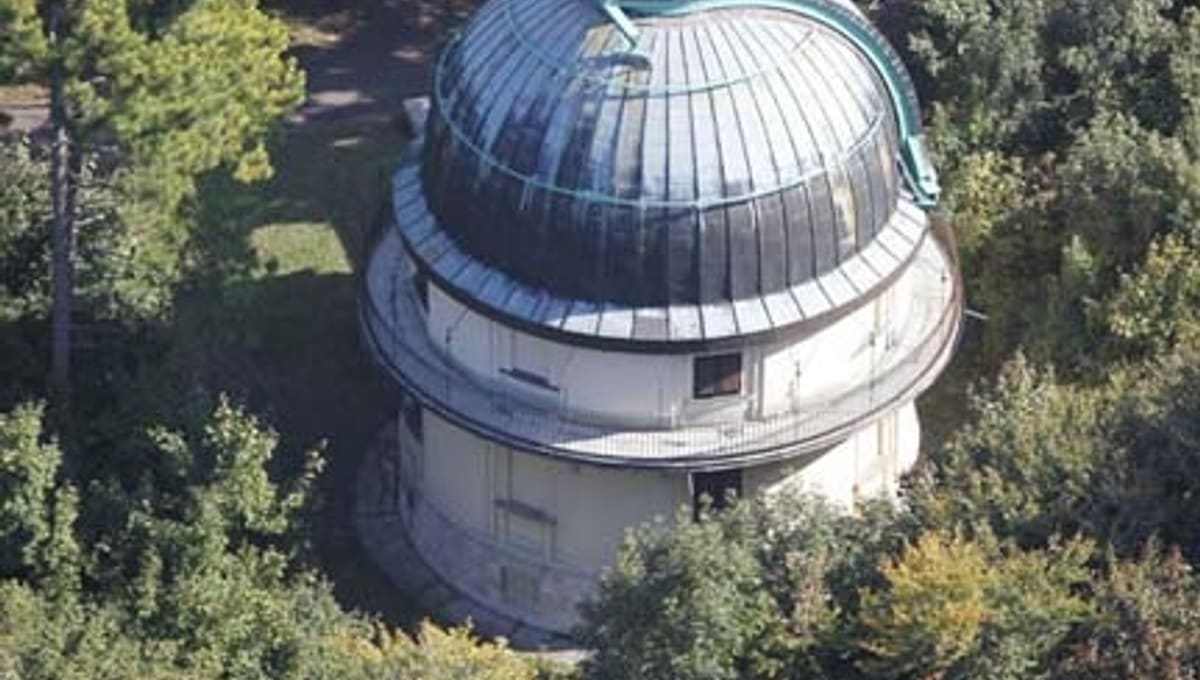
Image: Wikimedia Commons
In Budapest, Hungary, Konkoly Observatory has stood at the centre of the country's astronomical research since the 19th century.
About Konkoly Observatory
Officially the HUN-REN CSFK Konkoly Thege Miklos Csillagaszati Intezet, Konkoly Observatory is the largest astronomical research institute in Hungary and hosts the country's largest telescopes. It's part of the HUN-REN Research Centre for Astronomy and Earth Sciences and employs more than 60 researchers, a quarter of them international.
History
The observatory was founded in 1871 by Hungarian astronomer Miklos Konkoly-Thege as a private facility and was donated to the Hungarian state in 1899, becoming the country's national astronomical institute.
Telescopes & research
Researchers at Konkoly work across an unusually wide range of fields: stellar structure and evolution, solar and stellar activity, variable stars, star and planetary formation, exoplanets, cosmology, Solar System studies, and high-energy astrophysics including supernovae and gamma-ray bursts, among others. The observatory has hosted seven Lendulet grants and two ERC-funded projects, and publishes the Information Bulletin on Variable Stars on behalf of the International Astronomical Union. It also runs a demonstrator programme, in collaboration with Eotvos Lorand University and the University of Szeged, introducing undergraduate students to research-grade telescopes and instruments.
Location & getting there
Konkoly Observatory sits at roughly 474 metres elevation in Budapest, Hungary, on a hillside above the capital.
Visiting Konkoly Observatory
As a working research institute, Konkoly Observatory isn't a typical tourist attraction with fixed public hours; visitors interested in a tour should check the observatory's official website before travelling.
See your named star from here
Konkoly's astronomers spend their careers pointing telescopes at precise coordinates across the sky, exactly the kind of coordinates you get when you name a star with Star Register. Take a look at the star catalogue to find a star to call your own.
Opening hours and public-visit programs vary by season. Check the official website and Google Maps for current times before you travel.
Institutional and reference sources used to verify this guide.
Satellite imagery: Esri, Maxar, Earthstar Geographics

 115 km
 175 km