
Sterngarten

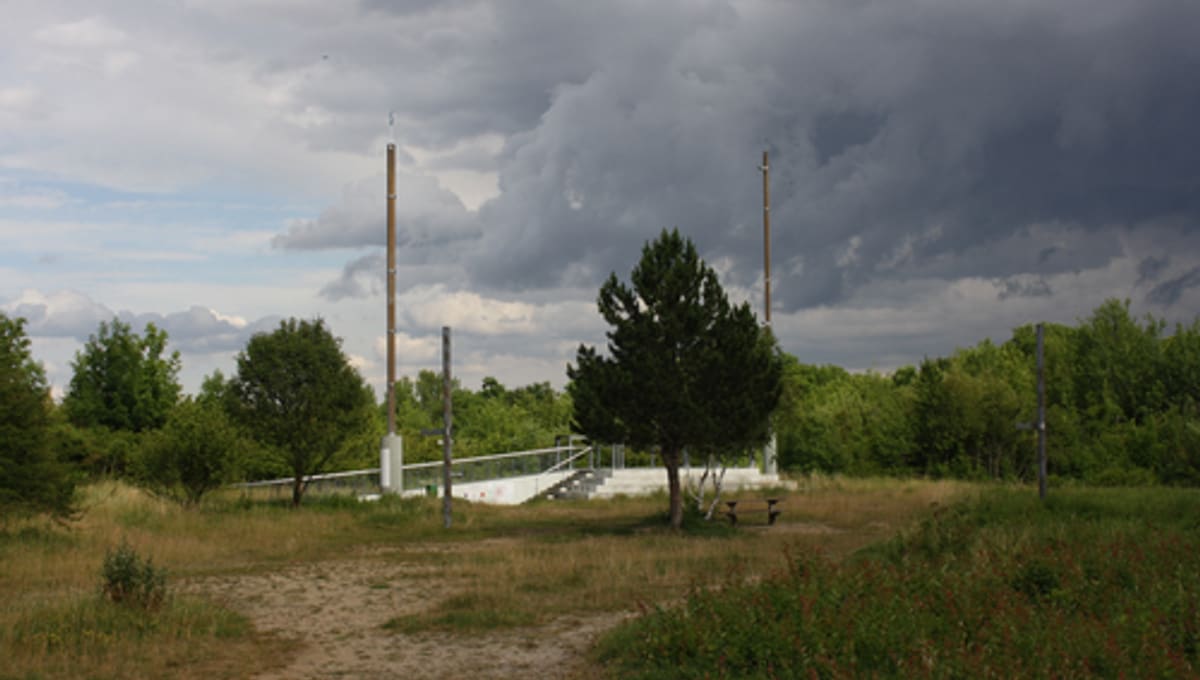
Image: Wikimedia Commons
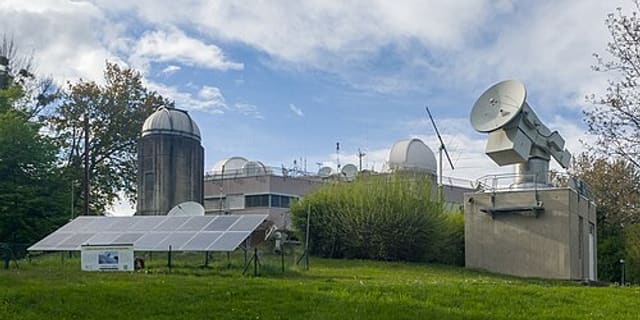
In the Mauer district on Vienna's southern edge, Sterngarten is not a telescope dome but an open-air "star garden" built to show the sky's motion with nothing more than sightlines and sunlight.
About Sterngarten
Sterngarten is an open-air planetarium covering almost a hectare of land in Vienna's 23rd district, Mauer. Rather than housing a telescope, it uses physical markers — masts, pillars and a walkable sundial — to demonstrate the sky's apparent rotation and the sun's changing path through the seasons. It is managed by the Austrian Astronomical Association (Österreichischer Astronomischer Verein).
History
The site was built between 1997 and 2000, initiated by Hermann Mucke building on earlier ideas from his predecessor Oswald Thomas. It is considered the first project of "horizon astronomy" in Europe.
Telescopes & research
Sterngarten doesn't rely on optical instruments: three 17-metre-high masts and six solar pillars mark sunrise and sunset positions through the year, while a slanted mast serves as the pointer for a large walkable sundial.
Location & getting there
The site sits at about 329 metres elevation in Mauer, in the south of Vienna, Austria — an accessible spot for a city that still offers a working demonstration of naked-eye sky-watching.
Visiting Sterngarten
Sterngarten is free and open to the public for observation, with room for around 50 people standing and 100 seated at organised events. Check the Austrian Astronomical Association's listings for guided sessions before you go.
See your named star from here
Sterngarten's masts and pillars exist to make the sky's motion visible to the naked eye — the same sky where a star named through Star Register can be found using its coordinates. Look up your star in the star catalogue and try tracking it from a spot built for exactly that kind of watching.
Opening hours and public-visit programs vary by season. Check Google Maps for current times before you travel.
Institutional and reference sources used to verify this guide.
Satellite imagery: Esri, Maxar, Earthstar Geographics

 17 km
17 km
 38 kmResearch
 120 kmPlanetarium
 133 km