
Haystack Observatory

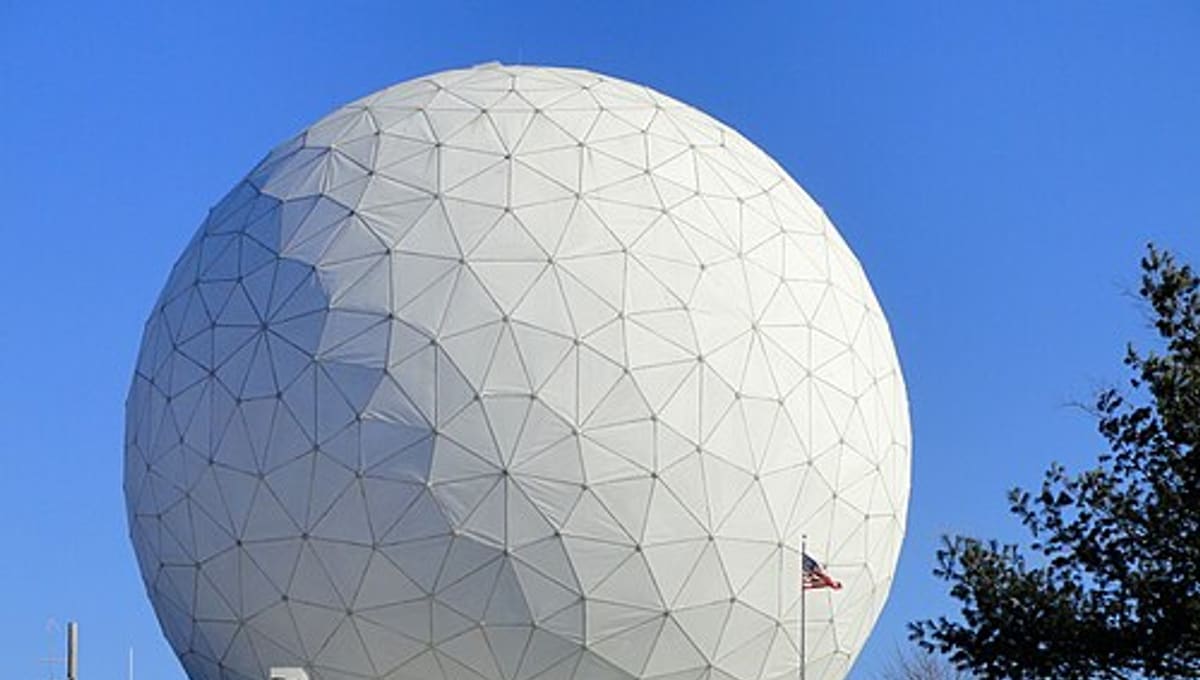
Image: Wikimedia Commons
Haystack Observatory sits in Westford, Massachusetts, about 45 kilometers northwest of Boston, and has operated as MIT's radio science and ionospheric research center since the 1960s.
About Haystack Observatory
Haystack Observatory is a multidisciplinary radio science center, ionospheric observatory, and astronomical microwave observatory owned by the Massachusetts Institute of Technology (MIT), sitting at an elevation of 131 meters.
History
Construction began in 1960 and the antenna began operating in 1964, originally under MIT's Lincoln Laboratory for the United States Air Force as the Haystack Microwave Research Facility. The site was transferred to MIT in 1970, which formed the Northeast Radio Observatory Corporation (NEROC) with other universities to run it as Haystack Observatory; as of January 2012 nine institutions participated in NEROC.
Telescopes & research
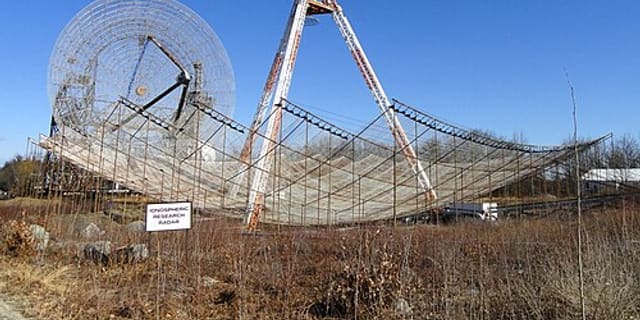
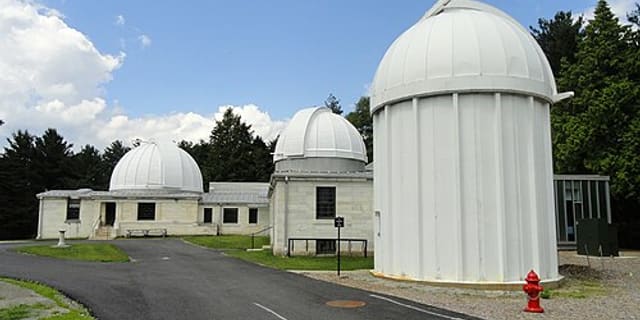
Beyond the main radio telescope, the site is also home to the Millstone Hill Geospace Facility, an atmospheric-sciences research center, and the George R. Wallace Astrophysical Observatory run by MIT's Department of Earth, Atmospheric, and Planetary Sciences. The Amateur Telescope Makers of Boston also keep a clubhouse on the property. Haystack Vallis on Mercury is named after the observatory.
Location & getting there
Haystack Observatory is located in Westford, Massachusetts, in the North America region, roughly 45 kilometers (28 miles) northwest of Boston - a convenient day trip from the city.
Visiting Haystack Observatory
For current tour information, opening hours, and any public event details, check the observatory's official website before travelling.
See your named star from here
Haystack Observatory's radio dishes track precise coordinates across the sky every day - the same kind of coordinates printed on a Star Register certificate. Name a star of your own, or browse the star catalogue to see what's already been named.
Opening hours and public-visit programs vary by season. Check the official website and Google Maps for current times before you travel.
Institutional and reference sources used to verify this guide.
Satellite imagery: Esri, Maxar, Earthstar Geographics

 under 1 km
 14 km
14 km
 26 kmResearch
 40 km
40 km