
Whitin Observatory

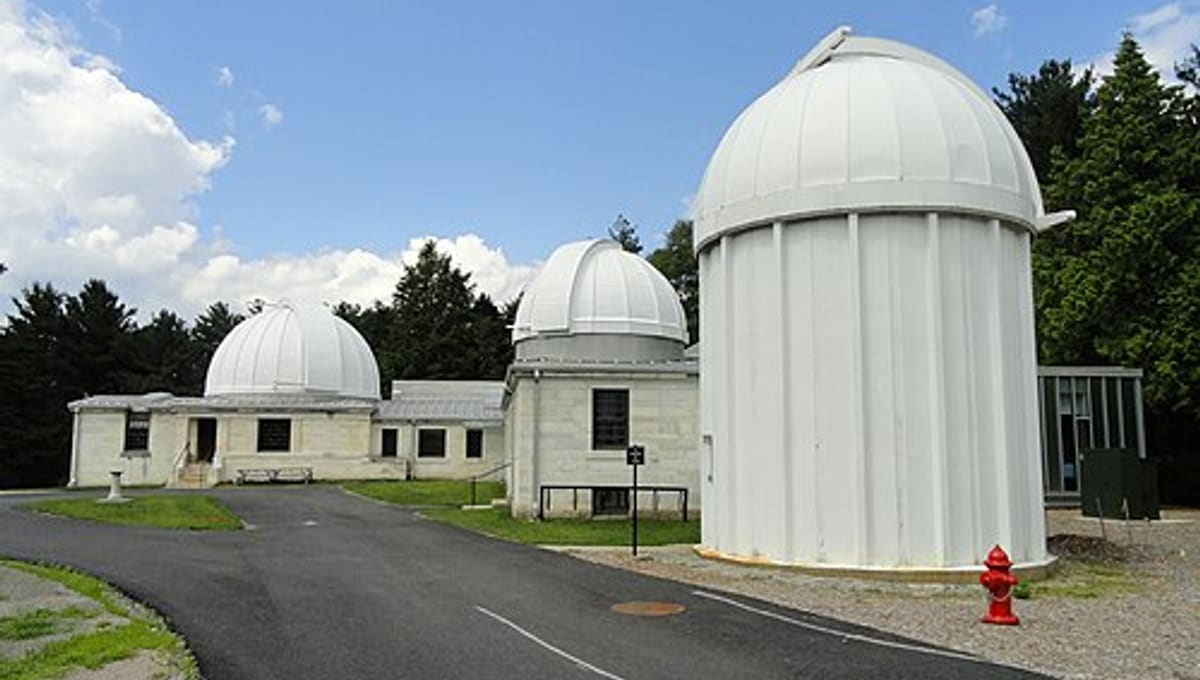
Image: Wikimedia Commons
Whitin Observatory has crowned the campus of Wellesley College in Massachusetts since 1900, giving generations of students their first look through a telescope at the wider universe.
About Whitin Observatory
Whitin Observatory is owned and operated by Wellesley College. It takes its name from trustee Sarah Elizabeth Whitin, who donated the funds to build it, and its first director was the astronomer Sarah Frances Whiting, founder of the college's astronomy department.
History
The observatory was built in 1900, with its formal opening on 8 October that year. It has been expanded several times since — with additions in 1906, 1967 and again in 2010 — reflecting more than a century of continuous use by the college's astronomy programme.
Telescopes & research
The observatory's instruments include a modern 0.7 m PlaneWave CDK700 reflector alongside historic telescopes: a 12-inch Fitz/Clark refractor, a 6-inch Alvan Clark refractor, and a Hale spectrohelioscope for observing the Sun. Several 8-inch Meade Schmidt-Cassegrain telescopes round out the collection, used for teaching and student research across the astronomy department.
Location & getting there
Whitin Observatory sits on the Wellesley College campus in Wellesley, Massachusetts, part of the Greater Boston area in the northeastern United States, and is a landmark on a campus otherwise known for its academic buildings and gardens.
Visiting Whitin Observatory
As a college facility primarily used for teaching and research, public access to Whitin Observatory is typically tied to Wellesley College's academic calendar and any scheduled public viewing events; check the college's website before planning a visit.
See your named star from here
With a working spectrohelioscope and multiple telescopes spanning more than a century of astronomy, Whitin Observatory is exactly the kind of place where a Star Register certificate comes to life — bring the right ascension and declination from your certificate and see if it can be pointed out. Browse the catalogue or visit our packages to name a star of your own.
Opening hours and public-visit programs vary by season. Check Google Maps for current times before you travel.
Institutional and reference sources used to verify this guide.
Satellite imagery: Esri, Maxar, Earthstar Geographics
Clay Center Observatory, Brookline
astronomical observatory in Massachusetts, United States

 18 kmResearch
 31 km
31 km
 39 km
39 km