
Harvard Observatory, Arequipa

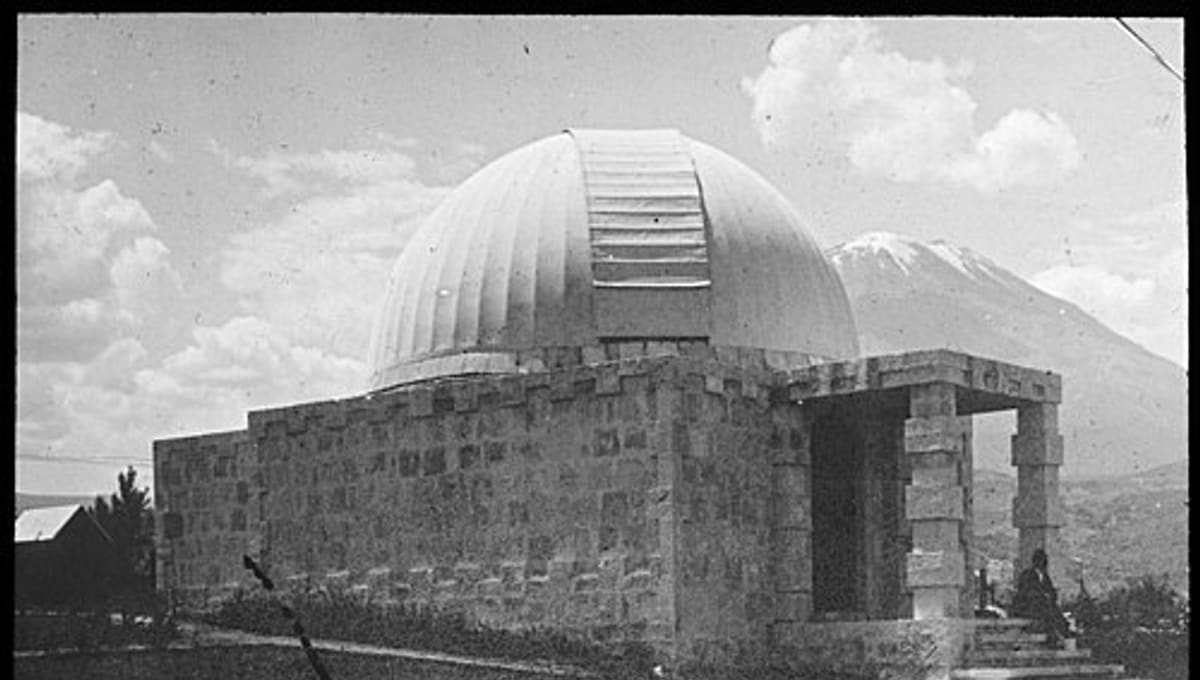
Image: Wikimedia Commons
Harvard Observatory in Arequipa, Peru, once known as Boyden Station, was Harvard College Observatory's outpost for surveying the southern sky, active for more than three decades from the Andean city.
About Harvard Observatory, Arequipa
The station was established in 1891, funded by a $250,000 gift from Uriah A. Boyden, whose bequest paid for its construction and operation. Its purpose was to carry out photographic surveys of stars visible only from the southern hemisphere, work that Harvard's Cambridge site could not do on its own. Astronomer Solon I. Bailey directed the station.
History
Boyden Station operated for 36 years before closing in 1927, driven out by consistently poor weather; its work was later carried on at a new site in Bloemfontein, South Africa. During its time in Arequipa, the station became central to one of astronomy's most important discoveries: analysing photographic plates from the site, Henrietta Leavitt identified the period-luminosity relation of Cepheid variable stars, a relationship that gave astronomers their first reliable way to measure distances to other galaxies.
Location & getting there
The former observatory site lies in Arequipa, in southern Peru, a region prized for its high altitude and clear Andean skies, the same qualities that drew Harvard astronomers there in the first place.
Visiting Harvard Observatory, Arequipa
The station's active research era ended in 1927, so it is primarily a site of historical interest today. Check locally in Arequipa for current access to the grounds before visiting.
See your named star from here
The same coordinate system that let Leavitt's colleagues catalogue southern stars is what points a telescope at any star named through Star Register today. Explore the naming packages or browse the star catalogue to find one to look for from the southern sky.
Opening hours and public-visit programs vary by season. Check Google Maps for current times before you travel.
Institutional and reference sources used to verify this guide.
Satellite imagery: Esri, Maxar, Earthstar Geographics

 924 km
 925 km