
Geophysical Observatory Collm

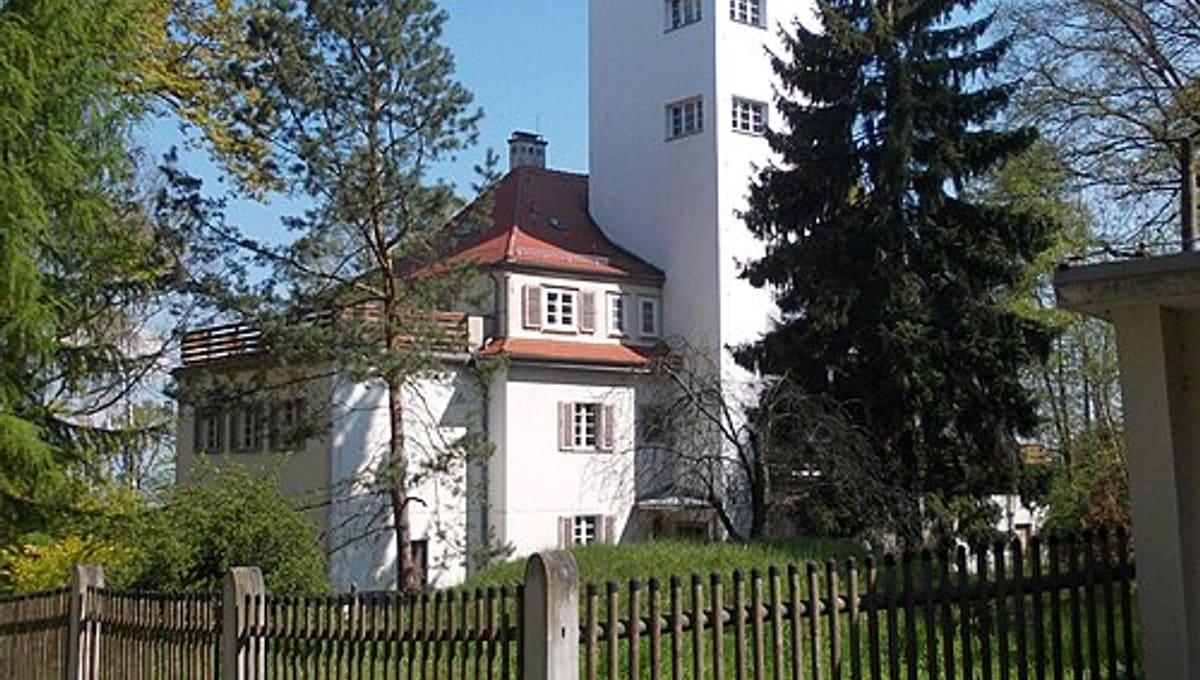
Image: Wikimedia Commons
Geophysical Observatory Collm stands on the Collmberg hill near Wermsdorf, Germany, where it has quietly recorded the Earth's tremors since 1932. It belongs to the University of Leipzig and remains one of Germany's longest-running geophysical monitoring stations.
About Geophysical Observatory Collm
The observatory is run by the University of Leipzig's Institute for Geophysics and Geology. It moved to the Collmberg from Leipzig in 1932 and was extended in 1935 with a dedicated seismographic station, giving it an unbroken record of seismic measurements ever since.
History
Founded in 1932, the observatory has been used for continuous scientific work throughout its history, including a mechanically coupled horizontal pendulum built in 1936–1937 to measure tiny changes in the Earth's inclination. During the Second World War it was even used to investigate reports of a nuclear test on 2 October 1944.
Telescopes & research
Rather than astronomical telescopes, Collm's instruments are geophysical: seismographs that have logged Earth movements continuously since 1932, and specialised pendulum equipment for tracking the planet's subtle tilt over time.
Location & getting there
The observatory sits on the wooded Collmberg hill near the town of Wermsdorf in Saxony, Germany, a quiet rural setting well suited to sensitive scientific instruments that need to be free from vibration and interference.
Visiting Geophysical Observatory Collm
As a university research facility rather than a public attraction, visiting details are not widely published. Anyone interested should check with the University of Leipzig or the observatory directly before planning a trip.
See your named star from here
Collm's instruments listen to the Earth, but the sky above the Collmberg is the same sky that holds a named star. With that star's coordinates in hand, any observatory equipped with a telescope can help you spot it on a clear night. Name a star, or browse the star catalogue.
Opening hours and public-visit programs vary by season. Check Google Maps for current times before you travel.
Institutional and reference sources used to verify this guide.
Satellite imagery: Esri, Maxar, Earthstar Geographics

 48 kmPlanetarium
 71 km
71 km
 75 km
75 km