
Astronomical observatory Leipzig
Satellite imagery: Esri, Maxar, Earthstar Geographics
Leipzig, Germany was once home to one of the oldest astronomical institutions at a German university, an observatory whose history stretches from the 18th century into the mid-20th.
About the observatory
The first Leipzig University observatory was built between 1787 and 1790, housed in a classical round building atop the tower of the medieval Pleißenburg castle, and inaugurated on 3 February 1794 by architect Johann Carl Friedrich Dauthe. A new university observatory later replaced it, built in 1860–1861 on the western edge of Johannistal by architect Albert Geutebrück and opened on 8 November 1861.
History
Among its notable directors were August Ferdinand Möbius, who led the observatory from 1816 to 1848, and Heinrich Louis d'Arrest, director from 1822 to 1875 and co-discoverer of the planet Neptune. The observatory was partially destroyed in an air raid on 4 December 1943, continued on a makeshift basis after the war, and finally closed in 1956.
Location & getting there
The observatory's later home stood in the Johannistal area on the western edge of Leipzig, Germany, though the institution itself is no longer active.
Visiting the observatory
As the observatory closed in 1956, there is no current public observatory to visit at this location. Visitors interested in its history can look into Leipzig University's astronomy department, which continues associated meteorological and remote-sensing work today.
See your named star from here
Astronomers like Heinrich Louis d'Arrest, who worked at this Leipzig observatory, helped chart the outer solar system by carefully tracking celestial coordinates — the same kind of coordinates you receive when you name a star with Star Register. Explore the catalogue to see how positions are recorded for every named star today.
Opening hours and public-visit programs vary by season. Check Google Maps for current times before you travel.
Institutional and reference sources used to verify this guide.
Satellite imagery: Esri, Maxar, Earthstar Geographics

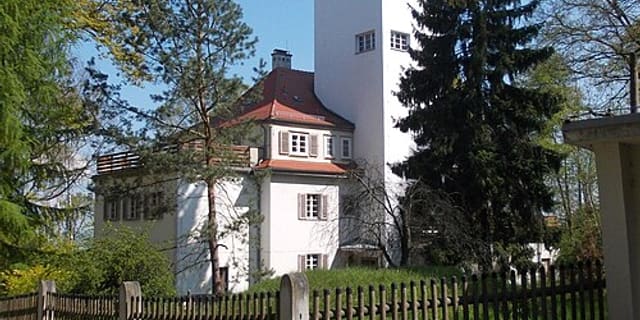 43 kmNon-optical
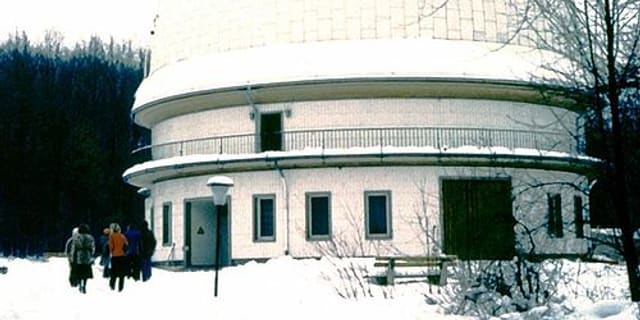 62 km
62 km
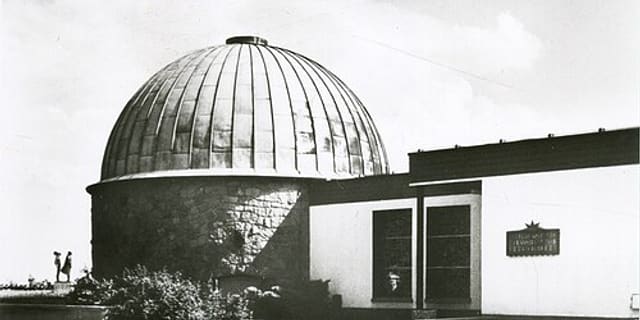 89 kmPlanetarium
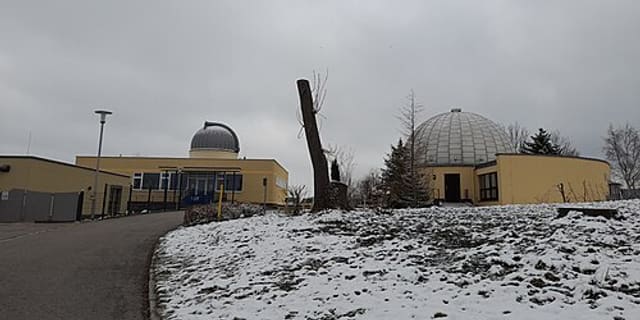 90 kmPlanetarium
Sternwarte und Planetarium „Sigmund Jähn“ Rodewisch
Observatory and planetarium in Rodewisch in Germany