
Gemini Observatory

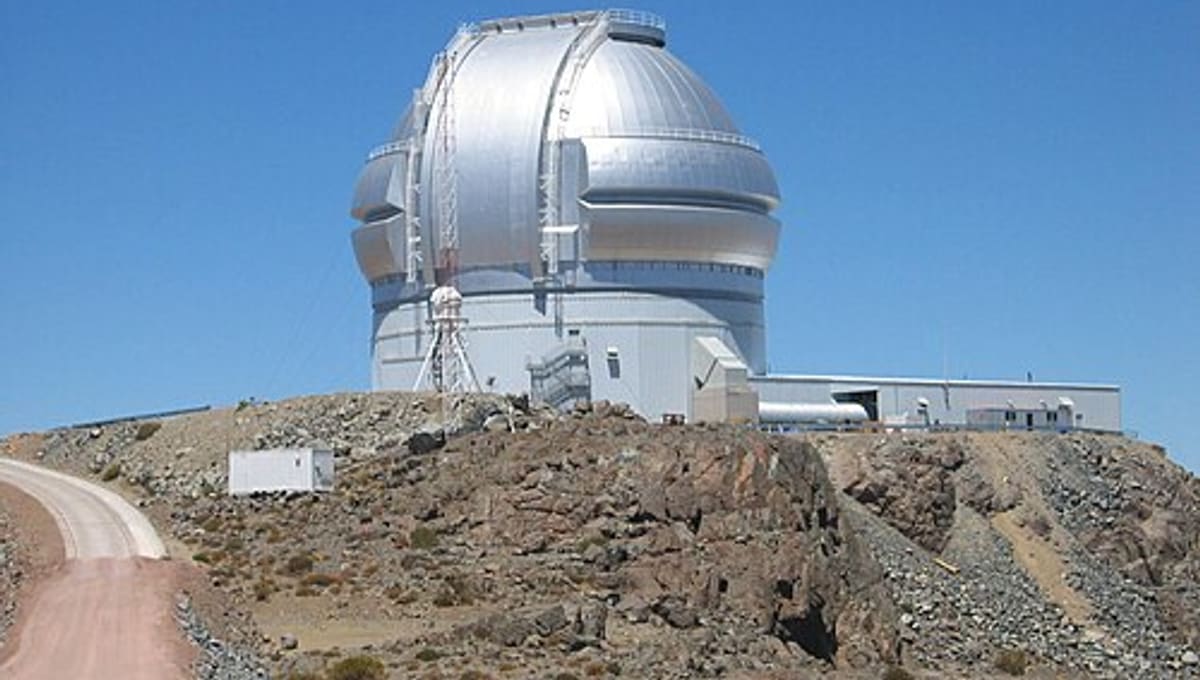
Image: Wikimedia Commons
Gemini Observatory is an international facility built around twin 8.1-metre telescopes, Gemini North in Hawaii and Gemini South in Chile, giving astronomers coverage of nearly the whole sky.
About Gemini Observatory
Operational since 1999, Gemini is owned and funded by the U.S. National Science Foundation, which provides around 70% of its resources, alongside the National Research Council of Canada, CONICYT of Chile, Brazil's MCTI, Argentina's MCTIP, and Korea's KASI. Australia and the United Kingdom were previously partners; the UK withdrew its funding at the end of 2012, prompting cost-cutting and streamlined operations at both sites. The Association of Universities for Research in Astronomy (AURA) manages the observatory on the NSF's behalf, and NSF's NOIRLab now serves as the US national centre for ground-based night-time optical astronomy that runs Gemini as one of its programmes.
Telescopes & research
Both telescopes use Cassegrain reflector designs fitted with modern optical and near-infrared instruments and adaptive optics that counter atmospheric distortion. Gemini is a leader in wide-field, adaptive-optics-assisted infrared imaging and operates the Gemini Planet Imager, built to directly image exoplanets far fainter than their host stars. Across both sites, Gemini supports research into the Solar System, exoplanets, star formation and evolution, galaxy structure, supermassive black holes, distant quasars, and the large-scale structure of the universe.
Location & getting there
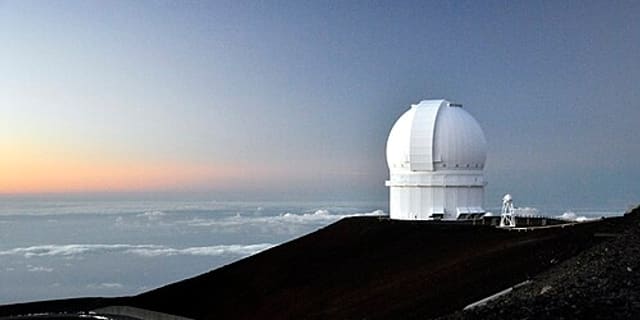
Gemini North stands at 4,213 metres on Mauna Kea, Hawaii, while Gemini South sits at 2,722 metres on Cerro Pachón, Chile. Both telescopes are operated remotely, from Base Facility Operations centres in Hilo, Hawaii, and La Serena, Chile.
Visiting Gemini Observatory
Visitor access differs between the two mountaintop sites; check the observatory's official website for current information before planning a trip to either location.
See your named star from here
Gemini's twin telescopes were designed to cover the entire sky between them, north and south, a fitting parallel to the precise coordinates given for a star named through Star Register. Name a star or browse the catalogue to find its position.
Opening hours and public-visit programs vary by season. Check the official website and Google Maps for current times before you travel.
Institutional and reference sources used to verify this guide.
Satellite imagery: Esri, Maxar, Earthstar Geographics

 under 1 km
 under 1 km
 under 1 km
 under 1 km