
Canada–France–Hawaii Telescope

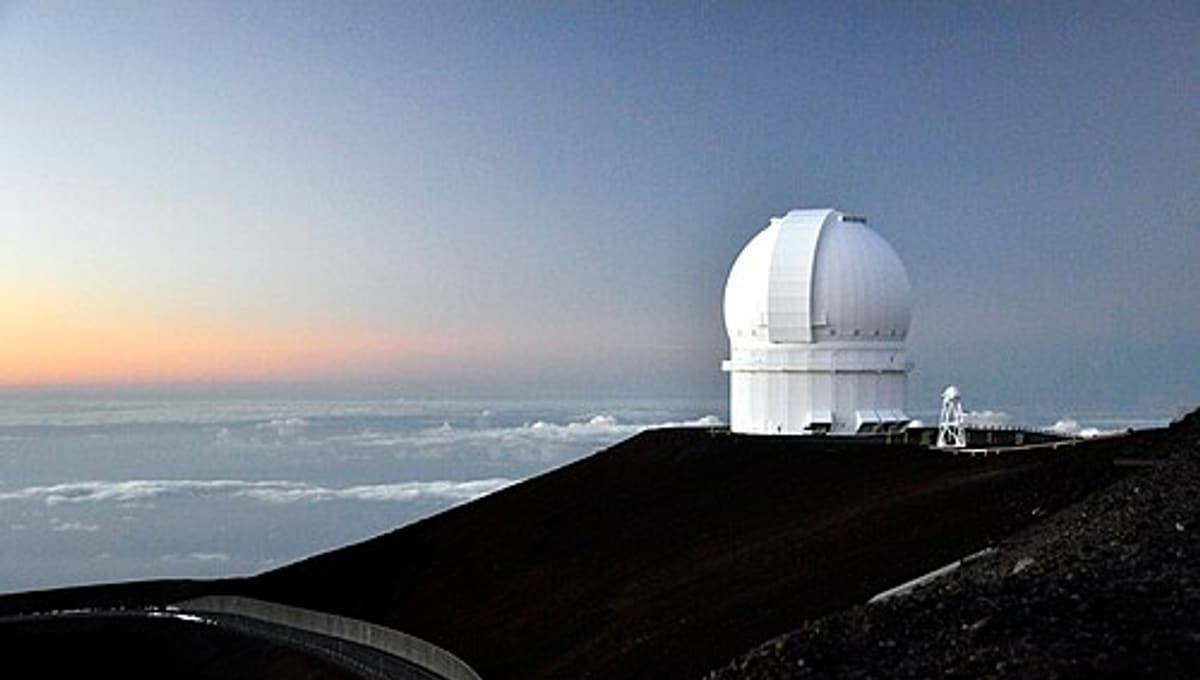
Image: Wikimedia Commons
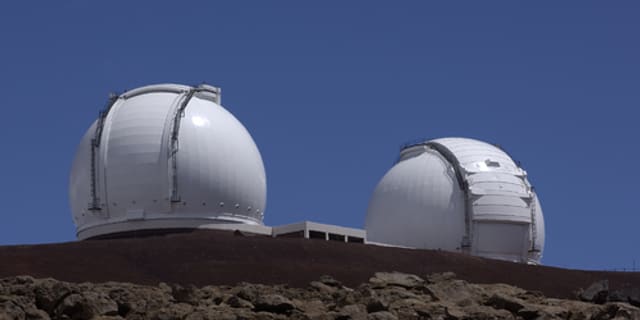
The Canada–France–Hawaii Telescope (CFHT) sits near the summit of Mauna Kea on Hawaiʻi's Big Island, one of the observatories sharing this dormant volcano's exceptionally clear, high-altitude skies.
About the Canada–France–Hawaii Telescope
CFHT is a 3.58-metre optical and infrared telescope at an elevation of 4,204 metres, operating in Prime Focus and Cassegrain configurations. It is jointly run by the National Research Council of Canada, the Centre National de la Recherche Scientifique of France, and the University of Hawaiʻi, through the non-profit Canada-France-Hawaii Telescope Corporation.
History
The telescope has been in continuous operation since 1979, making it one of the longer-serving instruments among the Maunakea Observatories. A previous plan to replace it with the larger 11.25-metre Maunakea Spectroscopic Explorer, reusing much of the existing infrastructure, remains on hold pending governance and leasing review; in the meantime, CFHT is expected to keep observing into the 2030s.
Location & getting there
CFHT stands within the Maunakea Observatories complex, near the summit of Mauna Kea at over 4,200 metres elevation. The mountain's summit access is tightly regulated because of altitude and cultural significance, and most visitors experience it via the Onizuka Center for International Astronomy Visitor Information Station lower on the mountain rather than the summit facilities themselves.
Visiting the Canada–France–Hawaii Telescope
CFHT does not run its own public visitor centre at the summit, but it shares live all-sky webcam images online. Anyone planning a trip to Mauna Kea should check current access rules and conditions on the official CFHT and Maunakea visitor sites before travelling, since summit access can change with weather and cultural or safety closures.
See your named star from here
A research instrument like CFHT can be pointed at precise celestial coordinates, the same kind of coordinates recorded for every star named through Star Register. Check your named star's right ascension and declination in our star catalogue.
Opening hours and public-visit programs vary by season. Check the official website and Google Maps for current times before you travel.
Institutional and reference sources used to verify this guide.
Satellite imagery: Esri, Maxar, Earthstar Geographics

 under 1 km
 under 1 km
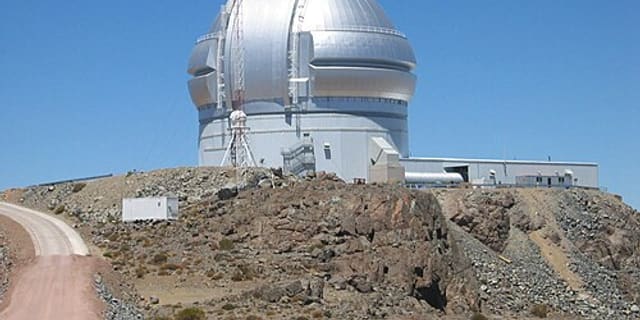
Gemini Observatory
astronomical observatory consisting of twin telescopes in the north and south hemispheres

 under 1 km
 under 1 km