
W. M. Keck Observatory

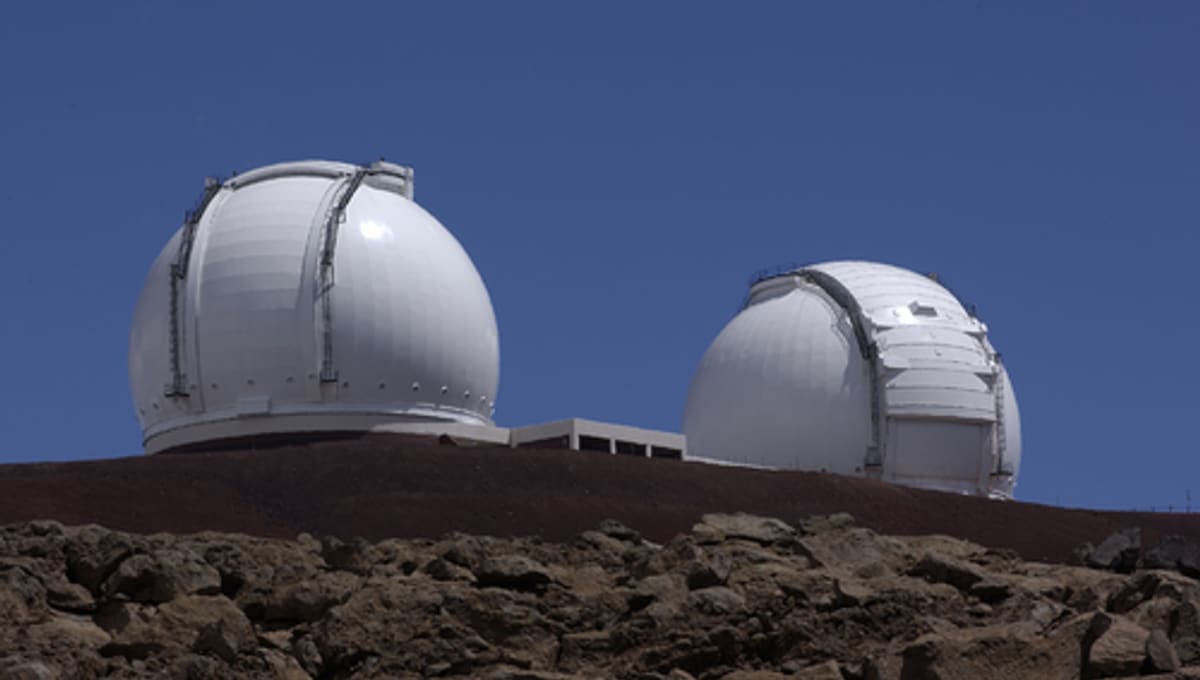
Image: Wikimedia Commons
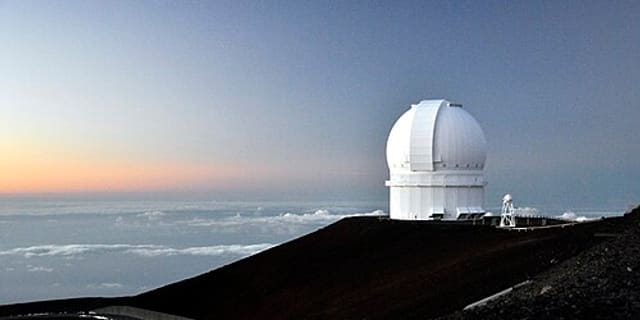
Perched near the 4,145-metre summit of Mauna Kea on the island of Hawaii, the W. M. Keck Observatory houses two of the largest optical telescopes on the planet, each with a 10-metre segmented primary mirror.
About W. M. Keck Observatory
Keck Observatory is run by the California Association for Research in Astronomy (CARA), a nonprofit with board representation from Caltech and the University of California. Its twin telescopes, Keck I and Keck II, pioneered active optics using 36 hexagonal mirror segments per telescope, each held in alignment to nanosecond-level precision, a technology that has since become the template for large modern telescopes worldwide.
History
Keck I saw first light on 24 November 1990, followed by Keck II on 27 April 1996. When completed, both were the largest optical reflecting telescopes in the world; they have ranked third and fourth largest since 2006 as newer giant telescopes have come online.
Telescopes & research
Both telescopes work primarily in the visible and near-infrared and carry a suite of powerful instruments, including MOSFIRE (a multi-object near-infrared spectrometer), DEIMOS (a deep extragalactic imaging spectrograph), HIRES (a high-resolution spectrometer), NIRC-2 (a near-infrared camera with adaptive optics), LRIS (a low-resolution imaging spectrograph), and the newer KPF, or Keck Planet Finder, which had first light in 2022. This instrument suite supports exoplanet detection and wide-ranging cosmological research.
Location & getting there
The observatory sits near the summit of Mauna Kea in Hawaii, at an elevation of 4,145 metres (13,600 ft), one of the highest and driest astronomical sites in the world, prized for its dark skies and stable atmosphere.
Visiting W. M. Keck Observatory
The telescopes themselves sit at high altitude and are not generally open for casual walk-in visits due to the extreme elevation. Contact details are published for the observatory at +1-808-885-7887; check the official website for the latest visitor programmes and any public outreach events before travelling.
See your named star from here
Keck's twin telescopes can be aimed at the precise right ascension and declination of any object in the sky, including a star named through Star Register. Once you have your certificate's coordinates, browse the full list of dedications in our catalogue to see how other stargazers have marked the occasion.
Opening hours and public-visit programs vary by season. Check the official website and Google Maps for current times before you travel.
Institutional and reference sources used to verify this guide.
Satellite imagery: Esri, Maxar, Earthstar Geographics

 under 1 km
 under 1 km
 under 1 km
 under 1 km