
Submillimeter Array, Mauna Kea (SMA)

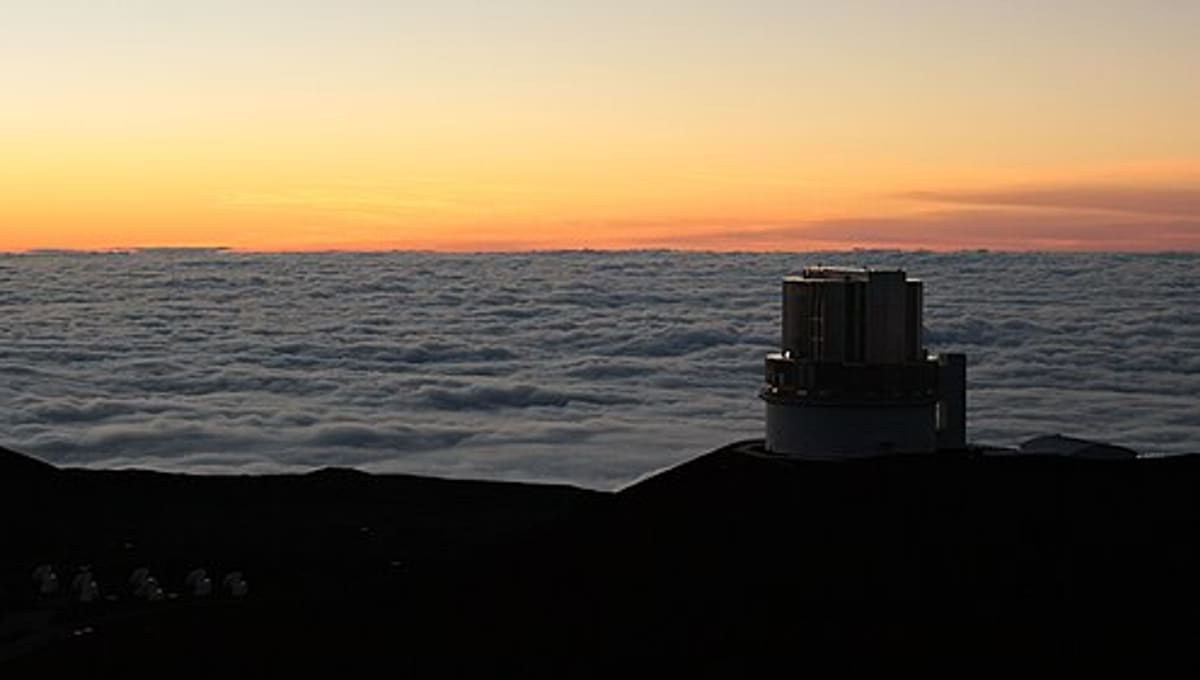
Image: Wikimedia Commons
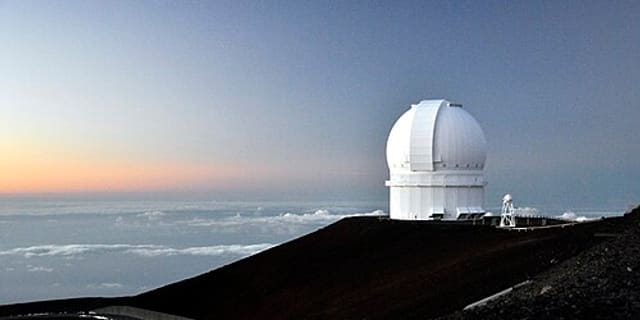
The Submillimeter Array sits near the summit of Mauna Kea in Hawaii, where eight linked radio telescopes work together as one of the world's most capable submillimeter-wavelength observatories.
About the Submillimeter Array
The Submillimeter Array (SMA) is a collaboration between the Smithsonian Astrophysical Observatory (SAO) and Taiwan's Academia Sinica Institute of Astronomy and Astrophysics (ASIAA). It's built from eight radio telescopes, each 6 metres in diameter, arranged as an interferometer on Mauna Kea, Hawaii, at an elevation of around 4,200 metres, above roughly 90 percent of the atmosphere's water vapour.
History
The project was initiated in 1983 under Irwin Shapiro and was formally dedicated, beginning official operations, on 22 November 2003. It was the first purpose-built submillimeter interferometer anywhere in the world. The array is now operated by the East Asian Observatory.
Telescopes & research
By combining signals from its eight 6-metre dishes, the SMA can study submillimeter wavelengths of light, a part of the spectrum that reveals cold gas and dust in star-forming regions and around distant galaxies, work that's very difficult to do from lower, wetter sites.
Location & getting there
The array sits high on Mauna Kea, one of the world's premier sites for astronomy thanks to its elevation, dry air and dark skies, alongside numerous other major observatories on the same mountain in Hawaii.
Visiting the Submillimeter Array
Like most of Mauna Kea's research telescopes, the SMA is a working scientific facility rather than a public visitor attraction. Anyone planning a trip to the mountain should check the East Asian Observatory's website and the Mauna Kea visitor centre for current access and stargazing information.
See your named star from here
The SMA's eight dishes are built to pinpoint faint, precise coordinates in the sky, the same kind of coordinates that come with every star named through Star Register. Name a star, or browse the catalogue of stars already named.
Opening hours and public-visit programs vary by season. Check Google Maps for current times before you travel.
Institutional and reference sources used to verify this guide.
Satellite imagery: Esri, Maxar, Earthstar Geographics

 under 1 km
 under 1 km
 under 1 km
 under 1 km