
Gaocheng Astronomical Observatory

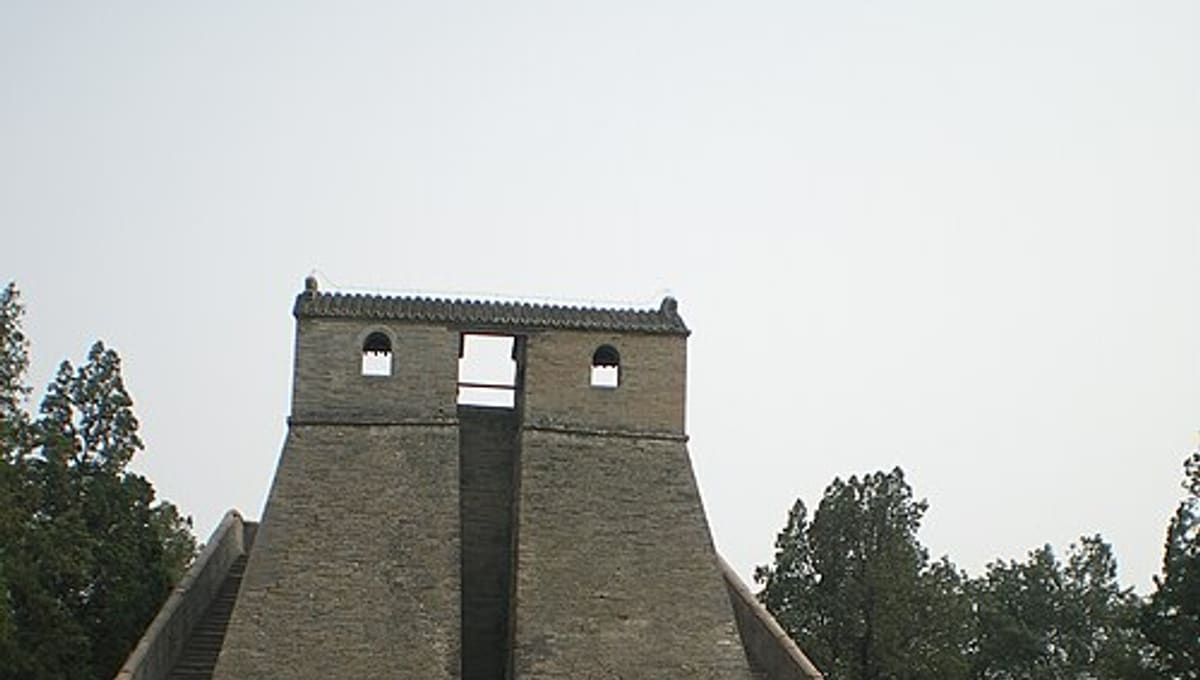
Image: Wikimedia Commons
Near Dengfeng in Henan province, China, the Gaocheng Astronomical Observatory, also known as the Dengfeng Observatory, sits within the Duke of Zhou's shrine and carries one of the longest unbroken traditions of astronomical observation on Earth.
About Gaocheng Astronomical Observatory
The site's astronomical use stretches from the Western Zhou dynasty, around 1042 BC, through to the early Yuan dynasty, and it is recognised today as part of the UNESCO World Heritage listing "Historic Monuments of Dengfeng in the Center of Heaven and Earth," designated in 2010.
History
A gnomon used for the Da Yan calendar was installed at the site in 729 AD, and the great observatory that stands today was built in 1276 under Kublai Khan. Its centrepiece is a shigui, a stone gnomon and measuring device 31.19 metres long, built with waterways precise to 2 millimetres. Observations made here enabled the Shoushi calendar of 1281, which calculated the length of the tropical year at 365 days, 5 hours, 49 minutes and 20 seconds, a figure more accurate than the Gregorian calendar introduced three centuries later.
Location & getting there
The observatory is located in Gaocheng Town, near Dengfeng, in Henan province, China, in the Asia region.
Visiting Gaocheng Astronomical Observatory
As a UNESCO World Heritage site, it is open to visitors; check current hours and access with local heritage authorities or your travel provider before visiting.
See your named star from here
Few places connect the history of astronomy to the present sky as directly as this ancient observatory. If you've named a star, you can find its exact position in our catalogue and look for it in the same sky these medieval astronomers once measured.
Opening hours and public-visit programs vary by season. Check Google Maps for current times before you travel.
Institutional and reference sources used to verify this guide.
Satellite imagery: Esri, Maxar, Earthstar Geographics

 589 km
 678 km
 773 km