
Dyer Observatory

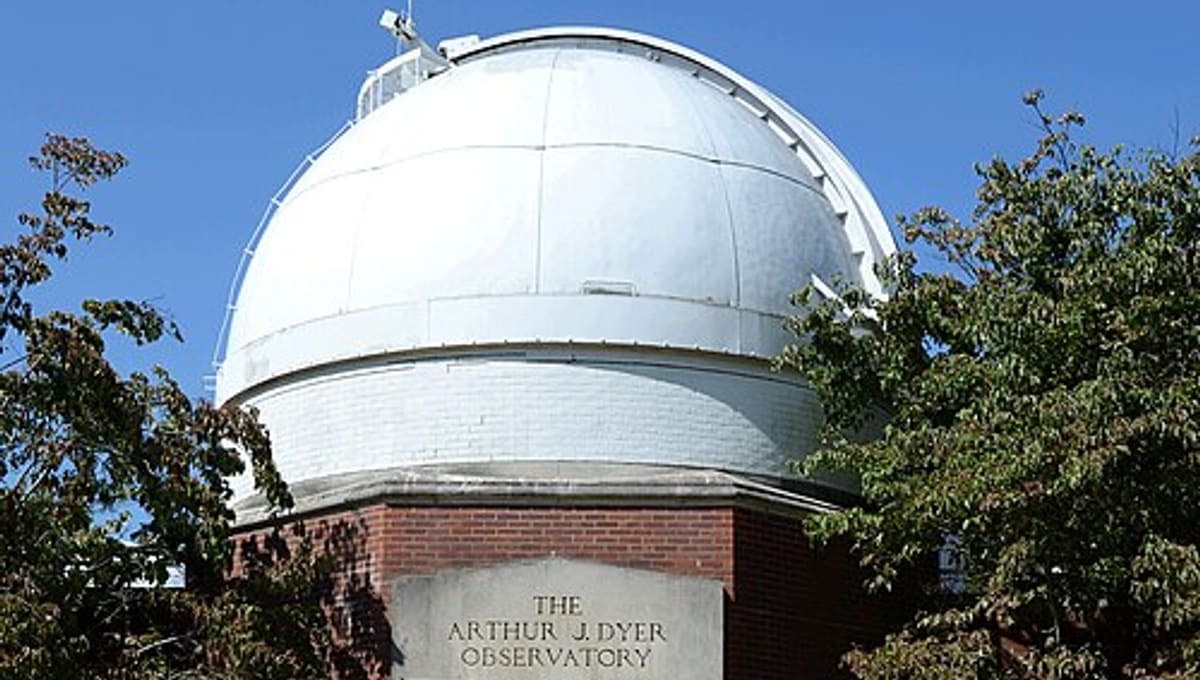
Image: Wikimedia Commons
Overlooking Radnor Lake State Park in Brentwood, Tennessee, Dyer Observatory has introduced generations of visitors to astronomy since Vanderbilt University built it in 1953.
About Dyer Observatory
Formally the Arthur J. Dyer Observatory, it sits at an elevation of 352 metres and is the only Vanderbilt University facility not located on the main Nashville campus. It is named after Arthur J. Dyer, who funded the observatory's 24-foot dome, which houses a 24-inch reflecting telescope named for astronomer Carl Seyfert.
History
Built in 1953, Dyer Observatory was listed on the National Register of Historic Places on 6 March 2009 in recognition of its role in Vanderbilt's astronomical history. Today its mission centres on public education, aiming to spark interest in astronomy, science and engineering.
Telescopes & research
The observatory's main instrument is its 24-inch reflecting telescope in the 24-foot dome. Around it, Dyer runs an active public programme including telescope observation nights, "Meet the Astronomer" evenings, field trips, summer camps, school visits, and concerts under the stars, along with private event rentals.
Location & getting there
Dyer Observatory is located at 1000 Oman Drive in Brentwood, Tennessee, just outside Nashville, overlooking Radnor Lake State Park at an elevation of 352 metres.
Visiting Dyer Observatory
The observatory is currently undergoing renovation, with mobile programmes visiting schools through summer 2026 in the meantime. Check the official Dyer Observatory website for the latest schedule before planning a visit.
See your named star from here
Dyer's long history of public stargazing nights makes it a natural place to look for a named star once its exact coordinates are known. Find the right ascension and declination for your star in our star catalogue.
Opening hours and public-visit programs vary by season. Check the official website and Google Maps for current times before you travel.
Institutional and reference sources used to verify this guide.
Satellite imagery: Esri, Maxar, Earthstar Geographics

 311 kmResearch
 311 km