
Constantinople Observatory of Taqi ad-Din

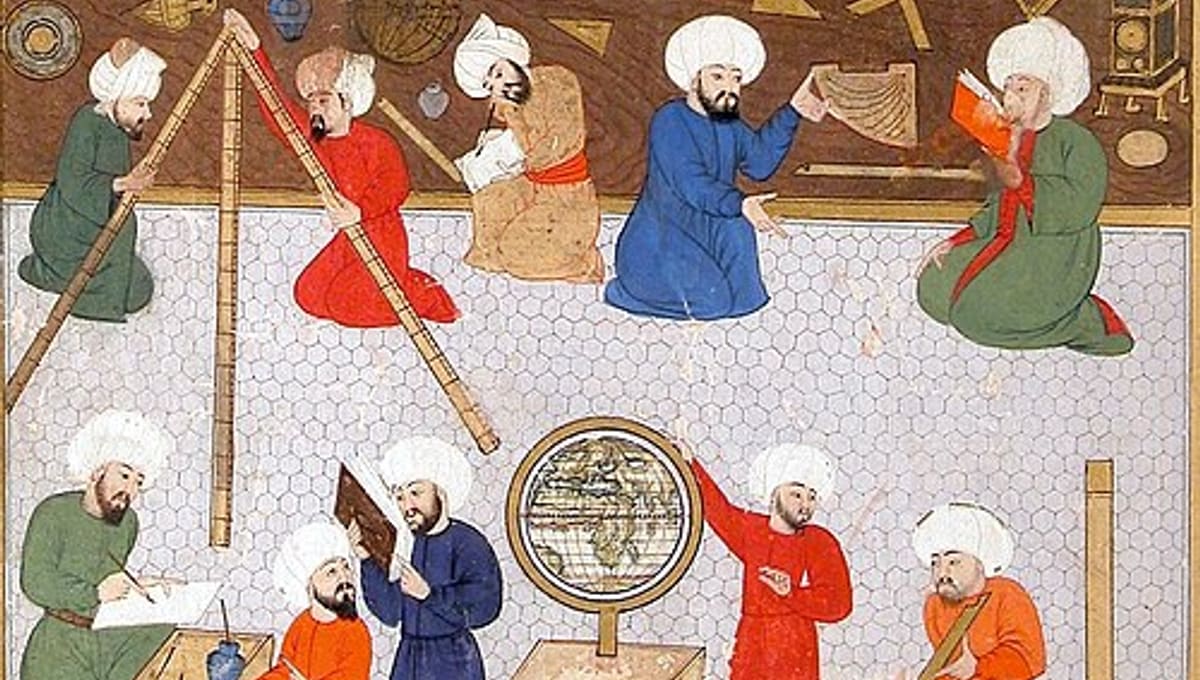
Image: Wikimedia Commons
The Constantinople Observatory of Taqi ad-Din was a short-lived but ambitious astronomical institution founded in 1577 in Constantinople, present-day Istanbul.
About the Constantinople Observatory of Taqi ad-Din
Founded by the Ottoman astronomer Taqi ad-Din Muhammad ibn Ma'ruf with the support of Sultan Murad III, the observatory was, for its brief existence, one of the largest astronomical observatories in the pre-modern world. It stood on a hill overlooking the European section of the city.
History
Built in 1577, the observatory was destroyed only three years later, in 1580, after an incorrect comet prediction contributed to its downfall. Despite lasting barely three years, it produced astronomical tables considered more accurate than those of many European contemporaries, and its work rivalled Ulugh Beg's earlier observatory at Samarkand as well as being contemporary with Tycho Brahe's Uraniborg in Denmark.
Telescopes & research
The observatory housed sophisticated instruments for its era, including a giant armillary sphere, framed sextant, quadrants, and astrolabes, along with a mechanical astronomical clock used to measure planetary positions. Its clock, with three dials tracking hours, minutes, and seconds, was a notable innovation for precise astronomical measurement in the sixteenth century.
Location
The observatory stood in Constantinople, now Istanbul, Turkey, though nothing of the original structure survives today; it exists only in historical record.
See your named star from here
The observatory itself is long gone, but the tradition of pointing precise instruments at the night sky lives on in modern astronomy. Anyone can name a real star and receive its exact coordinates through Star Register, and browse other named stars in our catalogue.
Opening hours and public-visit programs vary by season. Check Google Maps for current times before you travel.
Institutional and reference sources used to verify this guide.
Satellite imagery: Esri, Maxar, Earthstar Geographics

 2 kmResearch
 8 kmResearch
 236 km
 257 kmPlanetarium