
Astronomical Observatory and Planetarium "Nicolaus Copernicus"


Image: Wikimedia Commons
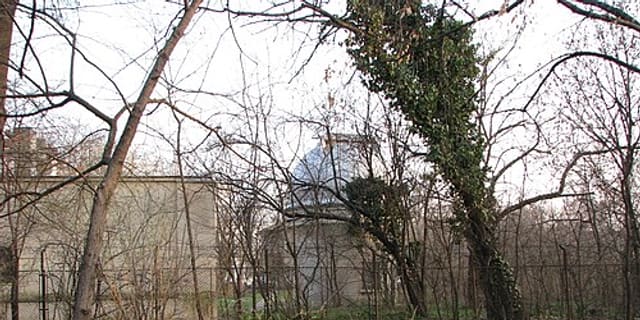
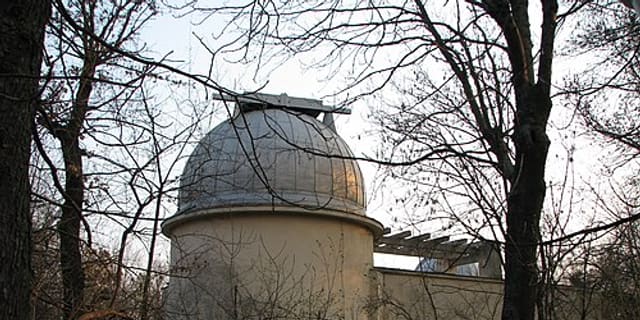
The Astronomical Observatory and Planetarium "Nicolaus Copernicus" opened in Varna, Bulgaria, on 22 May 1968 as the country's first astronomical complex.
About the Observatory
The complex was born out of the wave of public enthusiasm for space that followed the 1957 launch of Sputnik, which led to the founding of Bulgaria's first astronomy club in Varna in 1960. Today it houses a refractor telescope (80/1200mm) and a Cassegrain telescope (150/2250mm), alongside a Zeiss Kleinplanetarium projector inside a 10.5-metre dome capable of displaying 5,500 stars. A striking Foucault pendulum hangs in the building's tower on a 17.6-metre wire, completing a rotation of just over 10 degrees per hour at Varna's latitude, visibly demonstrating the Earth's rotation to visitors. By 1998 the complex had welcomed more than 800,000 visitors, and the building itself was renewed on 15 August 2002.
History
Opened in 1968 in the aftermath of Sputnik-era enthusiasm for space and following the 1960 founding of Bulgaria's first astronomy club in Varna, the complex has stood for decades as the country's original astronomical centre, with a major renovation completed in 2002.
Telescopes & research
Its instruments include an 80/1200mm refractor and a 150/2250mm Cassegrain telescope for observation, plus a Zeiss Kleinplanetarium projector and a working Foucault pendulum for public demonstration of the Earth's rotation.
Location & getting there
The observatory sits at an elevation of 14 metres in the city of Varna, Bulgaria, on the country's Black Sea coast.
Visiting the Observatory
With more than 800,000 visitors recorded by 1998 alone, the complex is clearly geared toward public audiences; check the official Varna astronomy website for current planetarium show times and telescope viewing sessions before visiting.
See your named star from here
Between its telescopes and its planetarium's 5,500-star dome, the Nicolaus Copernicus Observatory is a fitting place to locate the coordinates of a star named through Star Register. Browse the star catalogue to see how it works.
Opening hours and public-visit programs vary by season. Check Google Maps for current times before you travel.
Institutional and reference sources used to verify this guide.
Satellite imagery: Esri, Maxar, Earthstar Geographics

 199 km
 199 km
 202 kmMuseum