
Chambon la Foret Magnetic Observatory
Satellite imagery: Esri, Maxar, Earthstar Geographics
In the Loiret countryside about 100 km south of Paris, the Chambon-la-Foret Magnetic Observatory has been listening to the Earth itself, recording its magnetic field without interruption since 1936.
About Chambon-la-Foret Magnetic Observatory
Known formally as l'Observatoire Magnetique National de Chambon-la-Foret, the facility is run by the Institut de Physique du Globe de Paris (IPGP) and is the only magnetic observatory on mainland France. Rather than telescopes, its instruments track the strength and direction of Earth's magnetic field around the clock.
Research & the INTERMAGNET network
Chambon-la-Foret is part of INTERMAGNET, the global network of magnetic observatories, and serves as the data-processing and management hub for all the stations run by France's Bureau Central de Magnetisme Terrestre (BCMT). Sixteen BCMT observatories belong to INTERMAGNET, together representing roughly 15% of the entire global network. Beyond routine monitoring, the site works as a research centre in geomagnetism and magnetic instrumentation, a reference centre for calibrating sensors, and a training centre that hosts observatory staff from other countries.
Location & getting there
The observatory sits in the commune of Chambon-la-Foret in the Loiret department, roughly 100 km south of Paris, a deliberately rural, low-interference site chosen to keep magnetic readings free of the electrical noise of a city. (Use the map and directions above to plan your route.)
Visiting Chambon-la-Foret
This is a working scientific research station rather than a public telescope site, so check IPGP's website before planning a trip, and don't expect regular open days.
See your named star from here
Chambon-la-Foret watches the Earth, not the stars, so it isn't a place to point a telescope at your named star's coordinates. But the same precision that keeps its magnetometers calibrated is the spirit behind giving a star its own fixed coordinates: look up your star in our catalogue, or name one for someone you love, then find a dark-sky spot or public observatory nearby to actually see it.
Opening hours and public-visit programs vary by season. Check Google Maps for current times before you travel.
Institutional and reference sources used to verify this guide.
Satellite imagery: Esri, Maxar, Earthstar Geographics

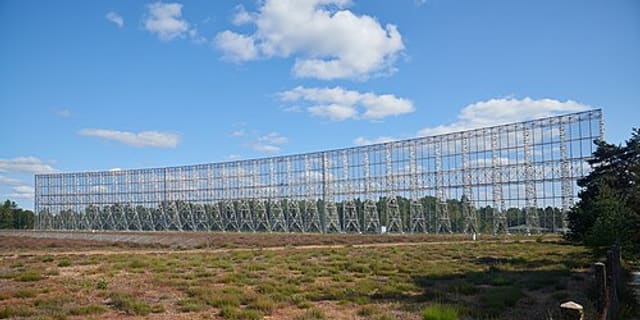 71 kmRadio
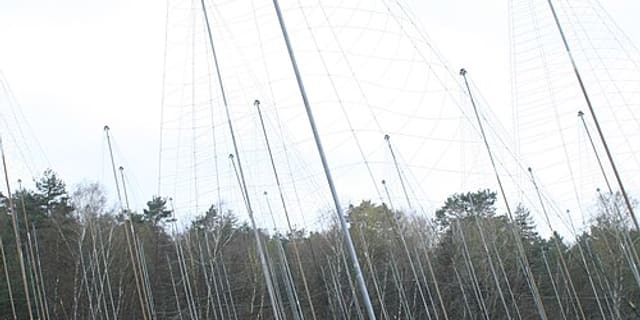 71 kmRadio
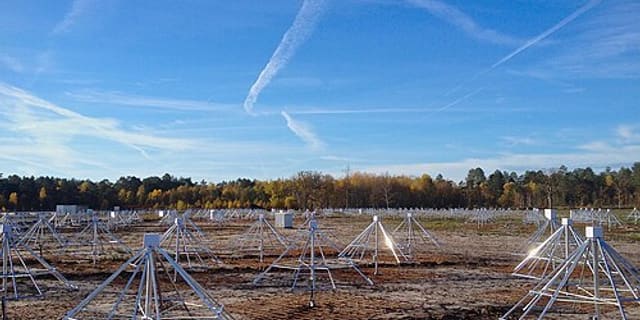 72 kmRadio
 75 km
75 km