
Nançay Decameter Array

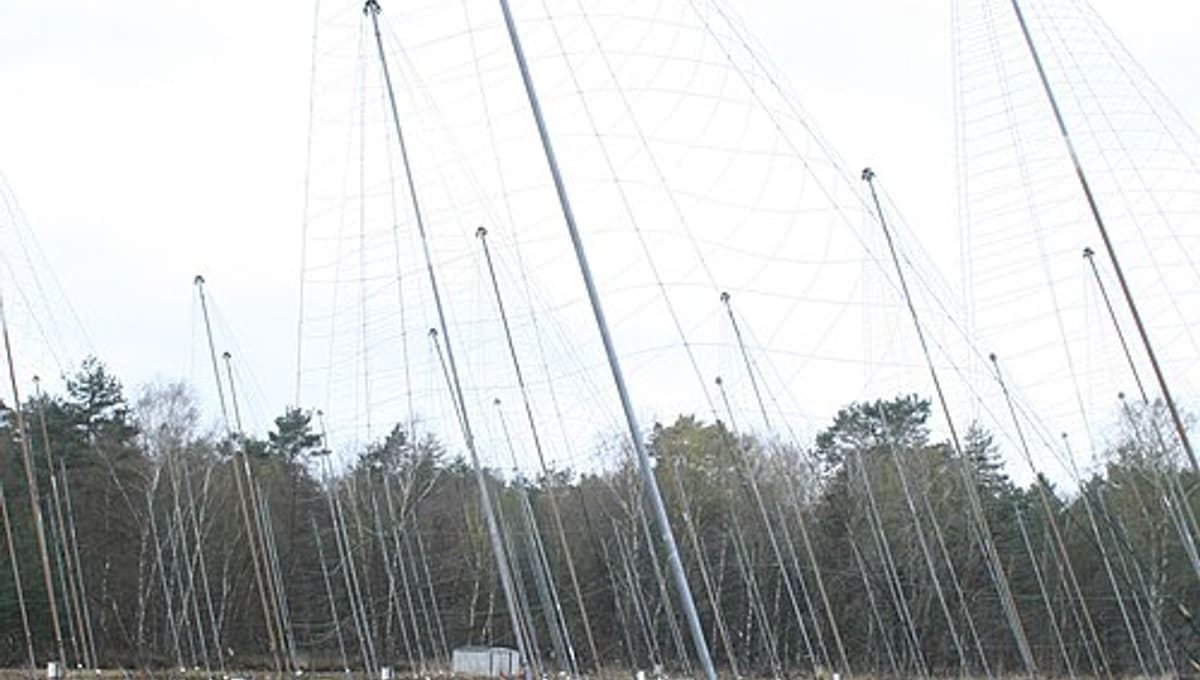
Image: Wikimedia Commons
The Nançay Decameter Array is a radio telescope in the Sologne countryside of the Cher department, France, built to listen to the sky at some of the longest radio wavelengths astronomers use.
About Nançay Decameter Array
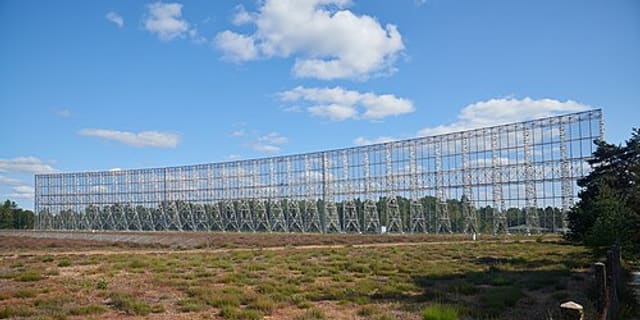
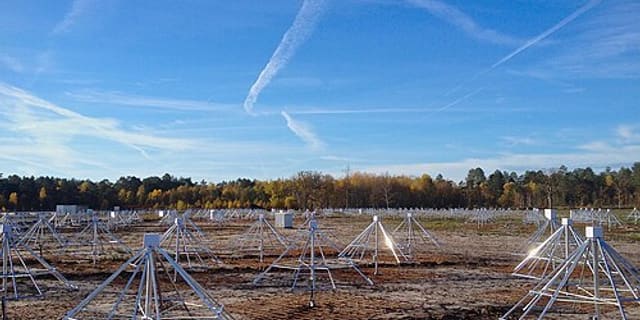
The array is one of the flagship instruments of the Nançay Radio Observatory, itself part of the Paris Observatory. Rather than a single dish, it is made up of 144 conical antennas spread across roughly 7,000 square metres of open land, working together to capture faint decametric radio emissions in the 10–100 MHz range.
History
Construction ran from 1975 to 1977, and the array became fully operational in late 1977. It was originally developed to support NASA's Voyager missions to the outer planets, giving ground-based radio astronomers a way to complement the spacecrafts' own observations.
Telescopes & research
Since continuous observations began in 1978, the array has built up what is described as the longest-running database of decametric radio observations of Jupiter and the Sun anywhere in the world. Its long-term monitoring of Jovian radio bursts and solar radio activity remains a distinctive contribution to planetary and solar radio astronomy.
Location & getting there
The site sits in the Sologne region of Cher, part of the Centre-Val de Loire, a flat, sparsely populated landscape that keeps radio interference low - exactly what a decametric array needs. It shares its location with the wider Nançay Radio Observatory complex.
Visiting Nançay Decameter Array
As a working research instrument, the array is not generally open for casual walk-up visits. Check the official Nançay Radio Observatory website before travelling for any public tour dates or open-day events.
See your named star from here
While this array listens in radio wavelengths rather than visible light, staff at observatories with optical telescopes can point their instruments at the exact right ascension and declination of any star named through Star Register. Name a star or browse the star catalogue to find coordinates you can ask an observatory to locate.
Opening hours and public-visit programs vary by season. Check the official website and Google Maps for current times before you travel.
Institutional and reference sources used to verify this guide.
Satellite imagery: Esri, Maxar, Earthstar Geographics

 under 1 kmRadio
 under 1 kmRadio
 147 km