
Astronomy Station "Samuel Heinrich Schwabe"

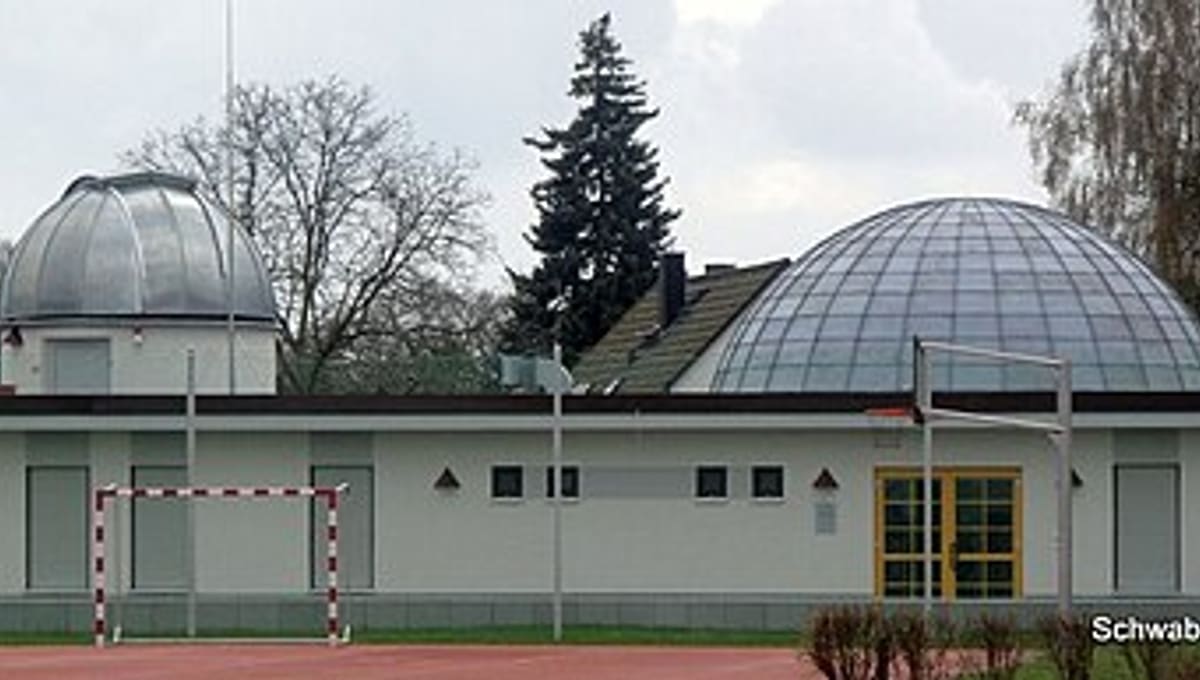
Image: Wikimedia Commons
At the Gymnasium “Walter Gropius” Europaschule in Dessau-Roßlau, Germany, an astronomy station keeps alive the legacy of a local astronomer who changed our understanding of the sun.
About the station
The station is named after Samuel Heinrich Schwabe (1789–1875), a German amateur astronomer from Dessau who studied sunspots from 1825 to 1867 and, in 1838, suggested the existence of a ten-year sunspot cycle. It was founded in 1967 and refurbished in 2008/09, and is run today by the Schwabe-Verein Dessau e.V.
Telescopes & research
The station features an 8-metre dome fitted with a ZKP 2P planetarium projector and a fulldome system, alongside a classroom and an observation dome, supporting its mission to provide astronomical and interdisciplinary knowledge to schools and the public.
Location & getting there
The station is located in Dessau-Roßlau, in the Saxony-Anhalt region of Germany.
Visiting the station
As a school-affiliated facility run by an association, visits are generally arranged through the Schwabe-Verein Dessau; check their channels before travelling for current opening times and programmes.
See your named star from here
Heinrich Schwabe spent decades patiently tracking a single object, the sun, to uncover its cycle — a reminder of how much can be learned from carefully recorded coordinates. Name a star through Star Register and receive its own position in the sky, viewable in the catalogue.
Opening hours and public-visit programs vary by season. Check Google Maps for current times before you travel.
Institutional and reference sources used to verify this guide.
Satellite imagery: Esri, Maxar, Earthstar Geographics

 76 kmNon-optical
 85 km
85 km
 89 kmResearch