
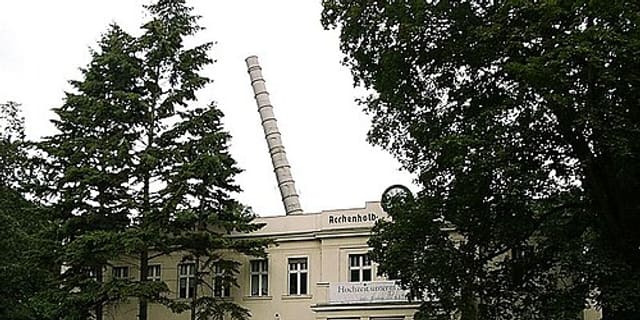
Leibniz Institute for Astrophysics Potsdam

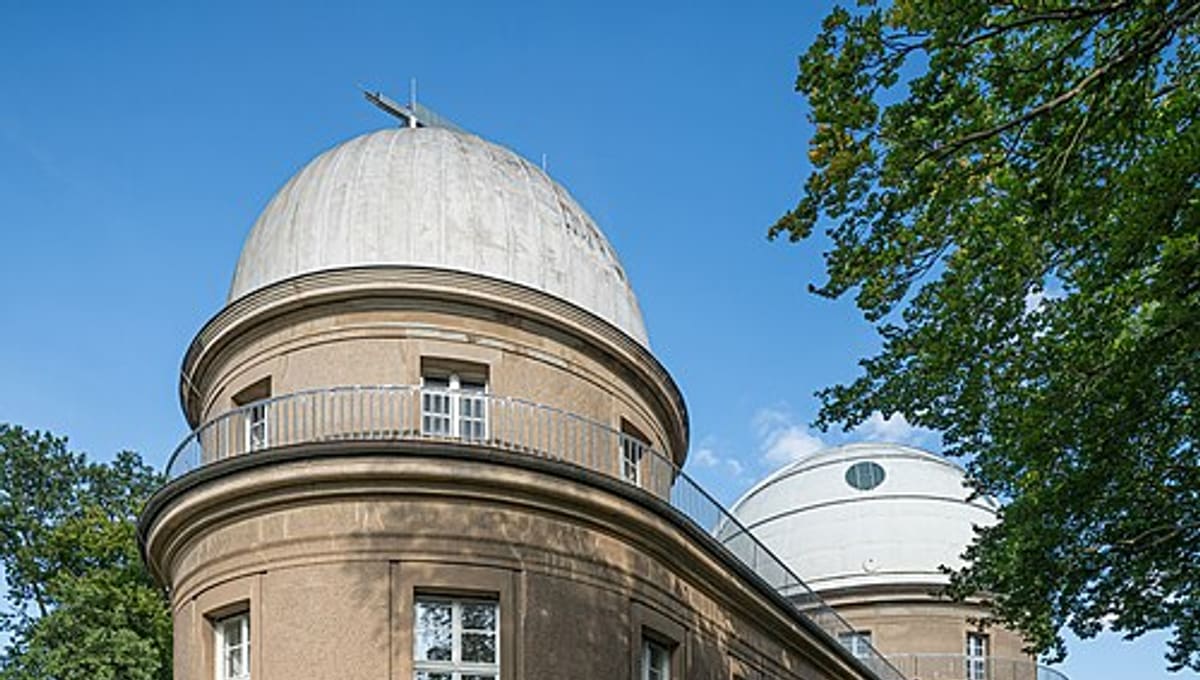
Image: Wikimedia Commons
The Leibniz Institute for Astrophysics Potsdam, known as AIP, is a German research institute in Babelsberg, on the western edge of Berlin, tracing its roots back more than three centuries.
About the Leibniz Institute for Astrophysics Potsdam
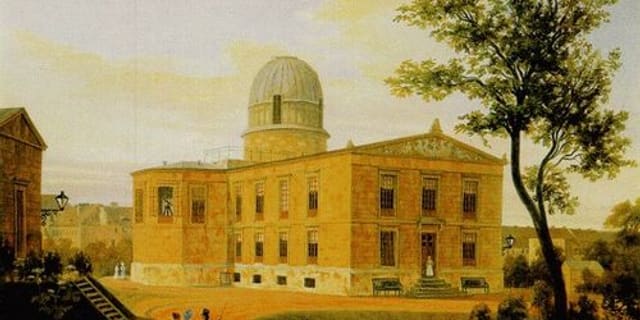
AIP is the successor of the Berlin Observatory, founded in 1700, and of the Astrophysical Observatory Potsdam, founded in 1874 as the world's first observatory explicitly dedicated to astrophysics research. The modern AIP was established in 1992, in the restructuring that followed German reunification. It is privately funded and belongs to the Leibniz Association.
History
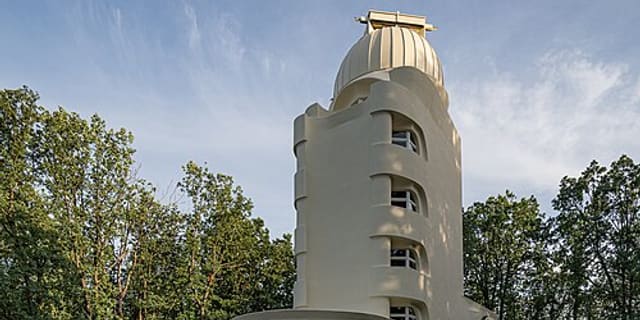
Although headquartered in Babelsberg, AIP's heritage sites remain nearby: the Einstein Tower solar observatory and the great refractor telescope on Telegrafenberg in Potsdam both belong to the institute, linking today's research back to its 18th- and 19th-century origins.
Telescopes & research
AIP's key research areas include cosmic magnetic fields and magnetohydrodynamics, extragalactic astrophysics, solar and stellar physics, stellar and galactic evolution, and cosmology. The institute develops its own instrumentation in spectroscopy and robotic telescopes, operates robotic facilities in Tenerife and Antarctica, is a partner in the Large Binocular Telescope in Arizona, and contributes instrumentation to large telescopes such as ESO's Very Large Telescope.
Location & getting there
AIP is based in Babelsberg, in the German state of Brandenburg, just west of Berlin - with its historic Einstein Tower and great refractor located across town on Telegrafenberg in Potsdam.
Visiting the Leibniz Institute for Astrophysics Potsdam
As a working research institute, AIP is not a typical tourist observatory; check its official website for open days, public talks, or tour opportunities before planning a visit.
See your named star from here
An institute that studies everything from stellar evolution to cosmology is a fitting place to think about a single named star of your own - its coordinates can, in principle, be pointed to by any capable telescope. Name a star or explore the star catalogue to see stars already named through Star Register.
Opening hours and public-visit programs vary by season. Check the official website and Google Maps for current times before you travel.
Institutional and reference sources used to verify this guide.
Satellite imagery: Esri, Maxar, Earthstar Geographics

 4 km
4 km
 13 kmPublic
 23 km
23 km
 27 km
27 km