
Hanle Dark Sky Reserve (Ladakh)

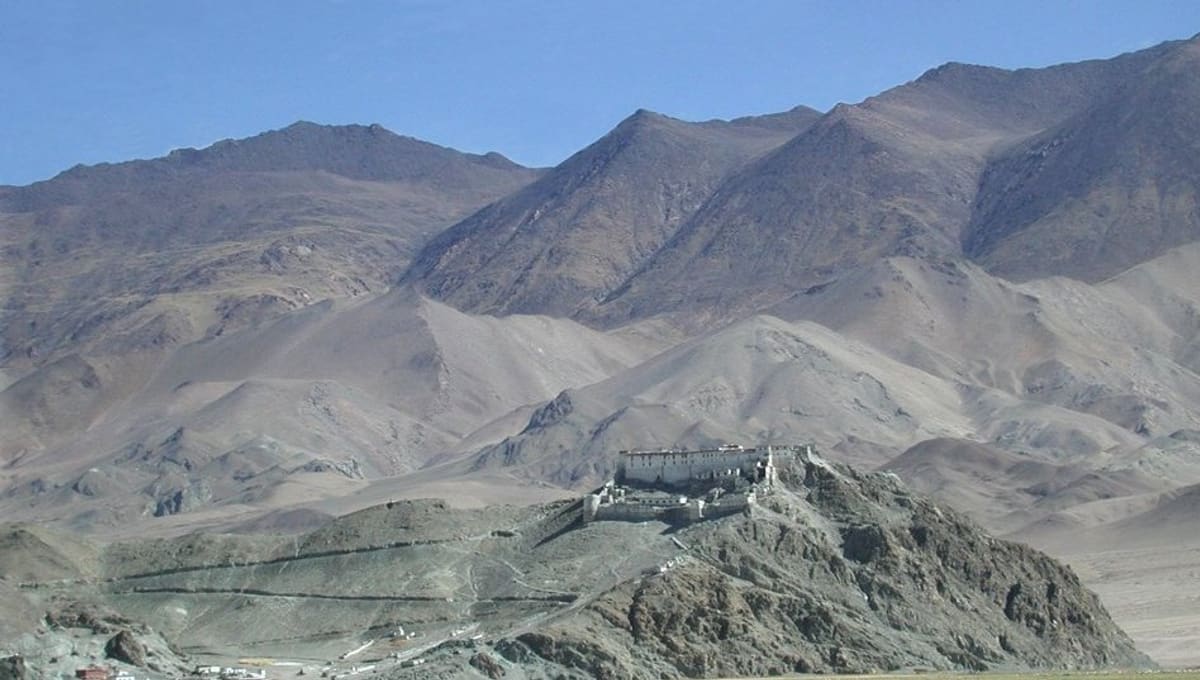
Image: Beefy SAFC at English Wikipedia · Public domain · Wikimedia Commons
Hanle Dark Sky Reserve sits around the historic village of Hanle in the Changthang region of Ladakh, high in the Indian Himalayas near the border with China. Certified in December 2022, it became the first dark sky reserve in India and in South Asia, protecting a 22 km radius of some of the darkest skies on the planet.
Why Hanle is a top stargazing spot
Hanle's sky has been rated Bortle 1, the very darkest classification on the nine-point Bortle scale, a rare rating held by only a handful of places worldwide. Much of that comes from its extreme setting: the reserve sits within the Changthang Wildlife Reserve at an altitude of 4,500 metres, where thin, dry mountain air and extreme remoteness combine to strip away nearly all atmospheric haze and artificial light. The reserve operates under a memorandum of understanding between the Union Territory of Ladakh, the Ladakh Autonomous Hill Development Council and the Indian Institute of Astrophysics, which regulates outdoor lighting in villages and even vehicle headlights within the reserve to keep the sky this dark.
What you can see
At Bortle 1, Hanle offers about as pure a view of the night sky as exists anywhere, with the Milky Way visible in fine detail and faint deep-sky objects within reach of the naked eye. The Indian Institute of Astrophysics operates facilities in the area, drawn there by exactly the same qualities that make Hanle exceptional for stargazers: minimal light pollution and consistently clear high-altitude air.
Visiting Hanle at night
Hanle village itself has a 17th-century monastery of the Drukpa Kagyu branch of Tibetan Buddhism, adding cultural depth to a visit built around the stars. More than 20 trained local astronomy ambassadors, most of them women, guide visitors through telescope viewing sessions, making Hanle one of the more accessible ways to experience an extreme dark-sky site with expert help on hand. Given the altitude and remoteness, check current road access, permits and seasonal conditions before travelling.
Best time to go
As a northern-hemisphere, high-altitude site, Hanle's Milky Way core season runs roughly March to September, though thin, dry mountain air can deliver excellent viewing across much of the year. Winter nights bring the bright winter constellations, plus the Quadrantid meteor shower in January and Geminids in December. Plan around the new Moon for the very darkest skies, allow 20 to 30 minutes for your eyes to adapt, and use red light only, since at 4,500 metres the cold and altitude call for extra preparation as well.
Getting there
Hanle lies in the Changthang region of Ladakh, a remote high-altitude area near the Indo-China border, reached via mountain roads from Leh. The journey itself crosses some of the highest inhabited terrain in the world, so allow for acclimatisation and check travel conditions carefully.
See your named star from here
Few places on Earth offer a purer view of the night sky than a Bortle 1 site, making Hanle an exceptional spot to track down a named star using its coordinates and a stargazing app. Browse the star catalogue to name a star before you travel, and see our guide on how to find a star in the night sky, or discover other observatories and dark-sky sites around the world.
Conditions and access vary by season. Check Google Maps before you travel, and aim for a clear night near the new Moon for the darkest sky.
Satellite imagery: Esri, Maxar, Earthstar Geographics

 3,666 kmCommunity
 4,156 kmDark Sky Park
 4,214 kmDark Sky Park
 4,452 kmDark Sky Park