
Weybourne Atmospheric Observatory

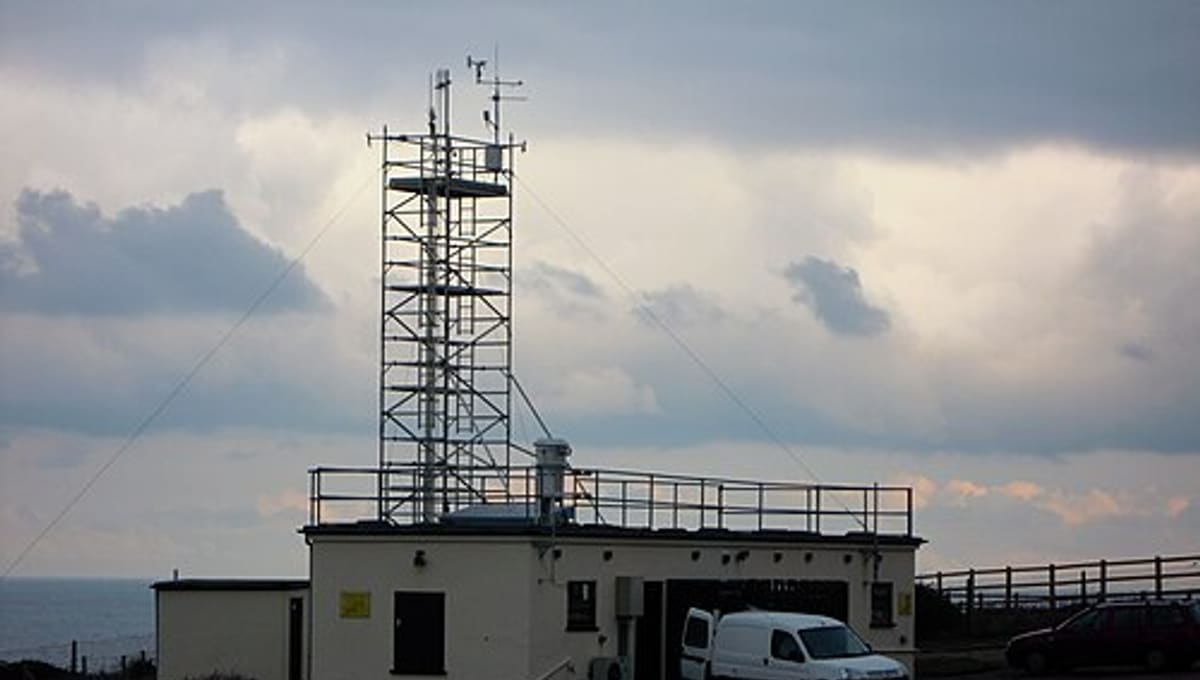
Image: Wikimedia Commons
Weybourne Atmospheric Observatory sits on the North Norfolk coast of eastern England, where clean air blowing in off the North Sea has made it one of the UK's most important long-term stations for tracking the composition of the atmosphere.
About Weybourne Atmospheric Observatory
Weybourne is a scientific monitoring station rather than a stargazing site: it exists to measure the gases that make up Earth's atmosphere, continuously and with extreme precision, from a coastal position largely free of local pollution.
History
The observatory was founded in 1992 by Professor Stuart Penkett of the University of East Anglia (UEA), with funding from BP and the Natural Environment Research Council (NERC). Since 2002 it has been operated by the National Centre for Atmospheric Science (NCAS).
Telescopes & research
Rather than telescopes, Weybourne's instruments sample and analyse the air itself. It holds the longest continuous UK record of in-situ atmospheric carbon dioxide measurements, and is the only UK station making high-precision measurements of atmospheric oxygen. The site is recognised as a regional station in the World Meteorological Organization's Global Atmosphere Watch programme and is part of the European ICOS greenhouse gas monitoring network, contributing directly to research on climate change and carbon emissions.
Location & getting there
The observatory stands close to sea level on the North Norfolk coast, near the village of Weybourne, in a stretch of England prized for its open coastline and big skies. Its exposed, low-lying position is exactly what makes it useful for sampling clean, well-mixed air arriving from the North Sea.
Visiting Weybourne Atmospheric Observatory
Weybourne is a working research station rather than a public visitor attraction. Anyone interested in its science should check with the University of East Anglia or NCAS before planning to visit.
See your named star from here
Weybourne's instruments watch the atmosphere rather than the stars, but the same clear Norfolk skies that make its air-quality readings so reliable also make for good stargazing after dark. If you've named a star with Star Register, its coordinates can be found from anywhere with a dark enough sky — browse the catalogue or see our packages to name one.
Opening hours and public-visit programs vary by season. Check Google Maps for current times before you travel.
Institutional and reference sources used to verify this guide.
Satellite imagery: Esri, Maxar, Earthstar Geographics

 105 km
 107 kmResearch
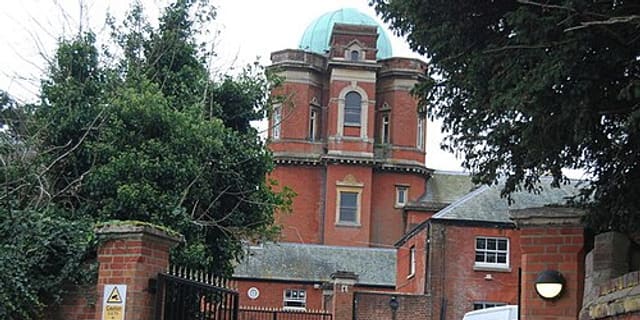
Cambridge Observatory
astronomical observatory at the University of Cambridge in the East of England
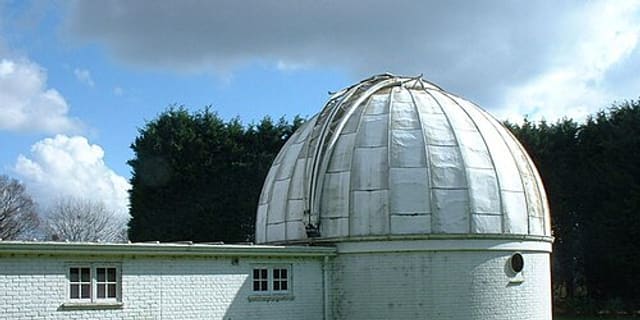
Observatory At South Wing, St Ibbs, 90 Metres To West South West Of House
observatory in St. Ippolyts, North Hertfordshire, England, UK