
Orwell Park observatory

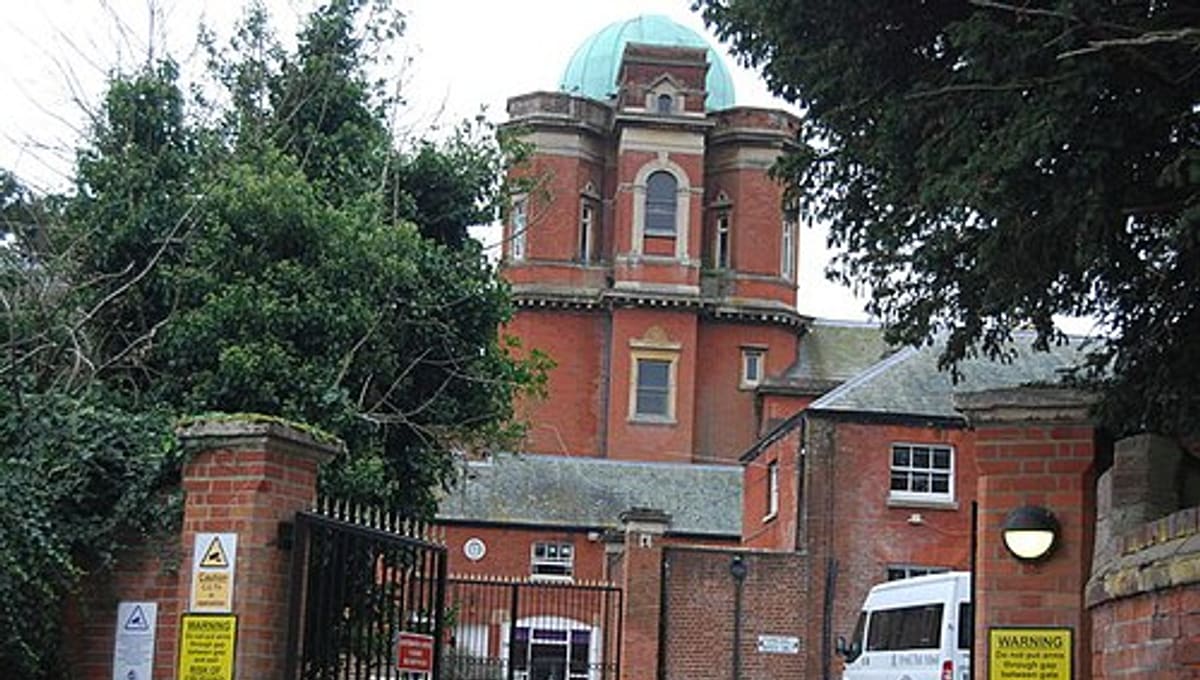
Image: Wikimedia Commons
In Nacton, Suffolk, on the English coast near Ipswich, Orwell Park observatory has been watching the sky since 1874. Built for the Orwell Park estate, it now hosts regular public open evenings run by a local astronomical society.
About Orwell Park observatory
Orwell Park observatory was completed in 1874 as part of the Orwell Park estate in Nacton, Suffolk, England. It was designed in 1872 by George Tomline and built by the instrument makers Troughton & Simms, and at the time of its construction its telescope ranked among the 25 largest in the world.
History
The observatory's first director was the professional astronomer John Isaac Plummer, who took up the post in June 1874. Under his and later observers' work, the observatory published observations of 48 comets, along with studies of Venus, meteors, lunar occultations, zodiacal light, and the 1878 transit of Mercury.
Telescopes and research
The observatory's principal instrument is a 10-inch (258 mm) Tomlin refractor. Its programme of nineteenth-century observational astronomy, covering comets, planetary transits, occultations and meteor work, placed it among the notable private observatories of its era.
Location and getting there
The observatory stands in Nacton, on the Suffolk coast close to Ipswich and the Orwell estuary, in the east of England. Its coastal, low-light setting has long made it a workable site for night-sky observation.
Visiting Orwell Park observatory
The observatory is now cared for by the Orwell Astronomical Society (OASI), which runs regular public open evenings for visitors to look through the historic telescope and learn about the site's history. Check OASI's website for current dates before travelling.
See your named star from here
Orwell Park's long history of tracking objects across the sky makes it a fitting place to think about your own star. When you name a star with Star Register, you get its precise coordinates, the same kind of data astronomers here have logged for comets and planets since 1874. Look it up any time in our catalogue.
Opening hours and public-visit programs vary by season. Check Google Maps for current times before you travel.
Institutional and reference sources used to verify this guide.
Satellite imagery: Esri, Maxar, Earthstar Geographics

 81 kmResearch
Cambridge Observatory
astronomical observatory at the University of Cambridge in the East of England
Observatory At South Wing, St Ibbs, 90 Metres To West South West Of House
observatory in St. Ippolyts, North Hertfordshire, England, UK

 103 kmMuseum
 110 km