
Valentia Magnetic Observatory
Satellite imagery: Esri, Maxar, Earthstar Geographics
Valentia Magnetic Observatory sits near Cahirciveen on Ireland's Valentia Island, one of the world's longest continuously running geomagnetic and meteorological stations.
About Valentia Magnetic Observatory
Operated today by Met Eireann, Ireland's meteorological service, the observatory traces its roots to 1868, when it began as a magnetic station in a rented house on Valentia Island. It later relocated to the mainland in 1892 and now sits about 1 kilometre west of Cahirciveen on the Feartha river estuary. Its long, continuous record has earned it World Meteorological Organization Centennial Observing Station status.
History
Meteorological work at the site began around 1860 as part of Admiral FitzRoy's telegraph weather network, with early instruments including an Adie photographic barograph and thermograph, a Robinson Beckley anemograph, a Beckley rain recorder added in 1869, and a Campbell-Stokes sunshine recorder added in 1879. Absolute magnetic observations began in 1888, and continuous magnetic field recordings have run since 1953. The observatory is part of Ireland's MagIE magnetic network alongside Armagh and Dunsink observatories.
Telescopes & research
Rather than optical astronomy, Valentia Magnetic Observatory's current work spans surface weather and upper-air meteorology, ozone monitoring, geomagnetics, seismology, solar radiation, and environmental monitoring, including an automatic weather system installed in 2012 and two daily radiosonde balloon ascents.
Location & getting there
The observatory is located about 1 kilometre west of Cahirciveen, on the Feartha river estuary near Valentia Island in County Kerry, Ireland, part of the Europe region.
Visiting Valentia Magnetic Observatory
Check the Met Eireann Valentia page for current visitor information, as this is a working scientific station rather than a general tourist site.
See your named star from here
Valentia Magnetic Observatory keeps watch on Earth's magnetic field and weather rather than the stars overhead, but the surrounding Kerry coastline offers its own dark skies for stargazing. A star named through Star Register comes with the exact coordinates you need to find it. Use the star-naming packages to get a certificate and locator details, or browse the catalogue to see stars already named by others.
Opening hours and public-visit programs vary by season. Check Google Maps for current times before you travel.
Institutional and reference sources used to verify this guide.
Satellite imagery: Esri, Maxar, Earthstar Geographics

 121 kmResearch
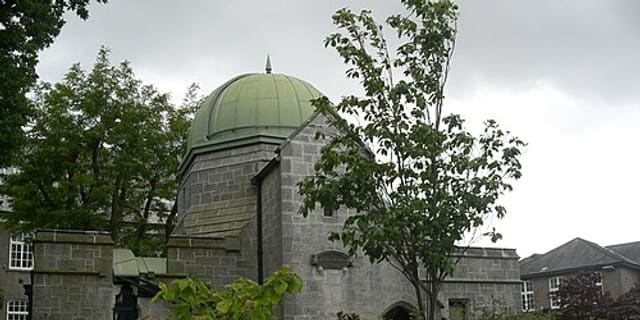
Crawford Observatory
19th-century observatory located on the campus of University College Cork, Ireland

 127 km
 204 km