
Urania


Image: Wikimedia Commons
Standing where the Wien River meets the city, Urania is Austria's oldest public observatory, an Art Nouveau landmark in Vienna that has combined stargazing with public life for over a century.
About Urania
Urania takes its name from the muse of astronomy in Greek mythology, and the building lives up to it: alongside its observatory dome, it houses seminar rooms, a cinema that screens during the Viennale film festival, a puppet theatre, and a restaurant, making it as much a cultural hub as a place to look at the stars.
History
Urania was built in 1909 to designs by the Art Nouveau architect Max Fabiani, a student of Otto Wagner, and opened in 1910 by Emperor Franz Joseph I as an educational facility with a public observatory attached. It was severely damaged during the Second World War, when its dome was destroyed, before being rebuilt and reopened in 1957. The building also holds a memorial room to the Kindertransport organised by the Dutch resistance figure Geertruida Wijsmuller-Meijer, who helped rescue 600 Jewish children from Vienna in December 1938.
Location & getting there
Urania sits at the outlet of the Wien River in central Vienna, Austria, a short walk from the city's historic core and easy to combine with a day exploring the capital.
Visiting Urania
Urania continues to operate as a public observatory alongside its cinema, restaurant, and educational programmes; check the official website for current opening hours and event schedules before you visit.
See your named star from here
A telescope at a public observatory like Urania can be aimed at the precise coordinates of any star, including one carrying a name you've chosen. Name a star today, or explore the catalogue of stars already named by others.
Opening hours and public-visit programs vary by season. Check the official website and Google Maps for current times before you travel.
Institutional and reference sources used to verify this guide.
Satellite imagery: Esri, Maxar, Earthstar Geographics

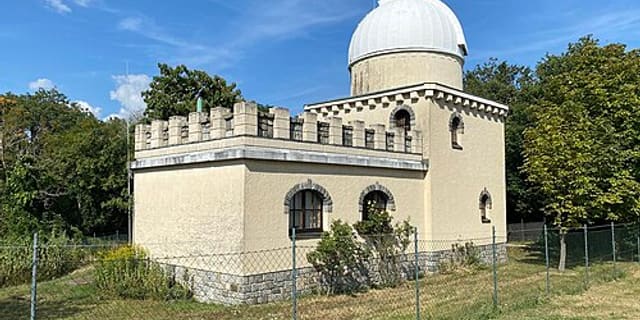 12 km
12 km
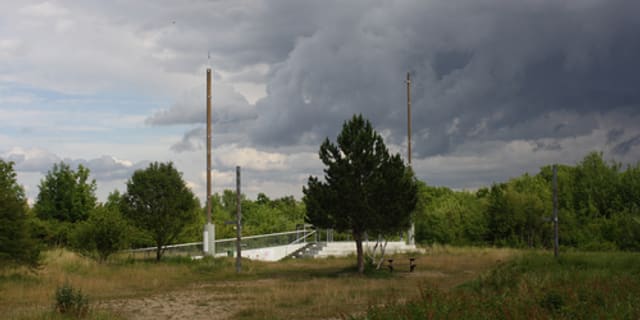 12 km
12 km
 50 kmResearch
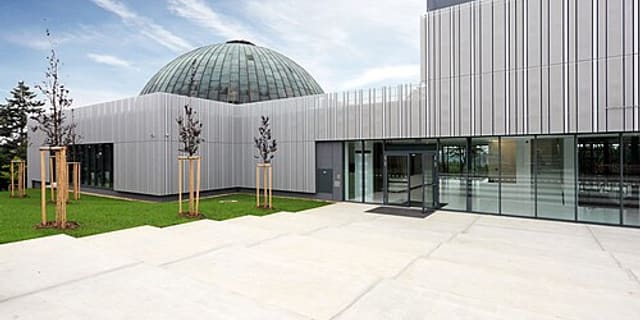 111 kmPlanetarium