
United States Naval Observatory

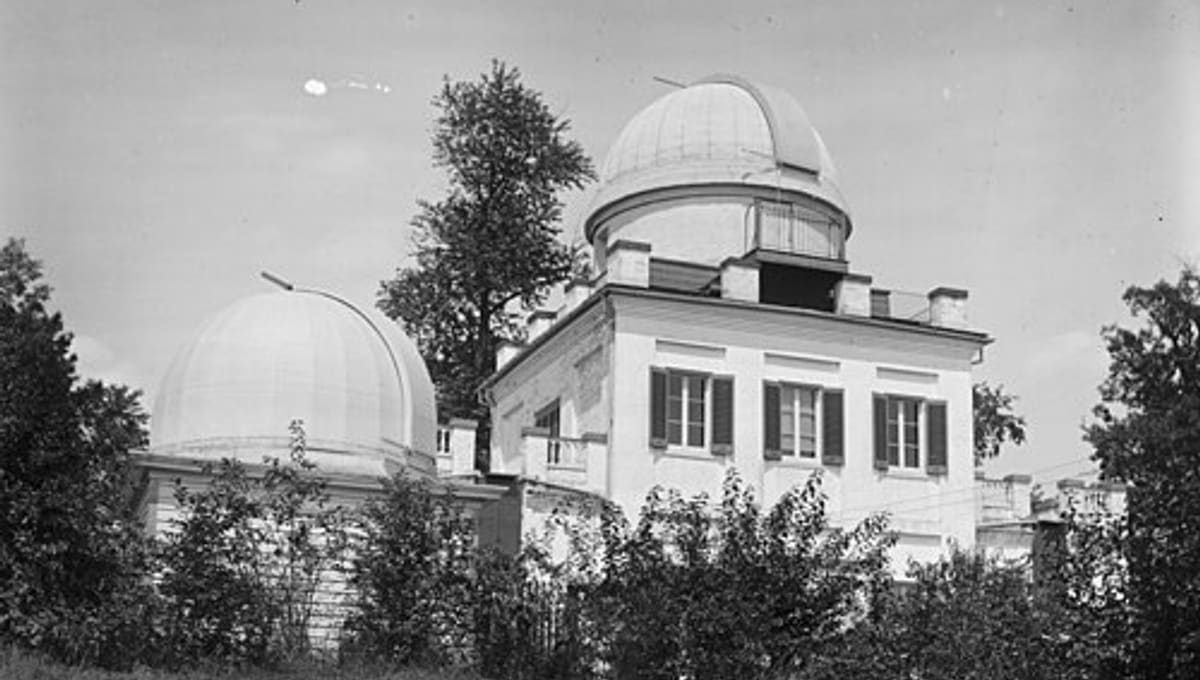
Image: Wikimedia Commons
The United States Naval Observatory (USNO) sits on Embassy Row in Northwest Washington, D.C., where it has quietly kept America's official time and produced navigation data for nearly two centuries.
About United States Naval Observatory
USNO is a scientific and military facility that produces geopositioning, navigation, and timekeeping data for the U.S. Navy and Department of Defense. It is one of the oldest scientific agencies in the country and remains a leading centre for astronomical and timing data.
History
Established in 1830 as the Depot of Charts and Instruments, the observatory moved in 1893 from Foggy Bottom near the city centre to its present Northwest Washington location, largely to escape encroaching light pollution, making it one of the few pre-20th-century observatories still sited within an urban area.
Telescopes & research
Over its history, USNO astronomers have measured the speed of light, observed solar eclipses, and discovered the moons of Mars. The observatory helped develop universal time and provided the first radio time signals. Today it performs radio VLBI observations of quasars for astrometry and geodesy with international partners, producing Earth orientation parameters and helping realise the celestial reference frame used worldwide.
Location & getting there
USNO is located in Northwest Washington, D.C., along Embassy Row. Since the 1970s, its campus has also hosted the official residence of the Vice President of the United States.
Visiting United States Naval Observatory
As an active military and scientific facility, general public access is limited. Check the observatory's official website before planning a visit, as tours and open events are arranged separately from casual sightseeing.
See your named star from here
An institution built to pin down time and position with extraordinary precision is a fitting place to think about pinpointing a star of your own. Once you know a star's right ascension and declination, it can be found from anywhere. Explore our star-naming packages or the full catalogue.
Opening hours and public-visit programs vary by season. Check the official website and Google Maps for current times before you travel.
Institutional and reference sources used to verify this guide.
Satellite imagery: Esri, Maxar, Earthstar Geographics

 2 kmResearch
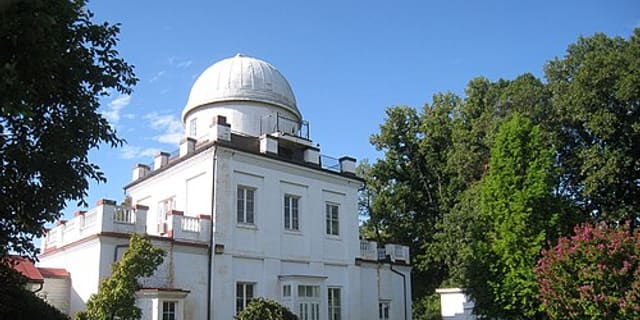
Georgetown University Astronomical Observatory
historical observatory on the campus of Georgetown University

 3 km
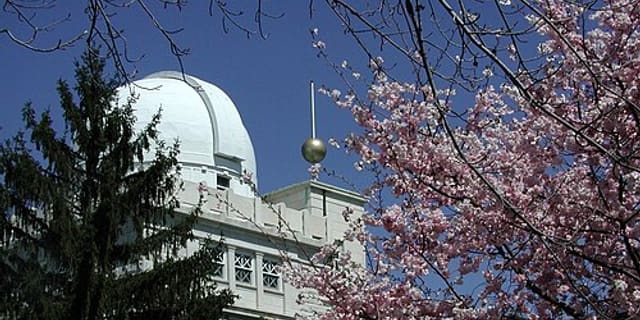
3 kmMark Slade Remote Observatory
astronomical observatory in Virginia, United States