
Gettysburg College Observatory
Satellite imagery: Esri, Maxar, Earthstar Geographics
Gettysburg College Observatory has watched over its Pennsylvania campus since the 1850s, and in July 1863 it quietly made history as the only known record of weather conditions during the Battle of Gettysburg.
About Gettysburg College Observatory
The college secured its first telescope in 1853, and its first dedicated observatory building went up in 1874. The current facility, on campus since 1967, stands at the northwest edge of the campus beyond West Building and the Center for Athletics, and is designated as a Minor Planet Center with the International Astronomical Union.
History
In July 1863, the observatory was used to observe conditions during the Battle of Gettysburg, producing the only surviving record of the battle's weather. The college's first purpose-built observatory followed in 1874, and the present facility has occupied its current site since 1967.
Telescopes & research
The observatory operates a 16-inch f/11 Ealing Cassegrain reflector, built in 1996 by Astronomical Consultants and Equipment of Tucson, with a computer-controlled dome, telescope and filter box. It is used for variable star photometry and imaging, and the observatory holds Minor Planet Center designation from the International Astronomical Union.
Location & getting there
The observatory sits on the campus of Gettysburg College in Pennsylvania, United States, at the northwest edge of the campus near West Building and the Center for Athletics.
Visiting Gettysburg College Observatory
The observatory supports the college's Physics Department and its planetarium programme. For current public viewing nights or open-house schedules, check the Gettysburg College Physics Department's official pages before visiting.
See your named star from here
A telescope that has tracked variable stars for decades is well suited to a very different kind of star search: finding the exact point in the sky where a named star sits, using its RA and Dec coordinates. Name a star, or browse the star catalogue.
Opening hours and public-visit programs vary by season. Check Google Maps for current times before you travel.
Institutional and reference sources used to verify this guide.
Satellite imagery: Esri, Maxar, Earthstar Geographics

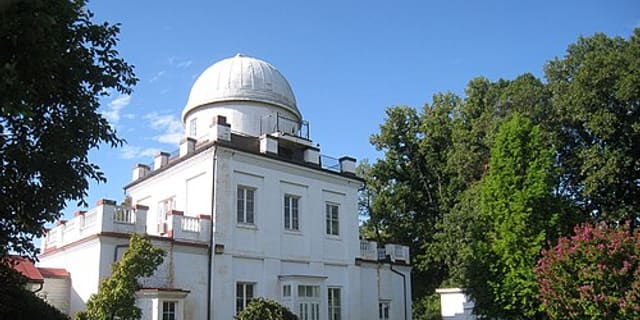 105 kmResearch
Georgetown University Astronomical Observatory
historical observatory on the campus of Georgetown University

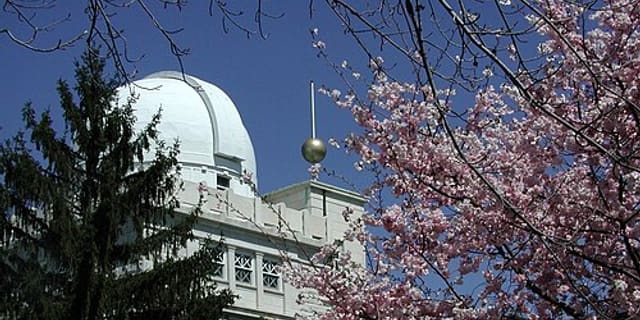 106 km