
Scottish Dark Sky Observatory


Image: Wikimedia Commons
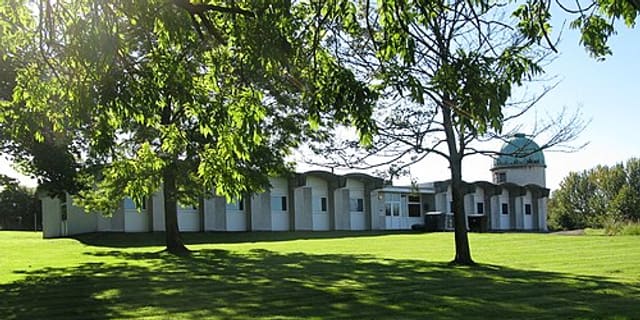
The Scottish Dark Sky Observatory (SDSO) was an astronomical observatory near Loch Doon in East Ayrshire, Scotland, built to share one of the UK's darkest skies with the public.
About Scottish Dark Sky Observatory
Designed by Glasgow architects G.D. Lodge, the observatory stood on a hilltop near the village of Dalmellington, within the Galloway Forest Dark Sky Park and the Galloway and Southern Ayrshire UNESCO Biosphere, an area known for exceptionally low light pollution. Its stated aim was to help people of all ages and abilities learn about and experience astronomy.
History
The observatory was built in 2012 and officially opened by then First Minister of Scotland Alex Salmond. In 2017, a design team led by Beecher Architect extended the site with a planetarium, opened by the Lord Lieutenant of Ayrshire and Arran, John Duncan. Tragedy struck in the early hours of 23 June 2021, when a fire, treated as suspicious, devastated the building. In late 2023, following an independent feasibility study, the Board of Trustees confirmed the observatory would not be rebuilt on its original site.
Telescopes & research
A new £1.5 million observatory is now planned at Clatteringshaws Loch, set to include two observing domes, a planetarium, a gift shop, and a small café. Astronomer Royal for Scotland Professor Catherine Heymans has been appointed the new observatory's patron.
Location & getting there
The original site sat near Loch Doon in East Ayrshire, Scotland, deep inside the Galloway Forest Dark Sky Park, one of the best stargazing regions in the UK thanks to its protected dark skies.
Visiting Scottish Dark Sky Observatory
The original building no longer operates following the 2021 fire. Anyone interested in the new Clatteringshaws Loch site should check for updates on its construction and opening before planning a visit.
See your named star from here
Few places in Britain offer skies as dark as Galloway Forest, making the area, and its future observatory, a fitting spot to look for a named star once its exact coordinates are in hand. Browse the star catalogue to find the star named in your honour.
Opening hours and public-visit programs vary by season. Check Google Maps for current times before you travel.
Institutional and reference sources used to verify this guide.
Satellite imagery: Esri, Maxar, Earthstar Geographics

 68 km
68 km
 69 kmPublic
 104 km
 105 kmMuseum