
Pyramid International Laboratory-Observatory

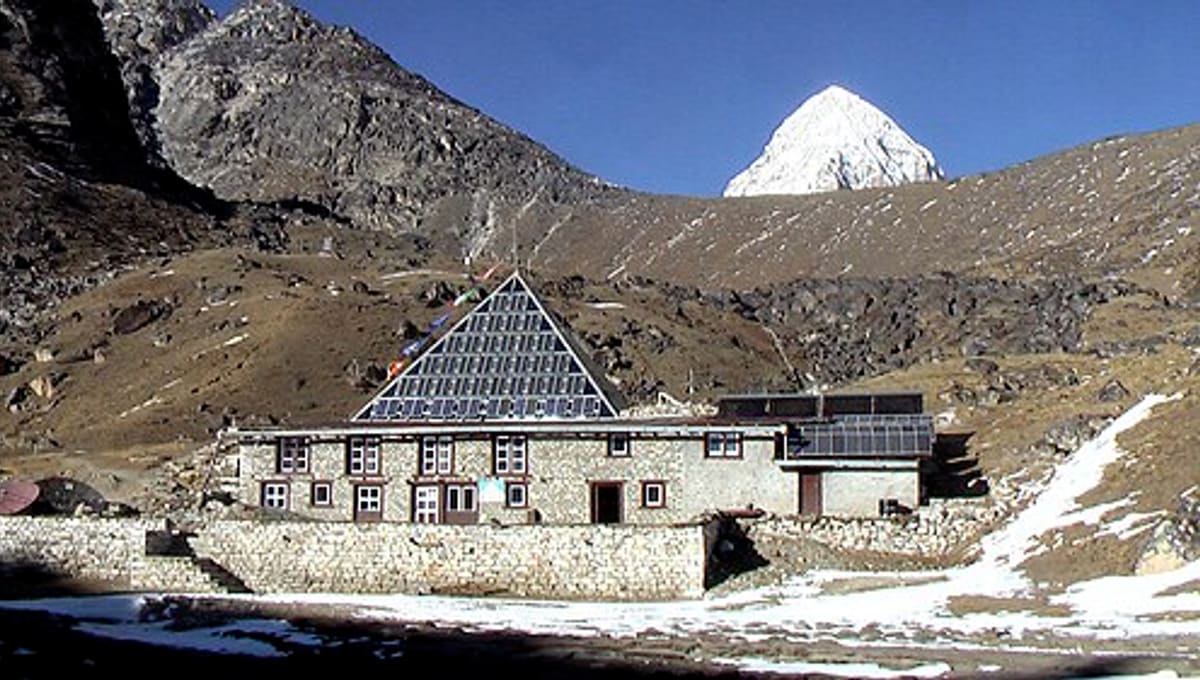
Image: Wikimedia Commons
At 5,050 metres in Nepal's Khumbu Valley, within sight of Mount Everest, the Pyramid International Laboratory-Observatory is one of the highest year-round research stations on Earth.
About the Pyramid International Laboratory-Observatory
The Pyramid International Laboratory-Observatory is a high-altitude scientific research centre in Sagarmatha National Park, Nepal, at 5,050 metres elevation. It was inaugurated in October 1990 on an initiative of Professor Ardito Desio and Agostino Da Polenza, and it is jointly managed today by the Ev-K2-CNR Committee and the Nepal Academy of Science and Technology.
History
Since opening in 1990, the station has hosted around 520 scientific missions involving some 220 researchers from 143 institutions worldwide. It has recently undergone a revival focused on climate and environmental research, and it is transitioning toward becoming a zero-emissions facility.
Telescopes & research
Research carried out at the Pyramid spans meteorology, hydrology, geology, medicine, biology, climate science, environmental science and human physiology at extreme altitude. Its position in the Khumbu Valley makes it one of the few facilities anywhere studying how the high atmosphere and the human body respond to conditions near 5,000 metres.
Location & getting there
The station sits in the Khumbu Valley of Sagarmatha National Park, at the base of Mount Everest in Nepal, reachable only by the trekking routes that lead through the region toward Everest Base Camp.
Visiting the Pyramid International Laboratory-Observatory
As a working high-altitude research station rather than a tourist facility, the Pyramid is not generally open for casual visits; trekkers pass near it on Everest region trails, but anyone hoping to visit the station itself should contact the Ev-K2-CNR Committee in advance.
See your named star from here
Few places on Earth offer skies as thin and dark as those above 5,000 metres in the Khumbu Valley. While the Pyramid's own work is scientific rather than public stargazing, the extreme altitude and remoteness that make it useful for research are the same qualities that make high-altitude sites prized for viewing faint stars, including one named through Star Register using its right ascension and declination. Browse our naming packages or search the catalogue.
Opening hours and public-visit programs vary by season. Check Google Maps for current times before you travel.
Institutional and reference sources used to verify this guide.
Satellite imagery: Esri, Maxar, Earthstar Geographics

 713 km
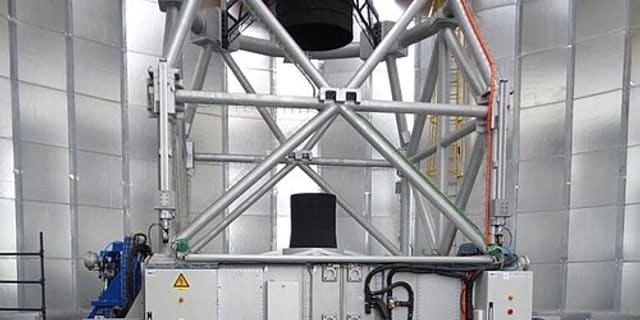
Devasthal Observatory
observatory center under department of science and technology government of India situated at Uttrakhand India