
Devasthal Observatory

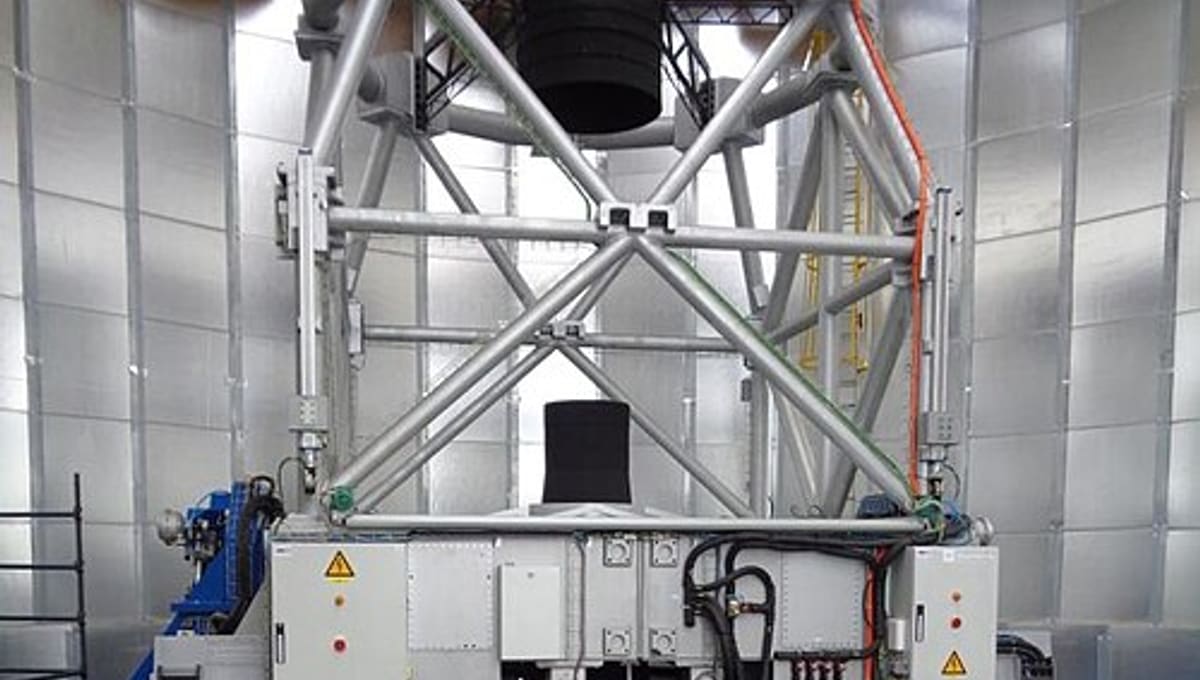
Image: Wikimedia Commons
Devasthal Observatory is a major Indian astronomical site high in the Kumaon Himalayas, near Nainital, Uttarakhand, home to the country's largest optical telescope.
About Devasthal Observatory
Devasthal Observatory sits on a Himalayan ridge in the Kumaon range of Uttarakhand, India, about 9 km from the town of Dhanachuli in Nainital district. At an elevation of 2,450 metres, its name - meaning "abode of god" - reflects its lofty, remote setting. The site is managed by the Aryabhatta Research Institute of Observational Sciences (ARIES), based in Nainital.
Telescopes & research
Devasthal hosts India's largest optical telescope, the 3.6-metre Devasthal Optical Telescope (DOT), built by the Belgian firm AMOS and commissioned in 2016. Alongside it stands the 4-metre International Liquid Mirror Telescope (ILMT), a zenith-pointing instrument that uses a rotating pool of liquid mercury as its mirror; it achieved first light in April 2022 and was formally inaugurated in March 2023. A smaller 1.3-metre Devasthal Fast Optical Telescope (DFOT), installed in 2010, handles wide-field surveys and rapid monitoring of transient events, alongside an additional 1.3-metre optical telescope also in operation on site. Research at Devasthal spans time-domain astronomy, supernova detection, gravitational lensing, near-Earth asteroids, variable stars and exoplanet transits.
Location & getting there
The observatory sits in the Asia region on Star Register's map, in the Kumaon Himalayas of Uttarakhand, India, roughly 9 km from Dhanachuli. Its high, dark, mountain site has been developed with guest facilities, a canteen and reliable water, internet and electric supply since 2008, supporting the astronomers who work there.
Visiting Devasthal Observatory
Devasthal is a working research facility run by ARIES, so access for the public is limited; anyone hoping to visit should check with ARIES directly or through organised astro-tourism trips based near Nainital before travelling.
See your named star from here
The 3.6-metre Devasthal Optical Telescope is precise enough to be pointed at exact celestial coordinates - the same right ascension and declination that come with every star named through Star Register. Name a star for someone special, or browse the catalogue of stars already named.
Opening hours and public-visit programs vary by season. Check the official website and Google Maps for current times before you travel.
Institutional and reference sources used to verify this guide.
Satellite imagery: Esri, Maxar, Earthstar Geographics

 254 km
 386 km
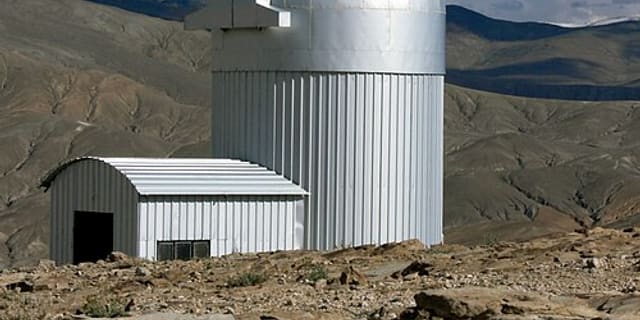
Indian Astronomical Observatory (IAO)
located near Leh, Ladakh, India; has one of the world's highest sites for optical, infrared, gamma-ray telescopes