
Pulkovo Station observatory

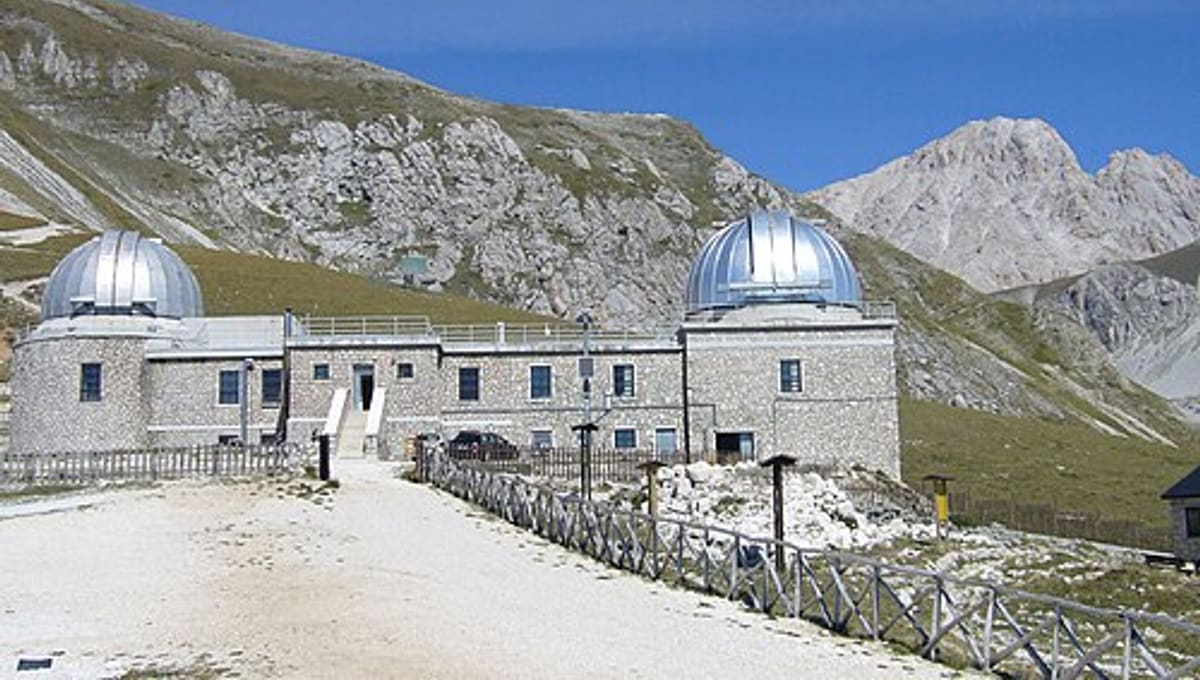
Image: Wikimedia Commons
High in the Apennine mountains of central Italy, the Pulkovo Station observatory - officially the Stazione Osservativa di Campo Imperatore - is a remote research outpost of the INAF Abruzzo Astronomical Observatory with a distinctly international backstory.
About Pulkovo Station observatory
Sitting at roughly 2,150 to 2,200 metres above sea level near L'Aquila, the station operates two telescopes: a Schmidt telescope for optical work and the AZT-24, an infrared instrument covering 1.1 to 2.5 microns.
History
The AZT-24 telescope has an unusual past. Built by the Soviet LOMO optical works for Pulkovo Observatory near Saint Petersburg, it was reportedly intended as a gift from Hitler to Mussolini before the Soviet Union took possession of it after the Second World War. The instrument was moved to Italy in 1995 and installed at its current mountaintop site in 1997 as part of the SWIRT project - a history that explains the "Pulkovo" name attached to an Italian observatory.
Telescopes & research
Research at the station focuses on near-infrared searches for extragalactic supernovae, along with studies of stellar variability, galaxy luminosity, active galactic nuclei and minor bodies of the Solar System.
Location & getting there
The station sits high in the Apennines in the province of L'Aquila, central Italy, at an elevation of around 2,150 to 2,200 metres - high enough for notably dark, stable skies.
Visiting Pulkovo Station observatory
As a remote research site of INAF, the station is not set up as a general tourist attraction. Visit enquiries can be made by phone at +39 0862 400 008, and current information is published on the observatory's website.
See your named star from here
At over 2,000 metres in the Apennines, the Pulkovo Station observatory sits well above much of the region's haze and light pollution - good conditions for locating a star named through Star Register. Name a star or look up its coordinates in the catalogue.
Opening hours and public-visit programs vary by season. Check Google Maps for current times before you travel.
Institutional and reference sources used to verify this guide.
Satellite imagery: Esri, Maxar, Earthstar Geographics

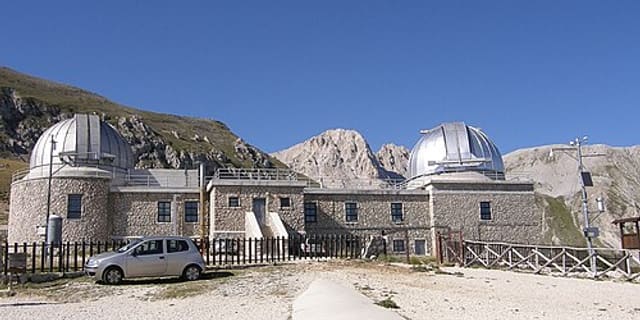 under 1 km
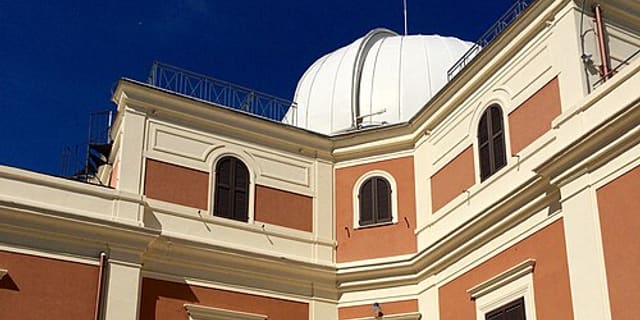 27 kmMuseum